Execution Risk After the Holidays
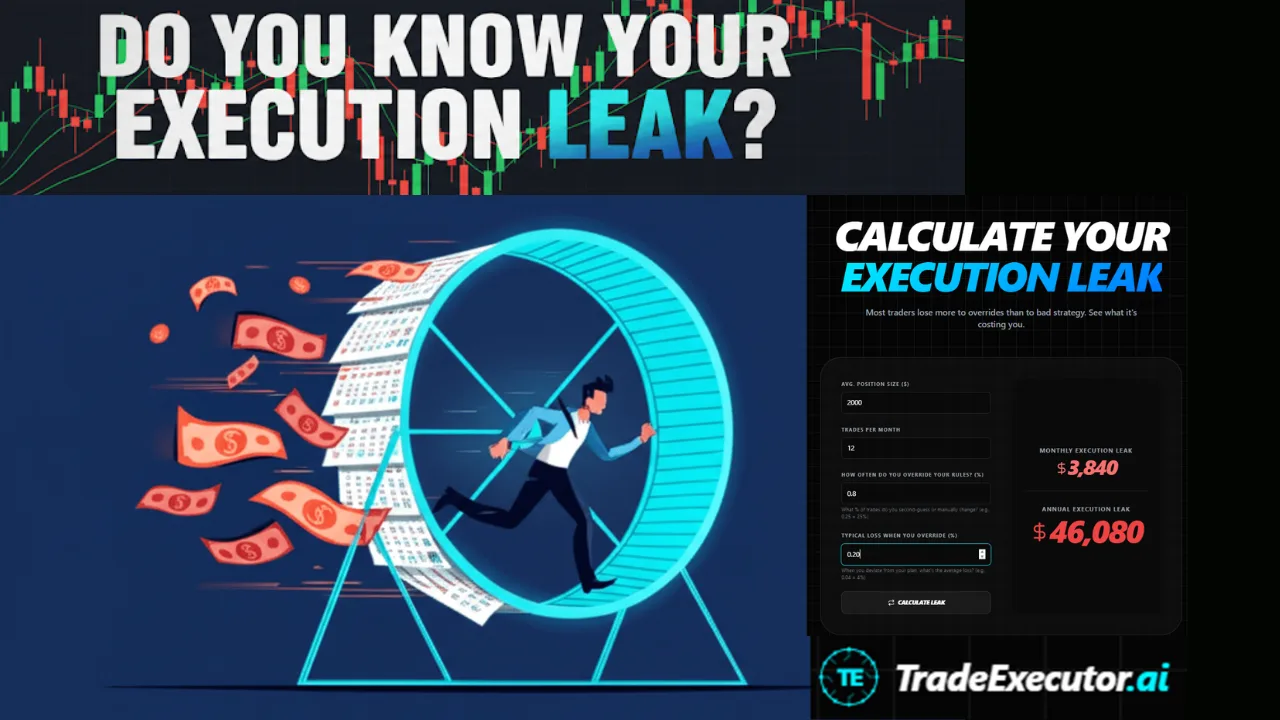
The return to trading after holiday breaks carries execution risks that most traders underestimate. Time away from markets feels like rest, but it creates a gap between the trader's mental model and current market reality. The patterns that were familiar before the break may have shifted. The rhythm that felt natural now feels foreign. This disorientation creates conditions where execution errors cluster — a pattern we call execution leak, the measurable gap between planned trades and actual behavior.
Understanding the specific risks of post-holiday trading helps traders protect themselves during a vulnerable period. The issue is not that markets are inherently more dangerous after holidays—it is that the trader returning to markets is temporarily less capable of maintaining the execution discipline that conditions require.
Execution Systems vs Signal Systems
The post-holiday period exposes a fundamental difference between execution systems and signal-based approaches. Execution systems do not predict or recommend — they execute predefined rules exactly as written. They do not care whether the trader just returned from vacation. They do not suffer from disorientation or rustiness. They evaluate conditions against criteria and act accordingly, maintaining identical precision whether operating continuously or after a break.
Signal-based tools notify; execution engines act. This distinction becomes critical after holidays when the trader's capacity to respond to signals is compromised. The signal fires, but the rusty trader hesitates. The alert arrives, but the disoriented trader misinterprets. The recommendation comes, but the trader who has been away struggles to evaluate current context correctly.
The failure mode of most automated trading tools is not strategy — it is execution delay. Every delay widens the execution leak. After holidays, this failure mode intensifies. The gap between signal and action widens because the trader needs more time to process, more time to verify, more time to feel confident. Each added moment of delay introduces slippage and opportunity cost that accumulates across trades.
The Disorientation Effect
Disorientation after breaks operates on multiple levels. There is factual disorientation—not knowing what happened while away, what levels were tested, what narratives developed. There is also rhythmic disorientation—having lost the feel for how current conditions flow, how setups develop, how price moves through familiar patterns.
Factual disorientation can be addressed through research. The trader can read news, review charts, and catch up on developments. This takes time but is straightforward. Rhythmic disorientation is more insidious. It cannot be researched away. It requires re-immersion in live market observation before the intuitive feel returns.
Many traders underestimate how long re-calibration takes. They assume they can jump back into full trading immediately after catching up on news. The research addresses factual gaps but not rhythmic gaps. The trader who feels informed may still be rhythmically disoriented, leading to execution that is technically based on current information but out of sync with current flow.
The Temporal Cost of Relearning
Every return from a break requires relearning what current conditions actually feel like, not just what they look like on charts. Execution behavior is understood through observation over time, not through screenshots or summaries. The trader who was away cannot compress this observation. They must spend time watching before they truly understand what they are watching.
This temporal cost creates pressure. The trader wants to trade. Markets are open. Opportunities appear to be developing. But the honest assessment is that execution quality will be compromised until rhythmic calibration completes. The disciplined response is to reduce activity until calibration finishes. The common response is to trade anyway and suffer the consequences of disoriented execution.
The pressure intensifies if the trader was already behind on annual targets before the break. They return feeling urgency to catch up, which compounds the execution risks that post-holiday disorientation creates. The combination of external pressure and internal disorientation produces some of the worst execution periods many traders experience.
Structural Protection During Transitions
Execution systems provide structural protection during post-holiday transitions by removing the disoriented trader from the execution loop. The system does not experience holidays. It does not become disoriented. It continues evaluating conditions against criteria with the same precision it maintained before the break. The trader's temporary incapacity does not translate to system incapacity.
This protection is particularly valuable because post-holiday periods often coincide with elevated market activity. Other traders are also returning. Positions are being reestablished. Capital is being deployed. The market may offer genuine opportunities exactly when the discretionary trader is least equipped to capture them.
The documented methodology that operates independently of trader state captures these opportunities without the contamination that disoriented execution would introduce. The trader benefits from post-holiday market activity without suffering from post-holiday execution degradation.
Structure Over Readiness
Execution risk after the holidays stems from the gap between when traders want to trade and when they are actually ready to trade well. Disorientation, both factual and rhythmic, compromises execution quality in ways that feel like bad luck but are actually predictable consequences of time away from markets.
The disciplined discretionary trader addresses this by reducing activity during recalibration periods, accepting that full engagement must wait until readiness returns. This is difficult because markets do not wait and opportunities do not pause for trader convenience.
Structural solutions that execute independently of trader readiness provide protection that discipline-dependent approaches cannot match. The system that maintains consistent execution regardless of whether the trader just returned from vacation or has been watching markets continuously eliminates post-holiday risk by eliminating the dependency on post-holiday trader capacity. What the trader cannot do well, the system does regardless. Addressing your execution leak starts with measuring it.
How much is your execution leak costing you?
Most traders lose more to overrides than to bad strategy. Calculate yours in 30 seconds.
Calculate Your LeakRelated Reading
TradeExecutor.ai — deterministic automated execution engine
← Back to Insights