Why Alerts Feel Worse During Volatile Markets
Alert-based trading systems feel efficient during calm market conditions. A notification arrives, the trader evaluates the setup, and execution proceeds with minimal friction. This reactive model works when signals are infrequent and conditions remain stable between alerts. When volatility increases, the same alert structure becomes a source of cognitive overload and execution degradation.
The problem is not the alerts themselves. The problem is that alert-based execution places decision-making at the moment of maximum time pressure and emotional intensity. During volatile markets, this structural weakness compounds as alert frequency increases and the time available to evaluate each signal decreases. What felt like a responsive execution tool becomes a mechanism for forced decisions under suboptimal conditions.
For more on this topic, see Why Market Volatility Exposes Weak Execution Logic.
The Cognitive Cost of Reactive Decision-Making
Alert-based execution requires the trader to shift from passive monitoring to active decision-making instantaneously. An alert arrives. The trader must evaluate current market conditions, assess the validity of the signal, determine position sizing, and execute within a compressed time window before the setup deteriorates. This process consumes cognitive resources each time it occurs.
During calm markets with infrequent signals, this cognitive cost is manageable. The trader receives a few alerts per day, evaluates each one, and returns to passive monitoring. The mental effort required for each decision is discrete and bounded. The trader has time to recover between signals.
Volatile markets eliminate this recovery period. Alerts arrive in rapid succession. The trader is evaluating one signal while another arrives. The cognitive demand becomes continuous rather than discrete. Mental fatigue accumulates across sequential decisions, degrading the quality of evaluation as the session progresses. The trader is making more decisions in worse cognitive states.
Why Alert Frequency Compounds During Volatility
Most alert systems are configured around price levels, technical patterns, or indicator thresholds. These trigger conditions occur more frequently when volatility increases because price moves through more levels in shorter timeframes. A support level that might generate one alert per week during calm conditions generates multiple alerts per day during volatile conditions as price tests and retests the level.
The trader who relied on alerts to filter signal noise during calm markets now faces signal overload during volatile markets. The filtering mechanism has become a noise amplification mechanism. Each alert still requires evaluation, but the increased frequency means less time per evaluation and more decisions made under time pressure.
This creates a structural mismatch between alert frequency and decision quality. The trader needs more time to evaluate signals during volatile conditions because market context is changing rapidly. But the alert system is generating signals faster during these same conditions, reducing the time available for each evaluation. The system optimizes for responsiveness when the trader needs deliberation.
The False Urgency Problem
Alerts create a sense of urgency regardless of whether urgency is warranted. The notification implies that action is required now. During calm markets, this urgency is often appropriate because setups develop gradually and remain valid for extended periods. During volatile markets, this urgency becomes misleading because many signals are false breakouts or temporary level tests that reverse quickly.
The trader receives an alert and feels compelled to act immediately. But immediate action during volatile conditions often means executing before the signal can be properly validated. The alert system has trained the trader to respond quickly, which worked well during calm conditions. Now that same training produces premature execution during conditions that require patience.
This false urgency compounds the cognitive cost. The trader must consciously override their trained response pattern to allow time for proper evaluation. This override consumes additional mental resources on top of the evaluation itself. The trader is fighting both the market conditions and their own alert-conditioned behavior patterns.
How Deterministic Systems Eliminate Reactive Overhead
Deterministic systems do not rely on alerts to trigger decision-making. The execution logic evaluates market conditions continuously and automatically. When entry criteria are met, the position is initiated without requiring the trader to make a real-time decision. When exit criteria are met, the position is closed without requiring the trader to evaluate whether the signal is valid.
This eliminates the cognitive overhead of reactive decision-making. The trader does not shift between passive monitoring and active evaluation. They do not experience the mental fatigue of sequential forced decisions. The methodology executes independently of the trader's cognitive state, which means execution quality does not degrade as alert frequency increases.
During volatile markets, this structural advantage becomes particularly visible. While alert-based traders are evaluating their tenth signal of the hour under time pressure and mental fatigue, deterministic systems are executing the same logic they execute during calm markets. The signal frequency does not create cognitive load because there is no human evaluation required for each signal.
 your execution
The Compounding Effect of Decision Fatigue
Decision fatigue during volatile periods creates a degradation pattern that persists beyond individual trading sessions. A trader who spends hours making rapid-fire decisions in response to alerts develops an aversion to the execution process itself. What was initially experienced as responsive trading becomes experienced as exhausting reactivity.
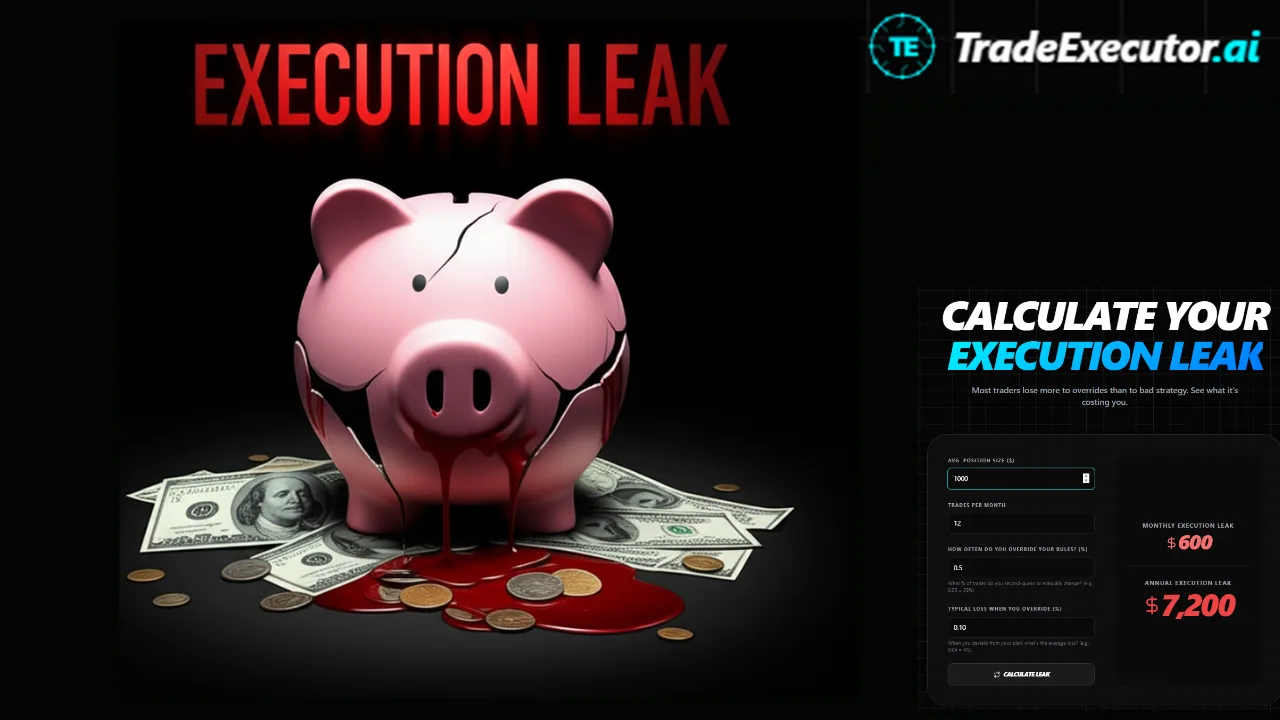
This aversion manifests as reduced engagement during subsequent volatile periods. The trader begins ignoring alerts or applying increasingly strict filters to reduce alert frequency. Both responses introduce execution inconsistency. Some valid signals are missed because the trader is avoiding alert overload. Other signals are taken based on relaxed criteria because the trader wants to reduce evaluation burden. This inconsistency — what we call execution leak — silently compounds over time.
Over multiple volatile periods, this pattern fragments the execution framework. The trader no longer has consistent rules for which alerts warrant action. They have a psychologically-driven variable threshold that changes based on recent decision fatigue and current cognitive capacity. The alert system that was supposed to create execution structure has instead created execution variability driven by the trader's mental state. This accumulated execution leak makes meaningful evaluation impossible.
Why Automation Beats Notification
The fundamental structural difference between alert-based execution and deterministic execution is where decision-making occurs. Alert-based execution places decisions at the moment of signal generation under time pressure. Deterministic execution places decisions during strategy development under deliberate analysis.
When a trader builds a deterministic system, they decide in advance how the system should respond to various conditions. These decisions are made without time pressure, during periods when cognitive resources are available for thorough evaluation. The decisions are then encoded into execution logic that runs automatically.
When alerts arrive during volatile markets, no new decisions are required. The system executes the decisions that were made during strategy development. The trader's current cognitive state is irrelevant. The signal frequency is irrelevant. The execution logic remains consistent because it does not depend on real-time human evaluation of each signal.
This is why deterministic systems maintain execution quality when alert-based approaches degrade. Alert-based execution becomes harder as conditions become more volatile because the cognitive demands increase. Deterministic execution remains consistent across volatility regimes because the execution logic is not affected by alert frequency or trader mental state.
Structure Over Reactivity
Alerts feel worse during volatile markets because they amplify the structural weaknesses of reactive decision-making. Increased signal frequency creates cognitive overload. Compressed evaluation windows produce forced decisions under suboptimal conditions. Decision fatigue accumulates and degrades execution quality across sessions. The responsive tool that worked during calm conditions becomes an exhausting burden during volatile conditions.
Deterministic systems avoid this degradation by eliminating reactive decision-making from the execution process. Decisions are made during strategy development when cognitive resources are available. Execution proceeds automatically based on those predetermined decisions. Volatile markets increase signal frequency but do not increase cognitive load because no human evaluation is required for each signal.
This is the cognitive cost difference between notification-driven execution and automated execution. One requires the trader to make good decisions at the worst possible time. The other allows the trader to make decisions once, deliberately, and then execute those decisions consistently regardless of market conditions or mental state. Alerts create reactivity. Automation creates structure. During volatile markets, that structural difference determines whether execution discipline maintains or collapses under cognitive load. Addressing your execution leak starts with measuring it.
How much is your execution leak costing you?
Most traders lose more to overrides than to bad strategy. Calculate yours in 30 seconds.
Calculate Your LeakRelated Reading
TradeExecutor.ai — deterministic automated execution engine
← Back to Insights