Fed Holds, Markets Panic: Why Your Trading System Just Failed Its Biggest Test
The Dow just shed 750 points. The Fed held rates steady while inflation worries sent traders scrambling for exits. Right now, someone is staring at their screen wondering if they should override their system, cut losses early, or double down on what seemed like a solid plan yesterday.
This is the moment that separates real trading systems from wishful thinking. When the headlines scream and portfolios bleed, does your strategy execute its rules-based strategy or does it bend to the panic of the moment?
Fed decisions are the ultimate test of trading discipline. Not because they're unpredictable—but because they make predictable traders act unpredictably.
The community submitted 1 prediction for AAPL. Every week, the most popular symbol gets publicly reviewed — good or bad.
Submit a Symbol →The Panic Override: How Discretionary Trading Dies in Fed Moments
Watch what happens when markets crater on Fed news. The discretionary trader who spent months backtesting a momentum strategy suddenly questions everything. The same trader who was confident in their risk management yesterday is now mentally calculating how much they can "afford" to lose today.
They override the stop loss because "this feels different." They exit profitable positions because "better safe than sorry." They add to losers because "it has to bounce back." Each decision feels rational in the moment. Each decision destroys months of systematic thinking.
The problem isn't the Fed decision. The problem is that human discretion turns consistent systems into emotional gambling the moment real money meets real fear.
"Down $200 on a day trade. Not much. But I refused to take it. 'It's only $200, it'll come back.' $200 became $400. Then $700. Then $1,200. I finally sold. Six hours of holding. Six hours of hoping...."


What 750 Points Down Looks Like to a Rules-Based System
An automated execution engine doesn't read headlines. It doesn't feel the weight of a 750-point drop or get excited by a 500-point rally. It sees price, volume, and predetermined criteria.
When the Dow tumbles and the Fed disappoints, a rules-based system asks one question: Do current market conditions trigger our predefined entry or exit signals?
Not: "Is this the start of a bear market?"
Not: "Should I protect my gains?"
Not: "What if it gets worse?"
Just: Do the numbers match the rules?
If the system is programmed to buy momentum breakouts above the 20-day moving average, it waits for momentum breakouts above the 20-day moving average. If it's designed to exit when volatility exceeds a certain threshold, it exits when volatility exceeds that threshold.
The 750-point drop becomes data, not drama.
The Execution Leak: Where Strategy Meets Reality
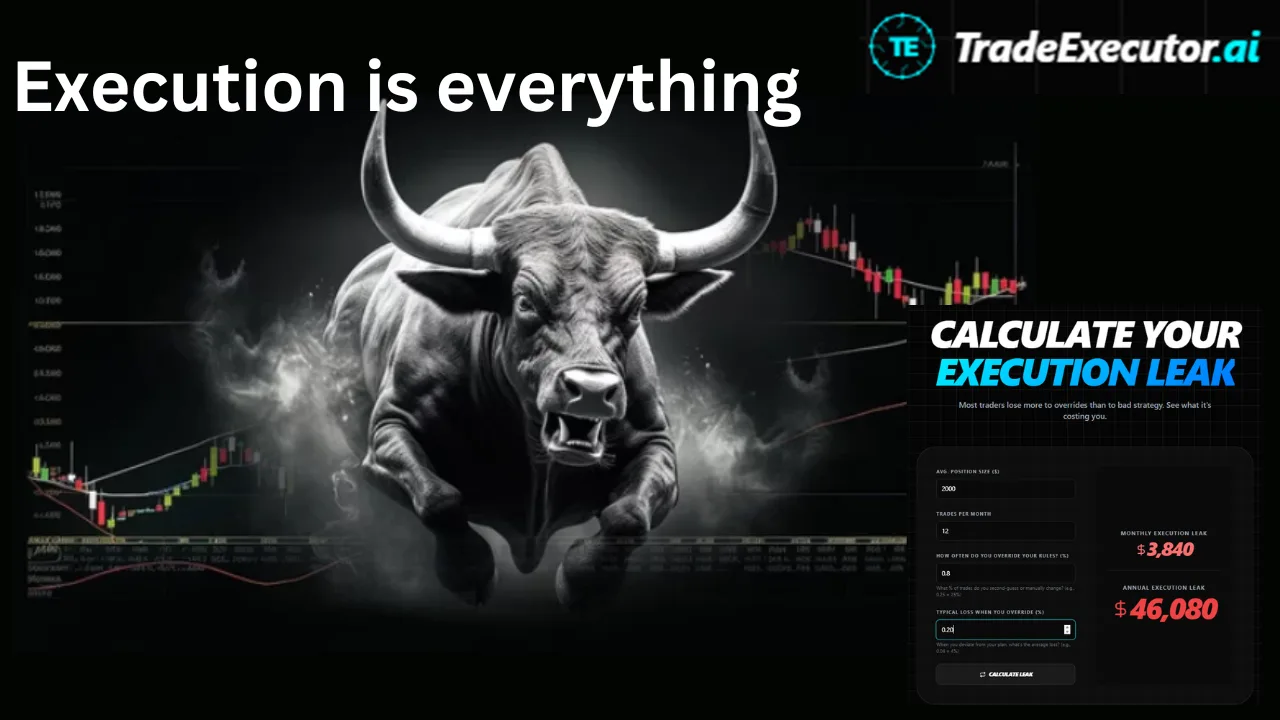
Here's what most traders miss: The gap between having a strategy and executing a strategy is where profits go to die. This gap—the execution leak—widens dramatically during Fed-driven volatility.
You backtest a system that would have made 15% last year. But your actual returns were 8%. The missing 7% didn't vanish because your strategy was wrong. It leaked out through hesitation, second-guessing, and emotional overrides during moments exactly like today.
TradeExecutor.AI eliminates this leak by removing the human decision point entirely. Same market conditions, same signals, same execution—every time. No hesitation when the Dow drops 750 points. No excitement when it rallies 500.
Should You Change Your Trading Strategy When Markets Crater?
This is the question flooding trading forums right now. The honest answer: If you're asking this question during a market event, you never had a strategy—you had a hypothesis.
Real strategies are built to handle market events, not avoid them. They're tested across different Fed cycles, crash scenarios, and volatility regimes before the first dollar goes to work.
Changing your strategy because of today's 750-point drop is like changing your insurance policy because of today's car accident. The time to stress-test your approach was before the stress, not during it.
The traders asking this question will spend tonight researching new systems, reading about defensive strategies, and convincing themselves that this time they'll stick to the plan. The same traders will be asking the same question six months from now when something else spooks the market.
Why One Strategy, One Platform Changes Everything
The beauty of deterministic trading isn't just emotional—it's mathematical. When TradeExecutor.AI executes the same strategy on TradeStation with the same inputs, it produces the same outputs. Every time.
This isn't revolutionary technology. It's basic logic applied to an emotional business. But basic logic becomes revolutionary when everyone around you is abandoning logic for gut feelings and market hunches.
One strategy means you're not jumping between systems when one approach hits a rough patch. One platform means you're not learning new interfaces during market stress. One-time payment means you're not calculating monthly costs while calculating losses.
The combination creates something rare in trading: predictability in an unpredictable business.
The Fed Decision That Never Happened
Want to know the real lesson from today's market action? For a properly built automated system, this Fed decision never happened. Not because it ignores the news—because it was already prepared for whatever the Fed decided.
The system that worked before the announcement works after the announcement. The risk management that made sense at yesterday's close makes sense at today's close. The entry and exit criteria remain exactly what they were when you committed to the strategy.
This is what "tested, trusted, transparent" actually means. Tested across market conditions that include Fed surprises. Trusted to execute regardless of headlines. Transparent about what it will do before it needs to do it.
While discretionary traders are recalculating, second-guessing, and overriding their systems, rules-based execution just... executes.
The market will recover or it won't. The Fed will cut rates or it won't. Your system will follow its rules or it won't.
Only one of these variables is under your control.
Tested. Trusted. Transparent.How much is your execution leak costing you?
Most traders lose more to overrides than to bad strategy. Calculate yours in 30 seconds.
Calculate Your LeakTradeExecutor.ai — deterministic automated execution engine
← Back to Insights