The S&P 500 Rallies on Iran Ceasefire Hope — But Does Your Strategy Follow Rules or Headlines?
The S&P 500 is climbing today as investors digest potential ceasefire news between Iran and the U.S., with traders scrambling to position themselves ahead of what could be a major geopolitical shift. Markets love certainty, but they love speculation even more.
The bottom line: While discretionary traders chase headlines and second-guess their positions, rules-based execution systems ignore the noise entirely. A predetermined strategy executes the same signals whether the news is about Iran, inflation, or alien invasions. The market moves, but the rules don't change.What Happens When Geopolitical News Breaks?
Discretionary traders panic, override their systems, and create execution leaks that compound over time. Rules-based systems execute signals based on price action and technical conditions, not CNN headlines.
When Iran ceasefire rumors hit the wires this morning, human traders started making judgment calls. "Should I exit my defense positions?" "Is oil about to crash?" "What if this is just speculation?" Each question leads to hesitation, and hesitation kills consistent execution.
A rules-based strategy doesn't ask these questions. It reads price, volume, and predetermined technical indicators. If the strategy says buy at a specific level, it buys. If it says sell when a moving average crosses, it sells. The Iran news becomes irrelevant background noise.
The math is simple: every override, every "just this once" decision, every emotional adjustment creates an execution leak. These leaks compound. A 0.5% leak per trade becomes a 10% annual drag on returns. Most traders never calculate this cost because they're too busy reacting to the next headline.
Should You Change Your Strategy When Geopolitics Shift?
No. Changing your strategy based on current events is speculation disguised as adaptation.
Markets have survived world wars, nuclear threats, financial collapses, and pandemics using the same basic principles: price discovery through supply and demand. Technical patterns that worked in 1987 still work today because human psychology hasn't evolved in 30 years.
Consider what happened during the 2020 COVID crash. Discretionary traders who abandoned their systems at the bottom missed the fastest recovery in market history. Meanwhile, systematic strategies that stayed disciplined captured both the downside protection signals and the subsequent reversal patterns.
The Iran situation presents the same test. Geopolitical events create volatility, but volatility follows patterns. A rules-based approach captures these patterns without trying to predict which headline will move markets tomorrow.
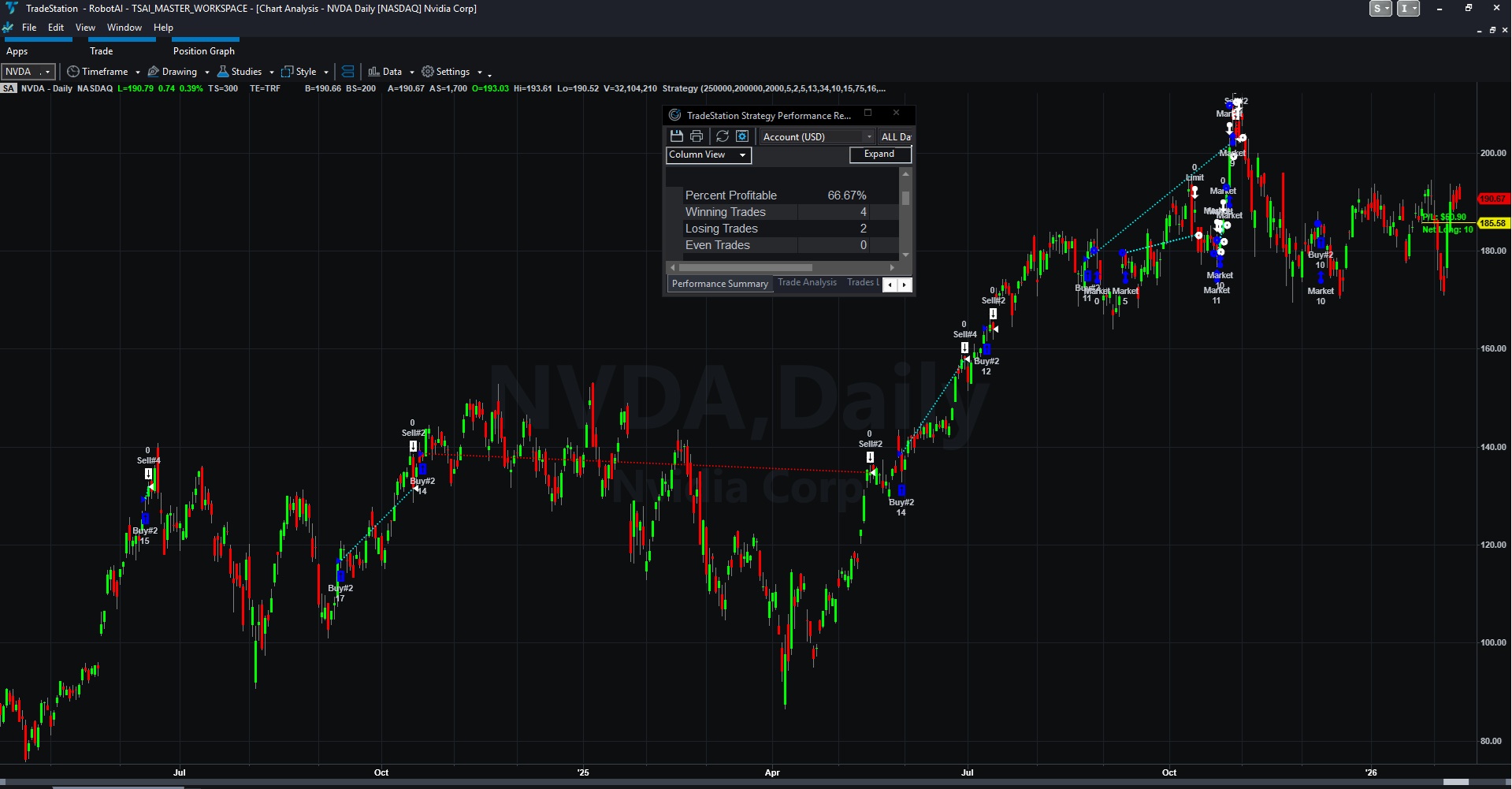
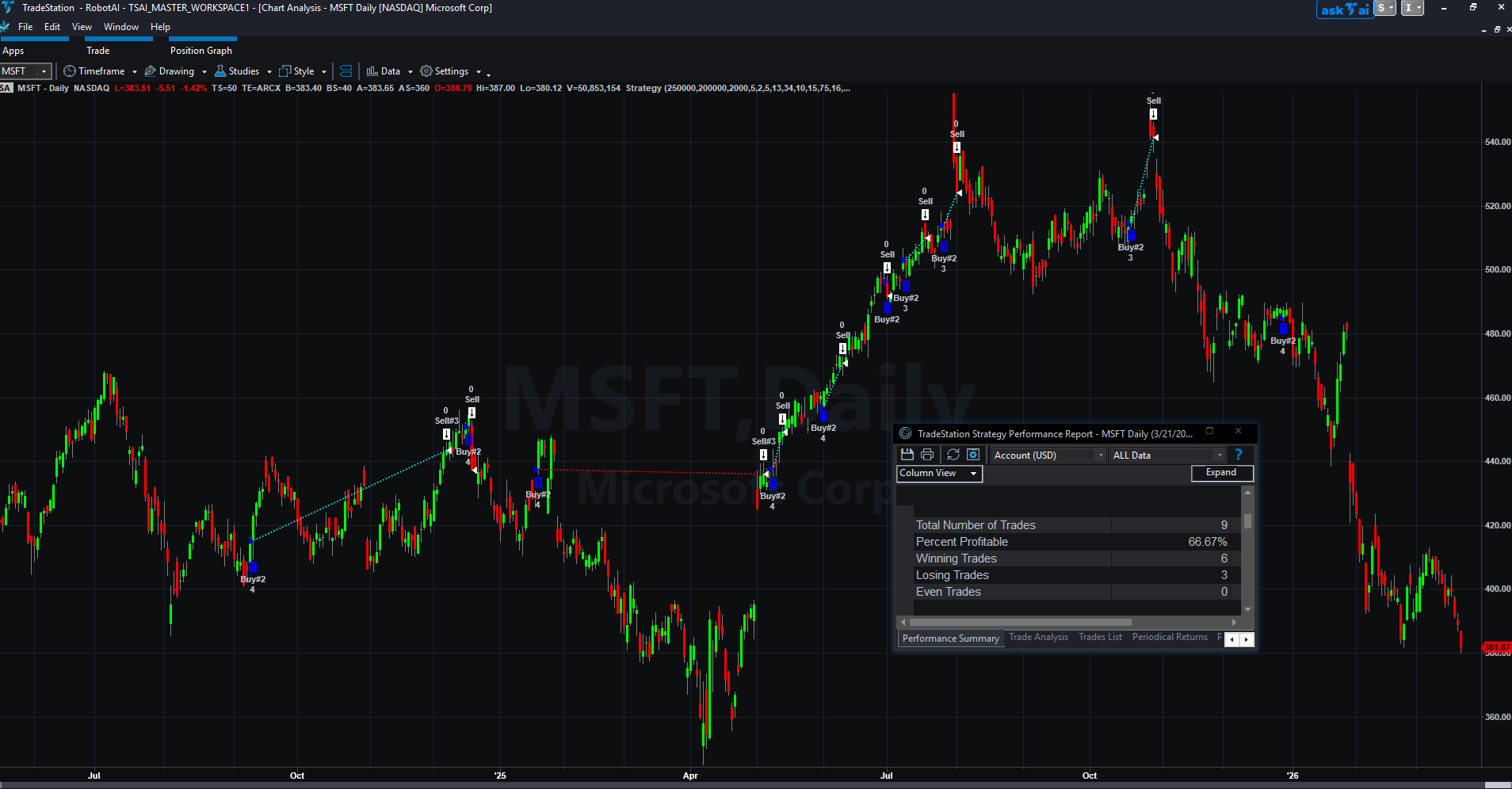
TradeExecutor.AI operates on this principle: one strategy, executed consistently, without human intervention. The system doesn't care if the news is about Iran, China, or Mars. It responds to what price action reveals about market participant behavior.
How Does Automated Trading Handle Volatility?
Automated trading treats volatility as data, not emotion. Higher volatility often creates better trading opportunities because it generates clearer technical signals and larger price movements.
When the S&P 500 gaps up on Iran ceasefire speculation, an automated system measures that gap against historical context. Is this gap within normal ranges? Does it trigger any predetermined entry or exit conditions? The system processes these questions in milliseconds and acts accordingly.
Human traders see the same gap and start storytelling. "This feels like 2019 when trade war tensions eased." "Oil stocks are going to get crushed." "Maybe I should take profits early." Each story creates delay between signal recognition and execution.
The execution delay matters more than most traders realize. In backtesting, a strategy might show a 15% annual return. But if real-world execution lags signals by even 30 seconds due to hesitation, that return drops to 11%. The 4% difference compounds to massive underperformance over time.
Automated systems eliminate this lag entirely. They receive signals and execute them within the same millisecond. No second-guessing, no overrides, no "let me see what happens first" delays.
14 levels from Gut to Executor. We don't expect anyone to blindly jump in — do your due diligence. Submit symbols, track your predictions, and prove your discipline.
 Start Your Path →
What Is an Execution Leak in Trading?
An execution leak is the performance gap between your strategy's theoretical returns and your actual trading results. Every emotional override, delayed entry, and "smart" adjustment widens this gap.
Most traders focus on finding better strategies when they should focus on executing their current strategy perfectly. A mediocre strategy executed flawlessly beats a brilliant strategy executed poorly.
The Iran news creates multiple execution leak opportunities: exiting positions too early because you fear reversal, entering positions late because you want "confirmation," or skipping trades entirely because the news feels too uncertain.
Each leak seems small in isolation. Taking profits 2% early doesn't feel costly when you're booking a win. But that 2% early exit becomes a pattern, and patterns compound. Over 50 trades, those 2% leaks cost 100% in missed gains.
TradeExecutor.AI eliminates execution leaks by removing the human decision point entirely. The strategy defines exact entry prices, exit prices, stop losses, and position sizes. The system executes these parameters without deviation, regardless of external circumstances.
Why Rules-Based Execution Outperforms Discretion
Rules-based execution produces consistent results because it eliminates the variables that destroy trading performance: emotion, bias, and inconsistency.
The data supports this conclusion across every asset class and time frame. Professional traders who stick to systematic approaches outperform discretionary traders by 3-7% annually, according to multiple industry studies. The performance gap widens during volatile periods when emotions run highest.
Today's Iran-related market move provides a perfect example. Discretionary traders are making real-time decisions based on incomplete information about a complex geopolitical situation. They're essentially gambling on outcomes they can't predict or control.
Rules-based systems ignore the geopolitical complexity entirely. They focus on what markets always reveal: where buyers and sellers are willing to transact, how volume confirms or contradicts price moves, and whether current conditions match historical patterns that have proven profitable.
This approach isn't glamorous. It doesn't make for exciting trading stories. But it works because it's designed around mathematical probabilities rather than human intuition about global events.
The TradeExecutor platform embodies this philosophy: deterministic execution that produces the same results every time the same conditions appear. Same inputs, same outputs, regardless of whether the headlines mention Iran, interest rates, or earnings surprises.
The Path Forward: Tested, Trusted, Transparent
Markets will continue generating headlines that trigger emotional responses in traders. Iran ceasefires, Federal Reserve announcements, earnings surprises — the news never stops, and neither do the opportunities for execution errors.
The solution isn't better news analysis or faster headline reading. The solution is removing yourself from the decision-making process entirely during trade execution. Let the strategy make the decisions based on predetermined rules, and let the system execute those decisions without human interference.
TradeExecutor.AI offers exactly this capability: a backtested, verified approach that handles market volatility through consistent rule application rather than reactive decision-making. One strategy, one platform, one-time payment, zero emotional overrides.
Your trading performance depends less on predicting what Iran and the U.S. will do next, and more on whether you can execute your strategy exactly as designed, every single time.
Tested. Trusted. Transparent.
How much is your execution leak costing you?
Most traders lose more to overrides than to bad strategy. Calculate yours in 30 seconds.
Calculate Your LeakTradeExecutor.ai — deterministic automated execution engine
← Back to Insights