Iran War Fears Sink Markets: Why Your Execution Is Your Biggest Risk Right Now
Stocks are tumbling. The Dow and Nasdaq are flirting with correction territory as Iran war fears grip markets. CNBC's live updates show red across every major index, and you can practically feel the panic radiating through trading floors worldwide.
But here's what they won't tell you in those breathless market updates: the biggest threat to your portfolio isn't geopolitical chaos. It's you.
Every market shock reveals the same brutal truth — traders who claim to follow a system abandon it the moment headlines get scary. They override their entries, second-guess their exits, and let fear dictate their execution. Meanwhile, their carefully backtested rules-based strategy sits unused while they chase headlines and trade their emotions.
The question isn't whether Iran will drag oil higher or crash global markets. The question is: when crisis hits, does your strategy follow rules or hype?
The Execution Leak That Headlines Create
Every geopolitical shock creates the same pattern. Markets gap, volatility spikes, and rational execution goes out the window.
Take this morning. Your system says buy the dip at specific levels. But the news is screaming about Middle East tensions. Oil is spiking. Defense contractors are rallying. Every instinct tells you to wait, to see what happens next, to maybe chase that energy trade instead.
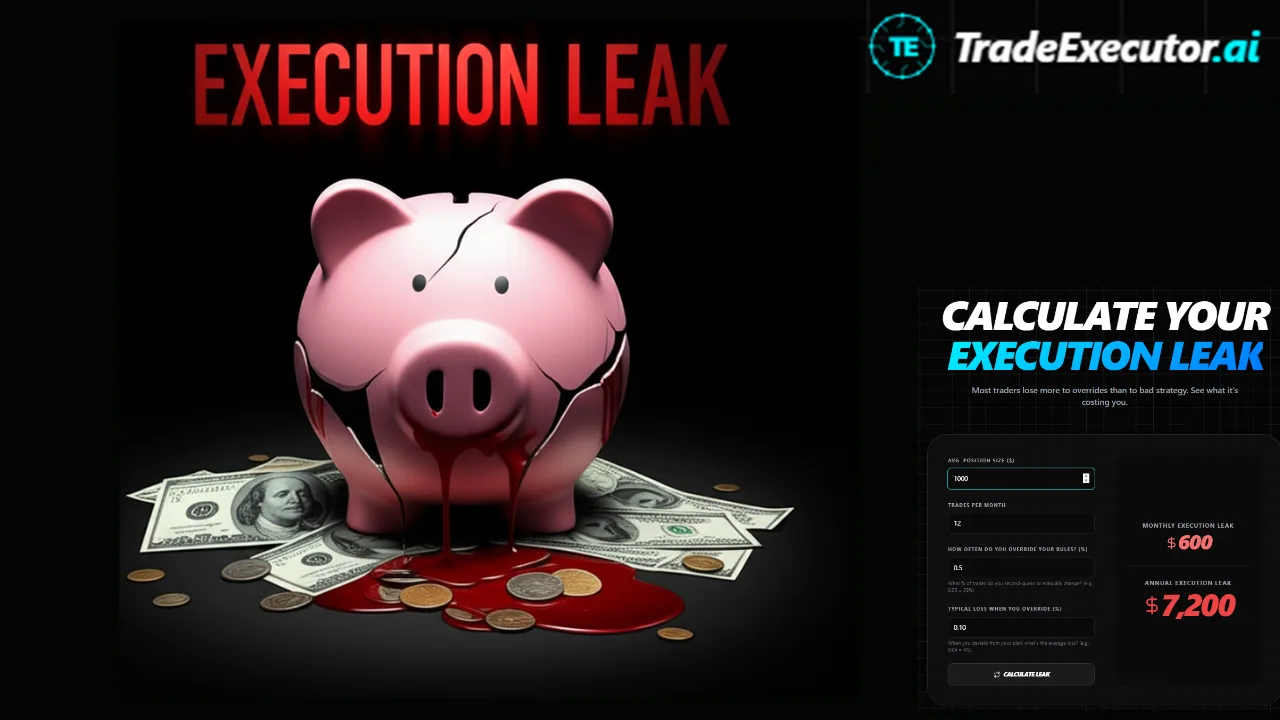
That hesitation? That's execution leak. The gap between what your strategy says to do and what you actually do. It's the silent killer of trading accounts, and it's never more deadly than when headlines are screaming.
Rules-based execution eliminates this gap entirely. When predetermined conditions are met, trades execute. No override button. No "let's see what the news says first." No emotional escape hatch that feels rational in the moment but destroys long-term performance.
The system doesn't care about Iran. It doesn't read CNBC. It follows the rules, period.
What Panic Looks Like: Discretionary vs. Automated
Let's get specific about how today's chaos plays out in real trading scenarios.
The discretionary trader sees Iran headlines and thinks:- "Maybe I should wait for more clarity on this situation"
- "Oil stocks look hot right now — should I pivot?"
- "This feels different, maybe the normal rules don't apply"
- "I'll just watch for now and jump in when things settle"
Meanwhile, the automated system:- Scans for predetermined entry conditions every second
- Executes trades when price hits specified levels
- Ignores news, sentiment, and "this time is different" thinking
- Maintains position sizing rules regardless of volatility
One approach floods your brain with variables and emotions. The other follows math. Guess which one has better long-term results?
TradeExecutor.AI was built specifically for this scenario. One strategy, one platform (TradeStation), executing the same way whether markets are boring or breaking. No discretion means no panic. No overrides means no execution leaks.
Should You Change Your Strategy When Markets Crash?
This is the question flooding trading forums right now. Iran tensions are spiking volatility, traditional correlations are breaking down, and traders are wondering if their systems still work in this environment.
The answer depends on how you built your strategy in the first place.
If you backtested only during calm markets, then yes — you have a problem. But if your strategy was developed and tested across multiple market regimes, including crisis periods, then changing it now is exactly the wrong move.
Think about it logically: the best time to test a fire escape plan isn't when the building is burning. The best time to abandon a trading strategy isn't when it's being stress-tested by real market conditions.
This is why transparency matters. You need to know how your strategy performed during the 2008 financial crisis, the 2020 COVID crash, and every other shock in between. Not just the cherry-picked good periods, but the full historical record.
A truly robust rules-based approach doesn't need modification for each new crisis. It was built to handle whatever markets throw at it, including scenarios exactly like today's Iran-driven volatility.
The Iran Test: What Separates Systems from Discretion
Every major geopolitical event becomes a stress test for trading discipline. Iran tensions joining a long list that includes Russia-Ukraine, COVID lockdowns, Brexit votes, and countless oil shocks before them.
Here's what these events reveal: systems that require human judgment during crisis aren't really systems at all. They're suggestions that get abandoned when you need them most.
True rules-based execution means the same inputs always produce the same outputs. If Iran pushes oil to $90, your system responds the same way it would respond to any technical setup at those price levels. If defense stocks gap higher, your position sizing rules apply identically to how they'd apply to any gap scenario.
The strategy doesn't know about geopolitics. It only knows about price, volume, and time. That's not a limitation — it's a feature.
TradeExecutor.AI embodies this philosophy completely. The engine executes based on predetermined rules, tested across decades of market data including every major crisis period. No emotion, no discretion, no "let's see what happens with Iran first."
Why "This Time Is Different" Is Always Wrong
The most dangerous phrase in trading isn't "I'm going all-in" or "I can't lose." It's "this time is different."
Iran tensions feel unique. The geopolitical implications seem unprecedented. The market reaction appears unlike anything we've seen before. Every crisis carries this same illusion of uniqueness that makes traders abandon proven approaches for emotional improvisation.
But markets are pattern-recognition machines. Asset prices move based on supply, demand, fear, and greed — the same forces that have driven markets for centuries. The specific catalyst changes, but the underlying mechanics remain constant.
Your strategy either works across different market environments or it doesn't work at all. There's no middle ground where it works "except during Iran crises" or "unless oil spikes too fast."
This is the power of deterministic execution. Same rules, same logic, same outcomes regardless of the crisis du jour. While discretionary traders are paralyzed by "unprecedented" conditions, rules-based systems keep executing the plan.
Calculate Your Real Execution Cost
Here's an exercise: track every trade you didn't take because of headlines over the next month. Every time your system generated a signal but you overrode it due to Iran fears, market uncertainty, or "unusual conditions."
Add up those missed opportunities. Calculate the real cost of discretionary overrides versus systematic execution. Most traders are shocked to discover their biggest losses don't come from bad trades — they come from good trades they talked themselves out of.
That gap is your execution leak, and it's probably larger than you think.
TradeExecutor.AI eliminates this gap entirely. One strategy, backtested and verified across multiple market environments. One platform in TradeStation for seamless execution. One-time payment with no ongoing discretionary decisions to second-guess.
When Iran tensions spike, oil crashes, or the next geopolitical crisis dominates headlines, the system keeps working. Because rules don't panic, and math doesn't read the news.
Tested. Trusted. Transparent.
How much is your execution leak costing you?
Most traders lose more to overrides than to bad strategy. Calculate yours in 30 seconds.
Calculate Your LeakTradeExecutor.ai — deterministic automated execution engine
← Back to Insights