SpaceX Soars, Markets Rally 370 Points: Your Strategy Still Following the Hype?
The Dow jumped 370 points today as SpaceX debuted and geopolitical tensions eased, sending traders scrambling to chase momentum. While financial media celebrates another "historic rally," experienced traders know this script: euphoria drives buying, fear drives selling, and most strategies get abandoned right when they should hold firm.
TL;DR: Market rallies and crashes expose the fatal flaw in discretionary trading—decisions based on emotion rather than tested rules. Rules-based execution systems follow predetermined criteria regardless of headlines, removing the human failure point between signal and action.Today's market surge perfectly illustrates why successful trading demands rules-based strategy execution over reactive decision-making. The difference isn't just performance—it's the elimination of execution leak, the costly gap between knowing what to do and actually doing it.
The community submitted 1 prediction for AAPL. Every week, the most popular symbol gets publicly reviewed — good or bad.
Submit a Symbol →What Happens When Your Strategy Meets Market Euphoria?
Rules-based strategies execute predetermined entry and exit criteria regardless of market sentiment. When euphoria hits, these systems evaluate current positions against backtested parameters, not CNBC headlines about SpaceX or geopolitical breakthroughs.
Discretionary traders face a different reality. Today's 370-point Dow surge creates immediate pressure: Should I chase this momentum? Is my current position too conservative? What if I miss the next leg up? These questions lead to strategy deviation—the number one killer of trading accounts.
Consider the trader holding a modest long position when markets gap up 2%. The rules-based approach checks: Does current price exceed predetermined exit levels? Are risk parameters still intact? If yes, hold. If no, exit. No emotion, no override, no second-guessing.
The discretionary trader wrestles with different demons: "This SpaceX news could run for days. Maybe I should double down." Or conversely: "This feels too good to be true. I should take profits before it reverses." Both thoughts represent strategy abandonment at the moment of truth.
"Down $200 on a day trade. Not much. But I refused to take it. 'It's only $200, it'll come back.' $200 became $400. Then $700. Then $1,200. I finally sold. Six hours of holding. Six hours of hoping...."
Should You Change Your Strategy When Markets Rally 370 Points?
No. Changing strategy during market events guarantees you'll buy tops and sell bottoms. Rules-based systems prevent this emotional trap by maintaining consistent execution criteria regardless of external catalysts.
TradeExecutor.AI demonstrates this principle through deterministic execution—same inputs always produce same outputs. Whether markets rally on SpaceX euphoria or crater on geopolitical fears, the system evaluates each signal against identical backtested parameters.
This consistency matters because market-moving events happen constantly. SpaceX debuts, oil spikes, Fed officials speak, earnings surprise—each event tempts traders to override their original plan. Rules-based execution eliminates this temptation entirely.
Professional traders understand a crucial truth: individual market days matter far less than consistent execution over hundreds of trades. Today's 370-point rally represents one data point in a series that includes tomorrow's potential reversal, next week's volatility, and next month's uncertainty.
How Does Automated Trading Handle Volatility?
Automated trading systems process volatility through predetermined algorithms that measure price movements against historical baselines. High volatility triggers tighter stop-losses or position sizing adjustments based on backtested rules, not fear or greed.
Manual traders experience volatility as emotional stress. When SpaceX news drives rapid price moves, discretionary traders must process information, evaluate options, and execute decisions under pressure. Each step introduces potential error—the wrong read on momentum, hesitation at critical moments, or impulsive position changes.
Rules-based systems like TradeExecutor.AI remove this human element entirely. Volatility becomes mathematical input: standard deviation calculations, average true range measurements, and position sizing algorithms. The system doesn't "feel" excited about SpaceX or nervous about Iran—it processes data and executes rules.
This difference becomes crucial during extended volatile periods. While traders experience fatigue, emotional burnout, and decision paralysis, automated systems maintain identical execution standards on trade 1 and trade 1,000.
14 levels from Gut to Executor. We don't expect anyone to blindly jump in — do your due diligence. Submit symbols, track your predictions, and prove your discipline.
 Start Your Path →
What Is an Execution Leak in Trading?
Execution leak represents the performance gap between your strategy's theoretical returns and actual results. Every hesitation, override, or emotional decision creates leak—the difference between knowing what to trade and actually trading it.
Research shows execution leak costs traders 2-4% annually, even when their underlying strategy performs well. The leak occurs in predictable patterns: chasing momentum after breakouts, hesitating during drawdowns, and abandoning rules during high-emotion market events like today's rally.
Consider a simple example: Your strategy signals a sell when XYZ stock hits $50. The stock reaches $49.95, then $49.98, then $50.02. A rules-based system sells at $50.02. A discretionary trader might think "It's barely above $50, maybe I should wait for $50.10 to be sure" or "This SpaceX momentum could push it higher."
That hesitation—waiting for $50.10 or hoping for more upside—creates execution leak. Over dozens of trades, these small deviations compound into significant performance drag. Rules-based execution eliminates leak by removing human judgment from execution decisions.
Why Do Traders Abandon Proven Strategies During News Events?
Traders abandon strategies during news events because human psychology mistakes noise for signal. Today's SpaceX-driven rally feels significant in the moment, creating pressure to "do something" even when the strategy calls for patience.
This abandonment pattern repeats across all market environments: traders hold losing positions too long during crashes, chase momentum during rallies, and second-guess entries during choppy markets. The underlying issue isn't market conditions—it's the gap between intellectual understanding and emotional execution.
TradeExecutor.AI addresses this gap through complete automation. The system cannot abandon strategy because it lacks the emotional capacity to doubt, hope, or fear. Every trade execution follows identical logic: evaluate signal, check parameters, execute order. No deviation, no override, no second thoughts.
Professional trading firms learned this lesson decades ago. They rely on systematic execution not because humans can't analyze markets—humans excel at analysis—but because humans struggle with consistent execution under pressure. Automation solves the execution problem permanently.
Does Rules-Based Trading Work in All Market Conditions?
Rules-based trading works by maintaining consistent execution across all market conditions, not by predicting which conditions will occur. The approach acknowledges that markets remain fundamentally unpredictable while execution remains completely controllable.
Today's SpaceX rally, tomorrow's potential reversal, and next month's uncertainty all represent external variables beyond trader control. Rules-based systems focus exclusively on controllable variables: entry criteria, exit rules, position sizing, and risk management.
This distinction matters because discretionary traders often conflate market prediction with trading success. They believe superior market analysis should produce superior results, leading to constant strategy tweaking based on recent performance. Rules-based execution takes the opposite approach: accept market uncertainty, optimize execution consistency.
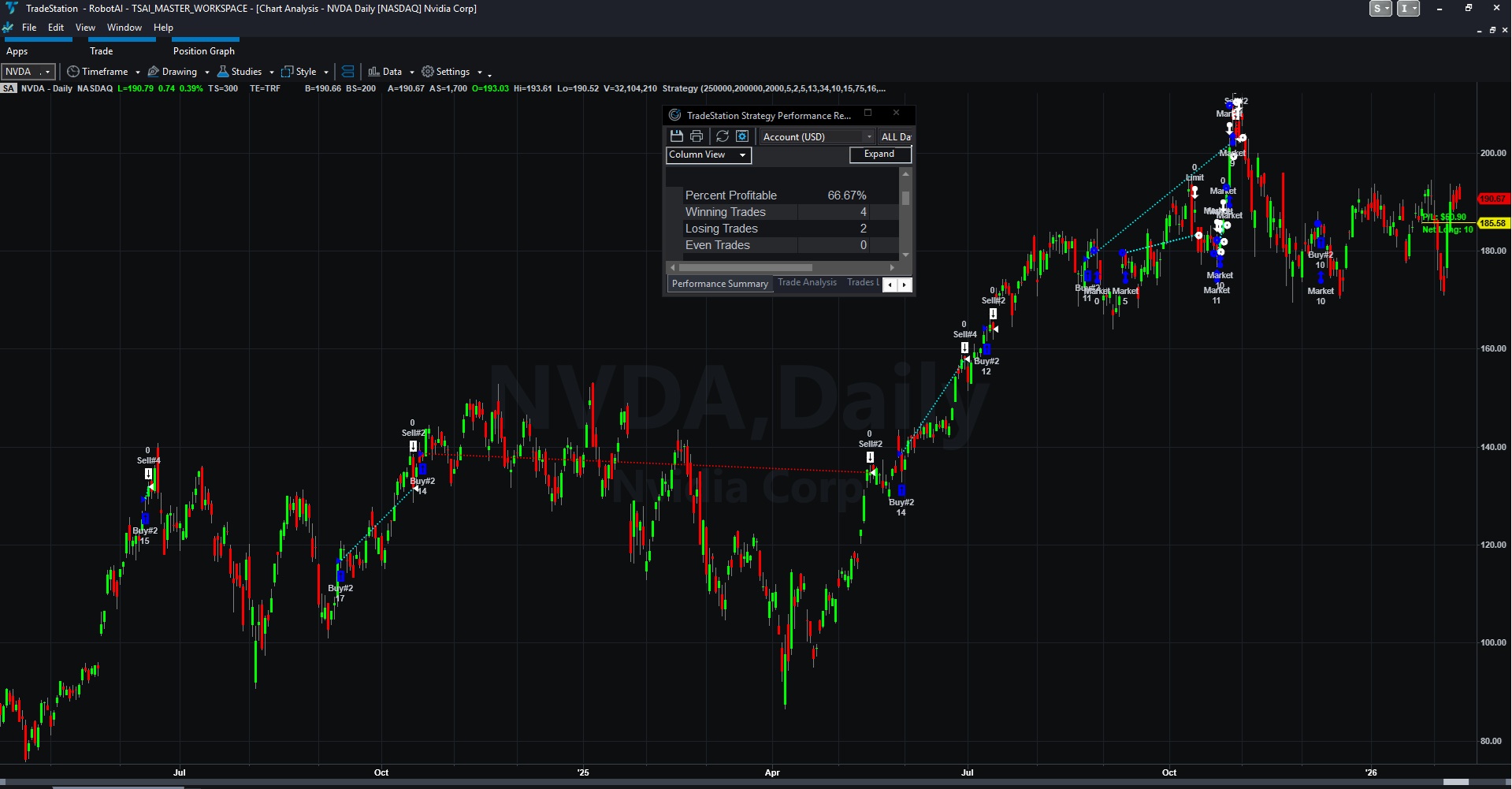
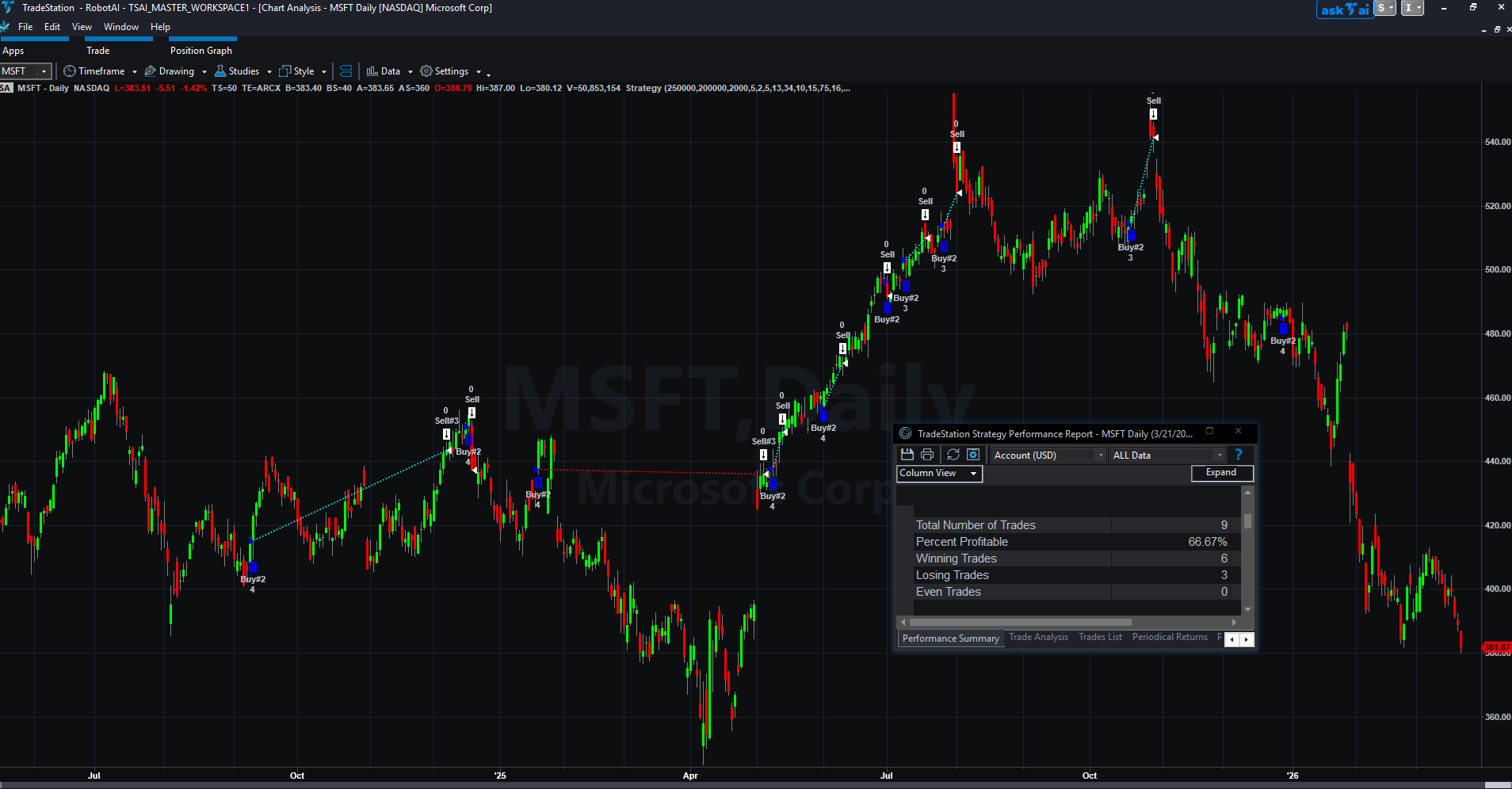
Backtesting validates this philosophy. TradeExecutor.AI's transparent performance data shows how consistent rule application performs across different market environments—bull markets, bear markets, trending conditions, and choppy periods. The strategy doesn't predict these environments; it executes identically within each.
The Real Cost of Trading Headlines
Trading headlines costs more than missed opportunities—it destroys systematic edge through inconsistent execution. Every time a trader modifies their approach based on SpaceX news, Iranian negotiations, or market euphoria, they abandon the statistical foundation that created their edge originally.
Professional money management operates on a simple principle: edge comes from systematic execution, not superior market insight. The manager running $100 million doesn't possess secret information about SpaceX or Iran—they possess superior execution discipline.
Individual traders can access this same discipline through rules-based automation. Rather than fighting emotional impulses or practicing meditation techniques, they can eliminate the human failure point entirely. The system trades rules, not headlines.
This approach requires accepting a counterintuitive truth: consistent execution of an average strategy outperforms inconsistent execution of an excellent strategy. Most traders possess adequate analytical skills but struggle with execution consistency. Automation solves the real problem.
TradeExecutor.AI represents this solution in practice: one strategy, one platform, deterministic execution. No discretion, no emotion, no override. The same inputs always produce the same outputs, whether markets rally 370 points or crash 500 points.
Ready to eliminate execution leak from your trading? Calculate how much inconsistent execution costs your performance, or explore our transparent, backtested strategy.
Tested. Trusted. Transparent.
How much is your execution leak costing you?
Most traders lose more to overrides than to bad strategy. Calculate yours in 30 seconds.
Calculate Your LeakTradeExecutor.ai — deterministic automated execution engine
← Back to Insights