Robinhood's AI Trading Push: Why Rules Beat the Hype Every Time
Robinhood just jumped into the AI trading game, sending their stock soaring as investors bet on the next big thing in automated execution. The market's buzzing with excitement about artificial intelligence revolutionizing how trades get executed.
TL;DR: While AI trading grabs headlines, rules-based execution systems deliver consistent results without the unpredictability. The same predetermined strategy executes the same way every time, eliminating the emotional whiplash that destroys accounts when hot trends cool down.Here's what most traders miss: every shiny new trading technology promises to be different, but the fundamental problem remains unchanged. Whether it's AI, machine learning, or whatever comes next, discretionary systems still leave room for failure between signal and action. A rules-based strategy removes that failure point entirely.
The community submitted 1 prediction for AAPL. Every week, the most popular symbol gets publicly reviewed — good or bad.
Submit a Symbol →Does Robinhood's AI Move Change Your Trading Rules?
No, market news shouldn't alter your predetermined trading rules — that's exactly why rules exist. When Robinhood announces AI features or any broker launches new technology, disciplined traders stick to their tested systems rather than chasing the latest development.
Rules-based execution operates on a simple principle: if the conditions are met, the trade executes. Period. No consideration for whether Robinhood's stock jumped 8% today or whether AI trading is trending on financial Twitter. The strategy that worked through 500 backtested scenarios doesn't suddenly become invalid because one company made an announcement.
This is where most traders fail. They see headlines about AI revolutionizing trading, then start second-guessing their proven approach. They wonder if they should incorporate AI signals, adjust their position sizes, or wait to see how the new technology performs. Each consideration adds another decision point where emotions can derail execution.
"Down $200 on a day trade. Not much. But I refused to take it. 'It's only $200, it'll come back.' $200 became $400. Then $700. Then $1,200. I finally sold. Six hours of holding. Six hours of hoping...."
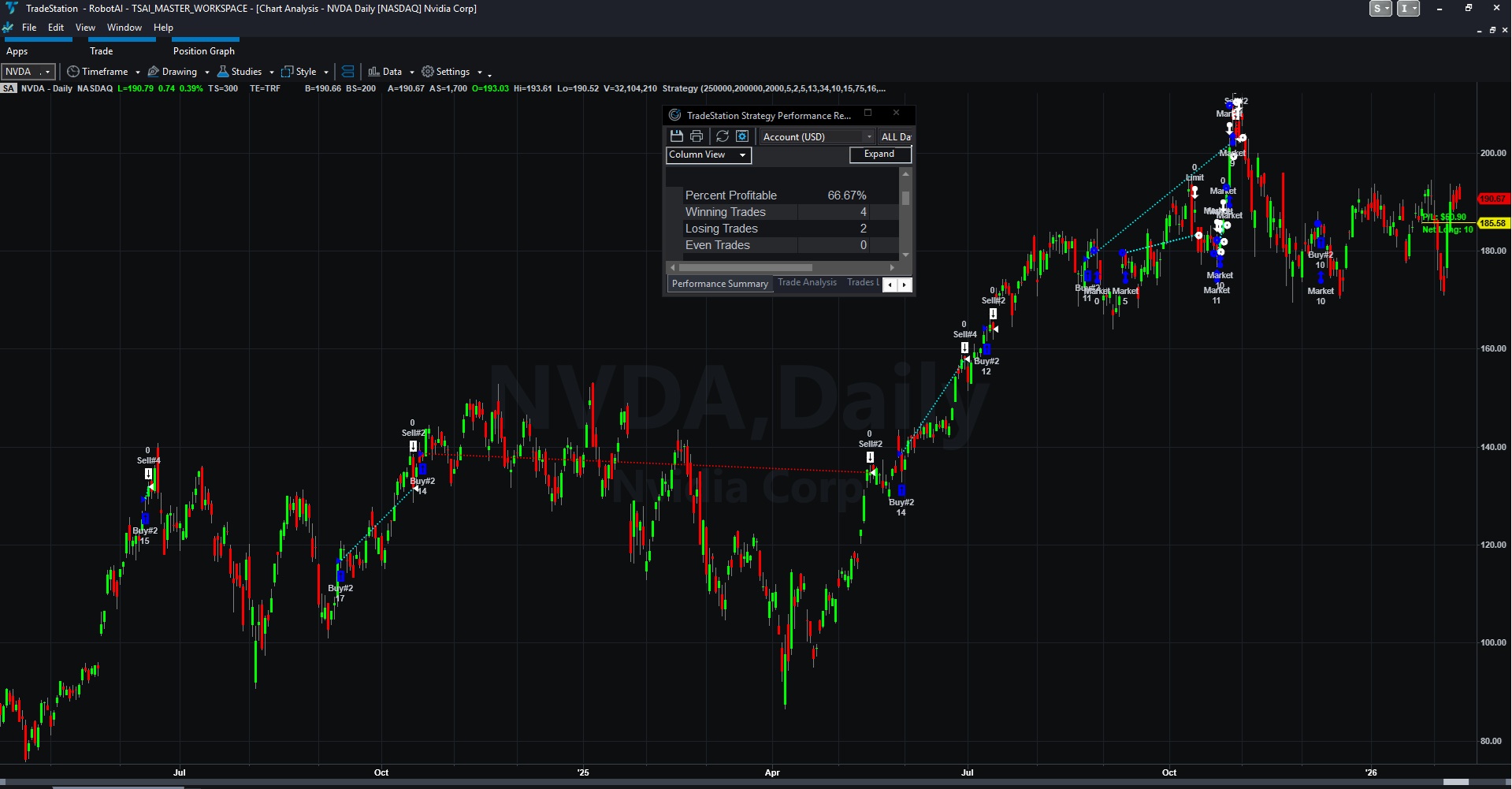
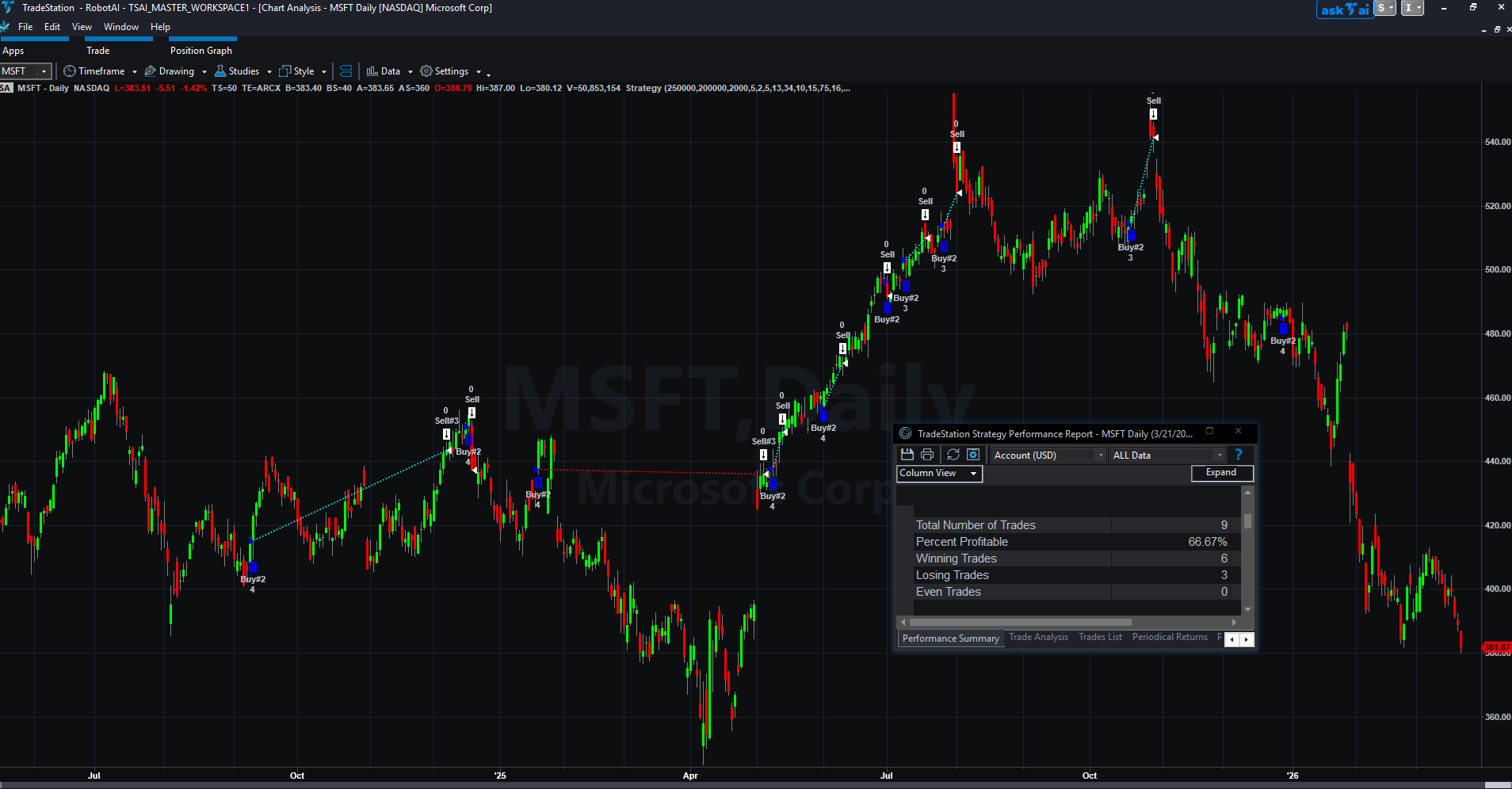
What Happens When Traders Chase AI Trading Trends?
Traders who chase AI trends typically abandon their tested strategies mid-stream, creating execution gaps that destroy consistent performance. They start with a profitable system, then layer on AI signals, machine learning filters, or "smart" position sizing that sounds impressive but lacks systematic testing.
Consider the trader who's been profitable with a simple breakout strategy. Robinhood announces AI features, the stock jumps, and suddenly that trader thinks they need artificial intelligence to stay competitive. They sign up for AI signal services, start adjusting their entries based on machine learning predictions, or begin using "intelligent" stop losses that adapt to market conditions.
Within weeks, their performance deteriorates. Not because their original strategy stopped working, but because they introduced variables that weren't part of their tested system. The AI signals conflict with their breakout rules. The machine learning predictions create hesitation at entry points. The adaptive stops trigger at different levels than their backtested system expected.
Meanwhile, the rules-based trader continues executing the same strategy that generated consistent profits before Robinhood's announcement. Same entry conditions, same exits, same position sizing. The market noise changes, but the execution remains identical.
How Does Automated Trading Handle Market Hype Differently?
Automated systems ignore market hype completely because they can't process emotional information — only predetermined data inputs. When news breaks about AI trading or any market development, automated execution continues following its programmed rules without deviation.
This creates a stark contrast with discretionary trading. A human trader sees Robinhood's AI announcement, reads analyst commentary about the future of automated trading, and starts questioning their current approach. Should they increase position sizes because AI is the future? Should they reduce exposure because everyone's jumping on the trend? Should they wait to see how this plays out?
These questions don't exist in automated execution. The system receives price data, volume data, and technical indicators. It processes these inputs through predetermined logic and executes trades when conditions align. There's no mechanism for processing news sentiment, analyst opinions, or market trends unless they're specifically coded into the strategy.
TradeExecutor.AI exemplifies this approach: one strategy, one platform, deterministic execution. The same inputs always produce the same outputs, regardless of whether Robinhood announces AI features or any other market development occurs. The system tested this strategy through thousands of market scenarios, including periods of technological disruption and competitive announcements.
14 levels from Gut to Executor. We don't expect anyone to blindly jump in — do your due diligence. Submit symbols, track your predictions, and prove your discipline.
 Start Your Path →
Should You Switch Platforms When Competitors Launch New Features?
Platform switching based on competitor announcements typically disrupts proven performance more than it improves results. Traders who chase new features often sacrifice the consistency that made their original setup profitable.
Every platform switch introduces execution variables that didn't exist in your tested system. Different order types, altered latency, modified data feeds, adjusted commission structures. These changes might seem minor, but they can significantly impact strategy performance when multiplied across hundreds of trades.
The rules-based approach focuses on execution consistency rather than feature collection. TradeStation provides the infrastructure needed for systematic strategy execution: reliable data, consistent order handling, and transparent performance tracking. Adding AI features, social trading capabilities, or other innovations doesn't necessarily improve these core requirements.
This doesn't mean ignoring technological advancement, but rather evaluating changes based on systematic impact rather than marketing excitement. Does the new feature improve execution accuracy? Does it reduce slippage? Does it provide better data quality? These questions matter more than whether the feature uses artificial intelligence or machine learning.
What Is an Execution Leak in AI Trading Systems?
Execution leaks in AI systems occur when algorithms make discretionary adjustments that weren't part of the original testing, creating performance gaps between backtested and live results. These leaks are often larger in AI systems because the decision-making process involves layers of complexity that can't be perfectly replicated.
Traditional execution leaks happen when traders deviate from their rules — entering late, exiting early, or skipping trades based on gut feelings. AI trading systems create different types of leaks: algorithms that adapt to recent market conditions, machine learning models that evolve beyond their training data, or "smart" features that override signals based on market sentiment analysis.
The promise of AI is that it learns and improves over time. The problem is that any learning means the system executing trades today is different from the system that generated your backtested results. Your 12-month backtest showed 15% returns, but the AI has been "learning" for three months since you started trading live. The current algorithm bears little resemblance to the one that produced those historical results.
Rules-based execution eliminates this problem by maintaining identical logic from backtest through live trading. The strategy that executed 1,000 historical trades continues executing future trades with the same logic, same entry conditions, same exit rules. No adaptation, no learning, no evolution that creates gaps between tested and live performance.
Why Do Rules Work When AI Predictions Fail?
Rules work because they're based on repeated market patterns that have shown statistical edges over extended periods, while AI predictions often optimize for recent data that may not represent future conditions. A rule like "buy breakouts above 20-day highs with volume 150% above average" remains valid regardless of market regime changes or technological announcements.
AI predictions attempt to find complex patterns in market data, often discovering relationships that exist in historical data but fail in live markets. The system might learn that certain combinations of technical indicators predict upward moves with 68% accuracy during the training period. But market conditions change, correlation relationships shift, and that 68% accuracy drops to 45% in live trading.
Rules-based strategies focus on simple, robust patterns that persist across different market environments. These strategies don't try to predict market direction with high accuracy. Instead, they identify setups where the risk-reward ratio favors profitable outcomes over many trades, even with lower individual accuracy rates.
This approach proved itself through decades of systematic trading before AI became fashionable. Trend following systems, breakout strategies, and mean reversion approaches generated consistent profits by following simple rules rather than making complex predictions about market direction.
The key insight: successful systematic trading depends more on consistent execution than accurate prediction. A mediocre strategy executed perfectly often outperforms a sophisticated strategy executed inconsistently.
TradeExecutor.AI applies this principle by focusing on one thoroughly tested strategy rather than attempting to optimize predictions through artificial intelligence. The system executes the same rules that generated profits in backtesting, ensuring that live performance matches historical results.
Rules cut through the hype. They work when AI stocks jump, when competitors launch new features, and when the next trading innovation captures headlines. Same strategy, same execution, same results.
Tested. Trusted. Transparent.
How much is your execution leak costing you?
Most traders lose more to overrides than to bad strategy. Calculate yours in 30 seconds.
Calculate Your LeakTradeExecutor.ai — deterministic automated execution engine
← Back to Insights