When Markets Surge 600 Points, Are You Following Rules or Riding Hype?
The Dow just surged 600 points on news of "productive" U.S.-Iran talks. Social media is buzzing with victory laps. CNBC commentators are calling it a "relief rally." And somewhere, a trader is staring at their screen thinking, "Should I jump in now?"
This is exactly the moment that separates rules-based traders from emotion-driven ones. While the market celebrates diplomatic progress, the real question isn't whether this rally will continue—it's whether your trading decisions are driven by headlines or by rules-based strategy that's been tested across all market conditions.
Bull markets make everyone feel like a genius. But when the celebration stops and volatility returns, only the traders who stuck to their rules will still be standing.
The community submitted 1 prediction for AAPL. Every week, the most popular symbol gets publicly reviewed — good or bad.
Submit a Symbol →The Anatomy of a News-Driven Rally
Today's 600-point surge is textbook market psychology. Fear turns to relief. Relief turns to buying. Buying creates momentum. And momentum creates the illusion that "this time is different."
But here's what the headlines don't tell you: productive talks can stall. Diplomatic progress can reverse. Market euphoria can evaporate faster than it appeared. The traders buying at today's highs based on Iran headlines will be the same ones selling at tomorrow's lows when the next crisis hits.
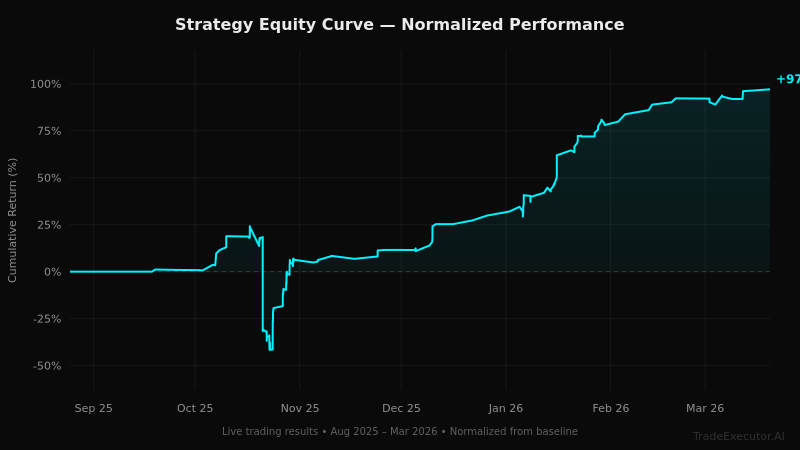
A rules-based execution system doesn't care about Iran. It doesn't read CNBC. It doesn't get caught up in relief rallies or panic sells. It follows predetermined entry and exit criteria that were backtested across decades of similar events—including the dozens of times "productive talks" led absolutely nowhere.
"Down $200 on a day trade. Not much. But I refused to take it. 'It's only $200, it'll come back.' $200 became $400. Then $700. Then $1,200. I finally sold. Six hours of holding. Six hours of hoping...."
What Happens When Emotions Override Systems
Let's get specific about how today plays out for two different traders:
Discretionary Trader Sarah sees the rally, feels the FOMO, and decides to "add risk" because "tensions are easing." She overrides her usual position sizing, buys more contracts than her rules allow, and tells herself she'll "take profits quickly." By market close, she's up 3%. She feels vindicated. She posts on Twitter about her "great read" on geopolitics. Automated System Mike has his strategy running on TradeStation through TradeExecutor.AI. The system sees the same price action but evaluates it against its rules: trend strength, volume patterns, risk parameters. If the rules trigger a buy, it executes. If they don't, it waits. No CNBC. No emotions. No overrides.Three weeks later, when Iran talks stall and the market gives back the entire rally, Sarah is underwater and angry. Mike's system either caught the move within its rules or avoided it entirely—but it never violated its risk management for a headline.
The Execution Leak Nobody Talks About
Here's the dirty secret about discretionary trading: the gap between your strategy and your execution widens precisely when it matters most. During today's rally, that gap costs you in position sizing mistakes, late entries, and early exits driven by fear of giving back gains.
This execution leak—the difference between what your strategy says to do and what you actually do—compounds over time. A 2% leak per month doesn't sound like much until you realize it's eating 24% of your annual returns.
Rules-based systems eliminate this leak entirely. Same inputs, same outputs, every time. The system that bought crude oil during the 2008 crash bought it for the same reasons it would buy today—not because of headlines, but because price and volume met specific, backtested criteria.
Should You Change Your Strategy When Markets Rally on News?
This is the question every trader faces during events like today's Iran-driven surge. The short answer: if you're changing your strategy based on one day's headlines, you never had a strategy to begin with.
Real strategies are built to handle noise—including 600-point rallies that feel significant but represent less than 2% of the Dow's value. They're tested across bull markets, bear markets, and the choppy mess in between.
The urge to "adjust" your approach after big market moves is exactly backwards. If your strategy worked during the Iran tensions that caused last week's selling, why would you abandon it during this week's relief rally? Market conditions didn't fundamentally change—only the headlines did.
TradeExecutor.AI runs the same rules-based strategy whether the market is up 600 points or down 600 points. It doesn't have opinions about Iran, inflation, or interest rates. It has rules that have been backtested across thousands of similar scenarios.
Why One Strategy, One Platform Actually Matters
The temptation during big market moves is to complicate things. Add indicators. Switch timeframes. Try new platforms. Chase the setup that would have caught today's move perfectly.
This is how profitable traders become broke traders.
TradeExecutor focuses on one proven strategy executed on one reliable platform—TradeStation. Not because we lack imagination, but because consistency beats complexity every single time. The traders who succeed long-term aren't the ones who caught every rally—they're the ones who followed their rules through every rally.
When you're running a single, backtested approach through one execution engine, there's no room for the performance-killing decisions that discretionary traders make during high-emotion days like today. No platform-switching. No strategy-tweaking. No second-guessing.
The Real Test Isn't Today—It's Tomorrow
Today's 600-point rally feels important because it's happening right now. But the real test of any trading approach isn't how it handles the obvious moves—it's how it performs across the mundane, grinding days that make up 90% of market action.
Relief rallies are easy to spot in hindsight. The challenge is building a system that captures them when they align with your rules while avoiding the head fakes that look identical until they collapse.
This is why backtested, rules-based execution matters. Not for today's obvious move, but for the thousand subtle decisions that determine whether you're profitable next year. While other traders are celebrating or lamenting today's action, systematic traders are focused on tomorrow's consistent execution.
The market will give you plenty more opportunities to prove your discipline. The question is whether you'll be ready with rules that work, or still chasing headlines that don't.
TradeExecutor.AI eliminates the guesswork, the emotions, and the execution gaps that turn winning strategies into losing accounts. One strategy. One platform. One focus: consistent, rules-based execution that works regardless of what Iran, the Fed, or any other headline throws at the market.
Tested. Trusted. Transparent.How much is your execution leak costing you?
Most traders lose more to overrides than to bad strategy. Calculate yours in 30 seconds.
Calculate Your LeakTradeExecutor.ai — deterministic automated execution engine
← Back to Insights