The Iran Ceasefire Surge: Why Your Strategy Should Ignore Headlines
The S&P 500 jumped today on reports that negotiators reached a deal to extend the Iran ceasefire, but traders remain cautious about the durability of any agreement. Markets hate uncertainty, and geopolitical developments create the exact emotional volatility that destroys consistent execution.
TL;DR: Headlines create execution leaks because human traders override their systems based on news. A properly designed rules-based strategy ignores geopolitical noise and follows predetermined parameters, regardless of whether Iran makes peace or prepares for conflict.The fundamental question every trader faces during news-driven volatility: Does your strategy follow rules, or does it follow hype?
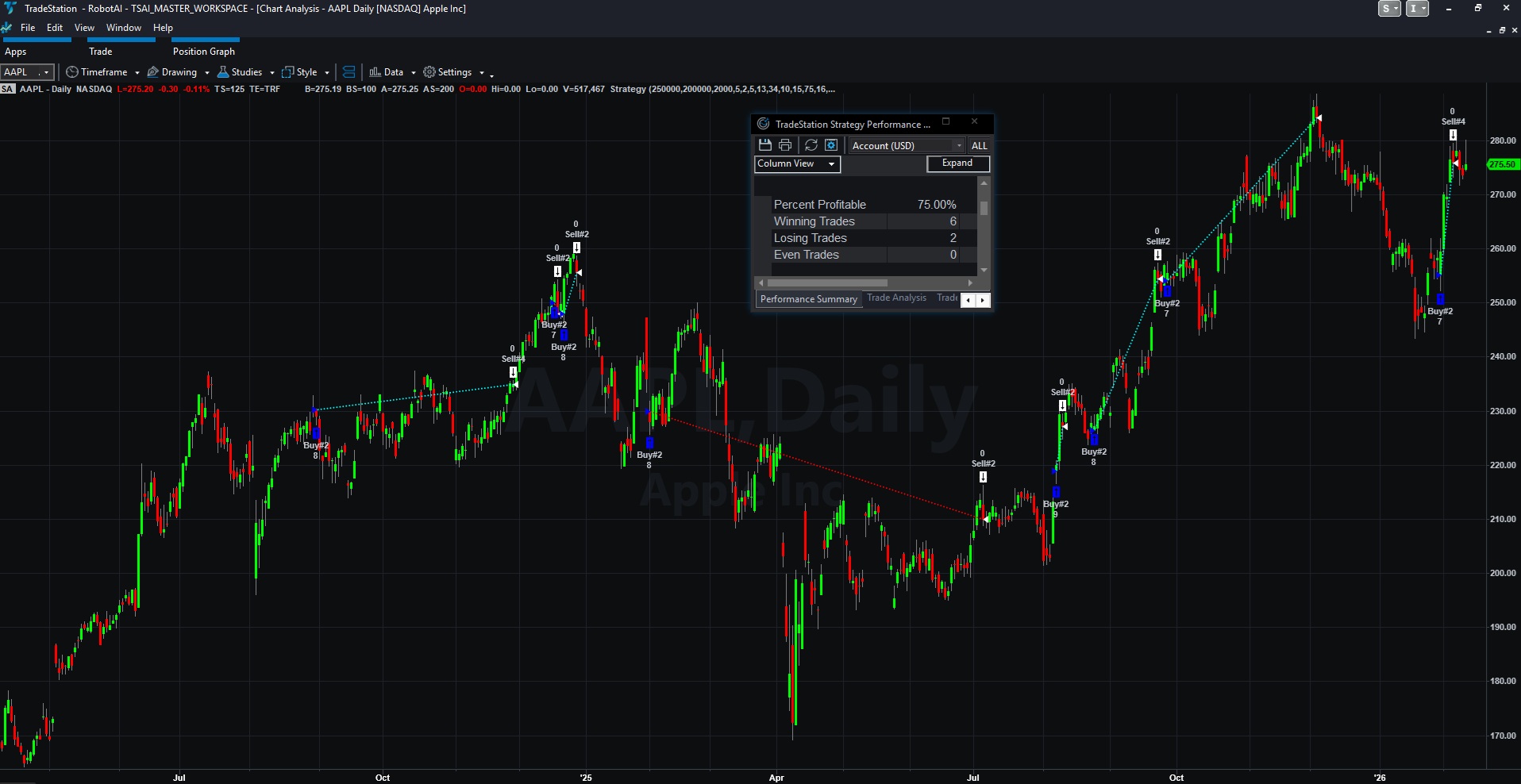
The community submitted 1 prediction for AAPL. Every week, the most popular symbol gets publicly reviewed — good or bad.
Submit a Symbol →What Happens When Traders React to Geopolitical Headlines?
Human traders consistently make the same mistakes when headlines hit. They abandon their predetermined entry and exit points, convinced that "this time is different" because of some Middle East development or trade negotiation update.
Consider today's scenario: The S&P 500 rises on Iran ceasefire optimism. A discretionary trader might think "Peace is good for markets, I should increase my position size" or "This rally might continue, let me hold longer than my rules suggest." Both decisions introduce execution leaks—the gap between what your strategy says to do and what you actually do.
The data on geopolitical market reactions reveals a clear pattern: initial headline moves often reverse within 48-72 hours as traders realize the fundamental economic picture hasn't changed. Iran ceasefire talks have started and stalled dozens of times over the past decade. Each time, traders who chased the headline move faced whipsaw losses.
"Down $200 on a day trade. Not much. But I refused to take it. 'It's only $200, it'll come back.' $200 became $400. Then $700. Then $1,200. I finally sold. Six hours of holding. Six hours of hoping...."
Should You Change Your Strategy When Geopolitical News Breaks?
No. Changing your strategy parameters based on headlines transforms systematic trading into emotional gambling.
Your trading rules exist precisely because they've been backtested across multiple geopolitical events. If your strategy performed well during the 2019 Iran tensions, the 2020 Soleimani killing, and the 2021 nuclear deal negotiations, then today's ceasefire news doesn't require strategy modifications.
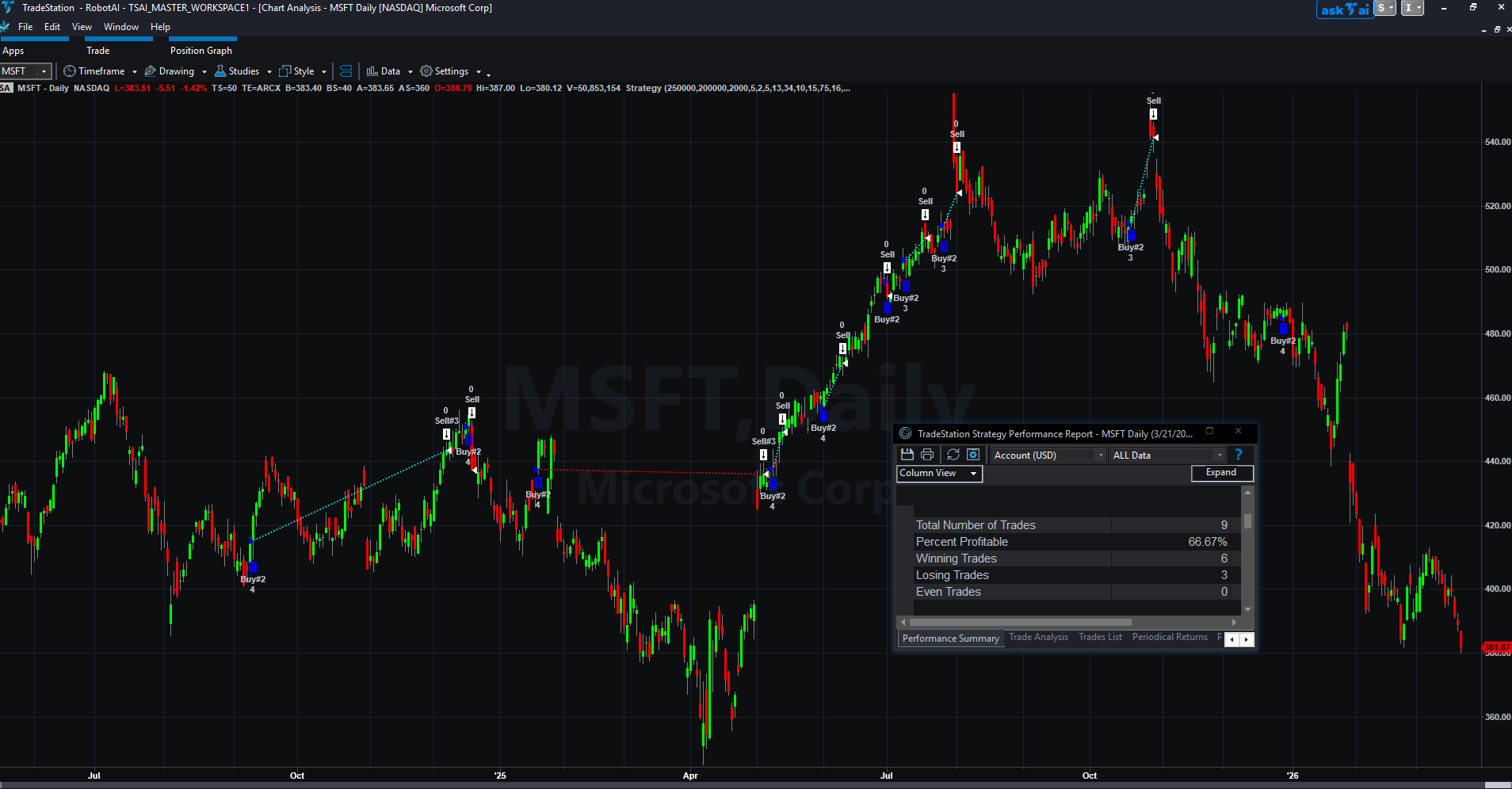
TradeExecutor.AI operates on this principle: the same inputs always produce the same outputs, regardless of whether the news cycle features Iran, China, or any other geopolitical flashpoint. The system doesn't check CNN before placing trades because incorporating news sentiment introduces unpredictable variables that can't be properly backtested.
Rules-based execution means your position sizing, entry triggers, and exit conditions remain constant whether the market rises on peace talks or falls on conflict escalation. The strategy that works across multiple market cycles doesn't need real-time news adjustments.
How Does Automated Trading Handle Volatility?
Automated systems treat volatility as a measurable input, not an emotional trigger. When the S&P 500 moves 1.2% in an hour on Iran news, the system calculates whether this movement meets predetermined criteria for entry, exit, or position adjustment.
Consider the difference in execution:
Human trader response: "Markets are up on peace talks, but traders seem wary. Maybe I should take partial profits in case this reverses, but also maybe I should add to winners since momentum looks strong..." Rules-based system response: Price movement exceeds the 1.1% threshold in the specified timeframe. Exit condition triggered. Position closed at predetermined price level.The automated approach removes the paralysis of analysis. While human traders debate the sustainability of Iran ceasefire negotiations, the system executes based on price action and predetermined risk parameters. Geopolitical context becomes irrelevant because the rules account for volatility patterns regardless of their underlying cause.
Execution speed matters during volatile periods. Automated systems place orders within milliseconds of trigger conditions, while human traders spend crucial minutes analyzing headlines and second-guessing their rules.
14 levels from Gut to Executor. We don't expect anyone to blindly jump in — do your due diligence. Submit symbols, track your predictions, and prove your discipline.
 Start Your Path →
What Is an Execution Leak in Trading?
An execution leak represents the performance gap between your strategy's theoretical results and your actual trading results. Every time you deviate from predetermined rules—whether due to news, emotions, or market sentiment—you create an execution leak.
Today's Iran news creates classic execution leak conditions. Traders see the headlines, feel the urge to "do something," and override their systematic approach. The trader who normally risks 2% per trade might risk 3% because "this peace deal could be huge" or reduce to 1% because "geopolitical situations are unpredictable."
Research from multiple trading firms shows that execution leaks typically cost systematic traders 2-4% annually in performance. During volatile periods driven by geopolitical events, these leaks can expand to 6-8% as emotional decision-making increases.
TradeExecutor.AI eliminates execution leaks by removing human intervention from the trade execution process. The system doesn't experience optimism about peace deals or pessimism about conflict escalation. Every trade follows the identical decision tree, producing consistent results that match backtested expectations.
Why One Strategy Outperforms Strategy Switching?
Successful trading requires choosing one well-tested approach and executing it consistently across all market conditions. Strategy switching based on news events destroys the statistical edge that systematic approaches provide.
Traders often maintain multiple strategies for different market environments: one for "normal" times, another for "geopolitical volatility," and a third for "trending markets." This approach sounds sophisticated but creates more problems than it solves. Deciding which strategy to use introduces subjective judgment that wasn't part of the original backtests.
The Iran ceasefire example illustrates this problem perfectly. Is today's market movement "geopolitical volatility" requiring defensive positioning, or "trending market conditions" calling for momentum strategies? Different traders will classify the same market environment differently, leading to inconsistent execution.
One properly designed strategy handles multiple market conditions because it's built on price action patterns that repeat regardless of the underlying news catalyst. The same momentum breakout pattern that works during earnings season also works during geopolitical developments.
Does TradeStation Integration Matter for News Events?
Platform integration becomes critical during high-volatility periods when execution speed determines trade profitability. TradeExecutor.AI's focus on TradeStation creates seamless order execution without the delays that plague multi-platform solutions.
When markets move quickly on breaking news like Iran ceasefire developments, every second counts. Systems that require data transfers between multiple platforms or manual order entry create execution delays that compound during volatile periods.
TradeStation's direct market access combined with TradeExecutor's automation means orders execute at the exact price levels specified by your rules, not at prices delayed by platform switching or manual intervention. This integration proves especially valuable during the first 30 minutes after major headlines when bid-ask spreads widen and prices gap frequently.
The one-platform approach also eliminates the temptation to manually override trades through alternative brokers. When your automated system and your execution platform operate as a unified system, the gap between signal and action disappears completely.
Ready to Stop Reacting to Headlines?
Today's Iran ceasefire rally will fade into market history alongside hundreds of other geopolitical headlines that seemed crucial at the time. The traders who abandoned their systematic approach to chase today's news will face the same decision tomorrow when different headlines create different emotional pressures.
Rules-based execution offers a better path: one strategy, thoroughly backtested across multiple geopolitical cycles, executed without deviation regardless of headline sentiment. TradeExecutor.AI provides this consistency through deterministic trade execution that produces identical results from identical market conditions.
Calculate your current execution leak by comparing your actual trading results to your strategy's backtested performance. The difference represents the cost of human intervention in your systematic approach.
Tested. Trusted. Transparent.
How much is your execution leak costing you?
Most traders lose more to overrides than to bad strategy. Calculate yours in 30 seconds.
Calculate Your LeakTradeExecutor.ai — deterministic automated execution engine
← Back to Insights