When Trump Trades Make Headlines: Rules vs. Hype in Automated Trading
Thousands of stock trades tied to Trump are raising eyebrows across financial media this week, as the BBC reports on unusual market activity following political developments. The trading patterns show classic signs of emotional, reactive decision-making — exactly the kind of behavior that destroys long-term returns.
TL;DR: Political headlines create market noise that triggers emotional trading decisions. Rules-based automated systems execute the same strategy regardless of news, removing the human failure point between market signals and trade execution. Deterministic trading follows predetermined logic, not breaking news or market sentiment.Markets don't care about your political opinions, your stress level, or what CNN said this morning. They respond to one thing: systematic execution of proven strategies. When headlines scream and social media explodes, successful traders rely on their rules-based strategy rather than knee-jerk reactions to news cycles.
The community submitted 1 prediction for AAPL. Every week, the most popular symbol gets publicly reviewed — good or bad.
Submit a Symbol →Does Your Trading Strategy Follow Rules or React to Headlines?
Rules-based trading systems execute predetermined logic regardless of external noise. Political headlines, market crashes, or celebrity stock picks don't change the mathematical relationships that drive profitable strategies. A properly designed automated system treats Trump-related trades the same way it treats any other market movement — through the lens of tested, backtested parameters.
Discretionary traders face a different reality. They see headlines about suspicious trading activity and immediately start questioning their positions. Should they exit early? Should they avoid certain sectors? Should they increase position sizes to capitalize on volatility? These questions lead to execution leaks — the gap between what your strategy says to do and what you actually do.
Consider the typical trader's response to political trading news: check positions, read more articles, maybe adjust stops, possibly override planned entries. Each decision point introduces emotion, bias, and inconsistency. The trader who built a profitable strategy in backtesting becomes the same trader who destroys that edge through discretionary overrides.
"Down $200 on a day trade. Not much. But I refused to take it. 'It's only $200, it'll come back.' $200 became $400. Then $700. Then $1,200. I finally sold. Six hours of holding. Six hours of hoping...."
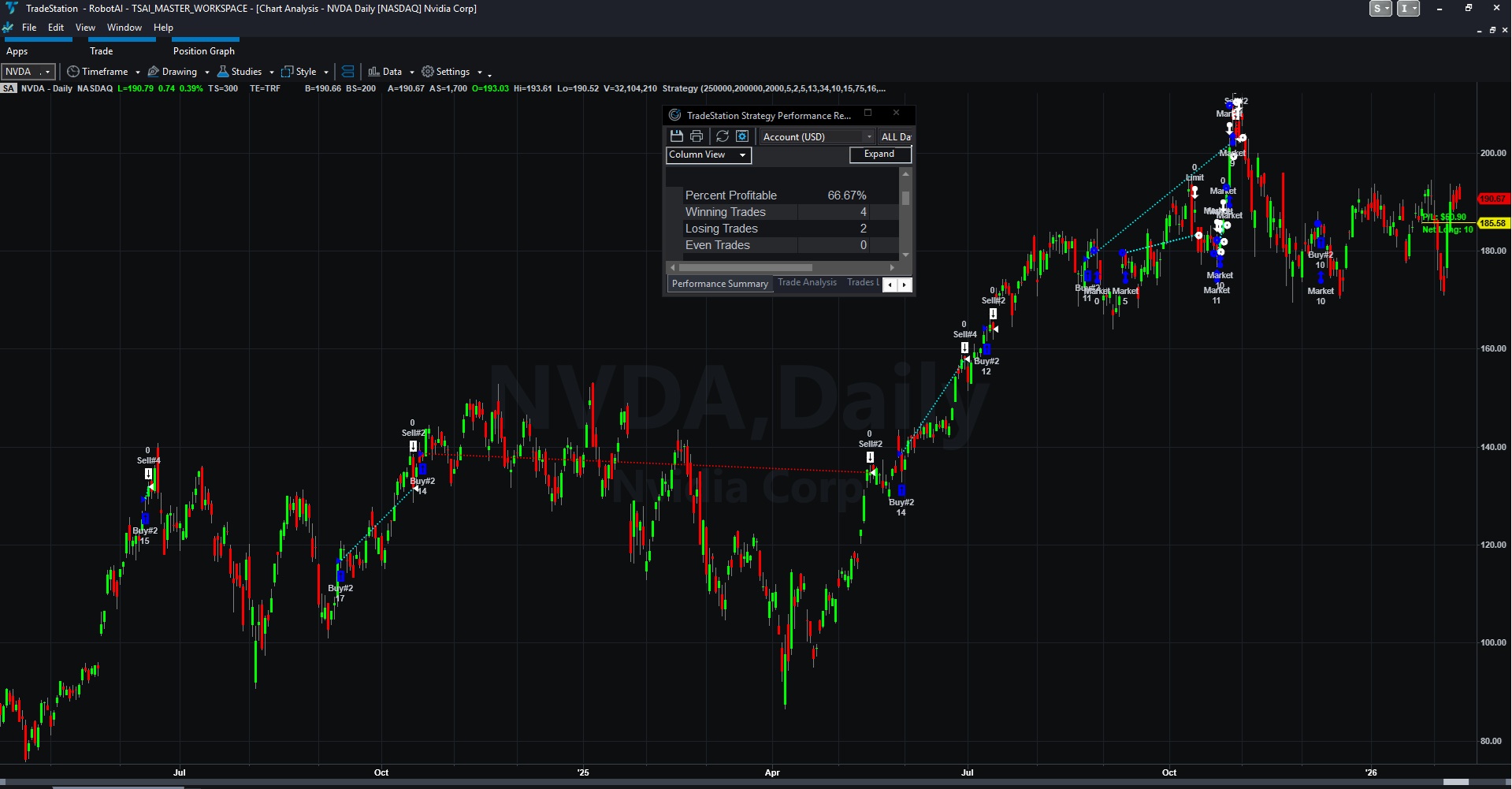
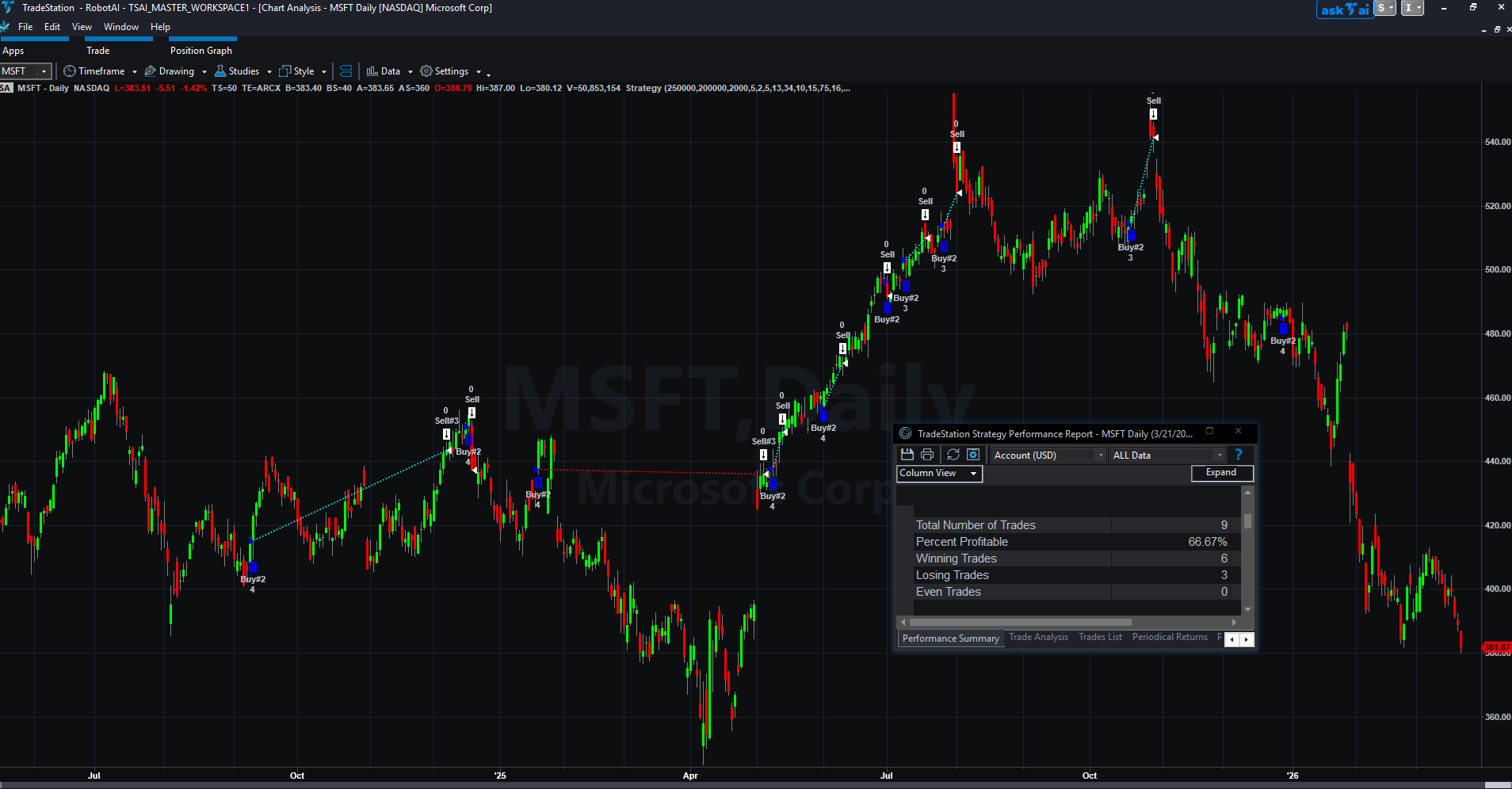
What Happens When Automated Systems See Political Trading News?
Automated trading systems process political headlines as irrelevant data. TradeExecutor.AI doesn't read BBC articles, check Twitter sentiment, or adjust parameters based on Trump trade investigations. The system follows the same logical sequence: evaluate market conditions against predefined criteria, execute trades when conditions align, manage positions according to tested rules.
This deterministic approach means identical market conditions always produce identical responses. If the strategy calls for a long position when specific technical criteria align, the system enters that position whether the news cycle focuses on Trump trades, Federal Reserve announcements, or alien invasions. The mathematical relationships that create trading edges don't change based on political developments.
Human traders struggle with this concept. They want their trading system to be "smart" enough to avoid positions during controversial periods. They believe market context should influence execution timing. This thinking transforms a rules-based strategy into a discretionary one, introducing the exact emotional variables that automated systems exist to eliminate.
The power of automated execution lies in its indifference to market narratives. Political trading investigations create volatility, but volatility isn't inherently good or bad for systematic strategies. The system evaluates volatility as a measurable parameter, not as a reason to panic or celebrate.
How Does Automated Trading Handle Market Volatility Differently Than Humans?
Automated systems treat volatility as a mathematical input, not an emotional trigger. When Trump-related trades create market swings, automated execution engines measure those swings against historical parameters and adjust position sizing accordingly. High volatility might trigger smaller position sizes or wider stops, but these adjustments follow predetermined rules, not real-time fear.
Human traders experience volatility as stress. They see their account balance fluctuating and start making decisions based on comfort levels rather than strategy logic. A trader might exit a profitable position early because political news makes them nervous, or hold a losing position too long because they believe the news cycle will reverse. These emotional responses create execution leaks that compound over time.
TradeExecutor.AI processes volatility through backtested algorithms that have seen thousands of market conditions. Political scandals, economic announcements, and black swan events all become data points rather than decision catalysts. The system doesn't experience fear when positions move against it or greed when profits accumulate quickly.
This mechanical approach to volatility management prevents the behavioral mistakes that destroy trading accounts. The trader who manually overrides their system during volatile periods often discovers they sold the bottom or bought the top — classic emotional timing mistakes that automated systems avoid through consistent rule application.
Should You Change Your Trading Strategy When Political News Creates Market Chaos?
Never modify a tested strategy based on current news cycles. Political developments represent temporary market noise, while profitable trading strategies exploit persistent mathematical relationships that exist across multiple news cycles, political administrations, and market conditions.
Traders who adjust their strategies based on Trump trade investigations or similar headlines make a fundamental error: they assume current events require strategic changes. This thinking leads to constant strategy modifications that prevent proper performance evaluation. How can you determine if your original strategy works if you keep changing it based on news?
Successful systematic trading requires the discipline to maintain consistent execution regardless of external events. The same strategy that worked during Obama's presidency, Trump's first term, and Biden's administration will continue working because markets operate on mathematical principles that transcend political cycles.
The urge to modify strategies during volatile periods stems from the illusion of control. Traders believe they can improve performance by incorporating current events into their decision-making process. In reality, this approach destroys the statistical edge that backtesting revealed by introducing untested variables into proven systems.
What Is an Execution Leak in Trading?
Execution leaks represent the performance gap between backtested strategy results and actual trading outcomes. These leaks occur when traders deviate from their predetermined rules due to emotions, news events, or second-guessing. Political headlines like Trump trade investigations create massive execution leaks as traders override their systems based on fear or speculation.
Common execution leaks include: taking profits earlier than the strategy dictates, avoiding trades because the news feels bearish, increasing position sizes during winning streaks, and modifying stops based on market sentiment. Each deviation from the tested strategy introduces variables that weren't present during backtesting, invalidating the performance expectations.
TradeExecutor.AI eliminates execution leaks through deterministic rule enforcement. The system cannot experience fear during drawdowns or excitement during winning periods. It executes the exact same logic that produced backtested results, ensuring real-world performance matches historical expectations within statistical variance.
Measuring execution leaks requires comparing actual trades against what the strategy should have executed. Traders often discover their discretionary overrides reduced returns significantly, even when individual override decisions seemed logical at the time. The cumulative effect of small deviations compounds into substantial performance degradation.
Why Do Rules-Based Systems Outperform During Market Uncertainty?
Rules-based systems maintain consistent execution when human psychology fails most dramatically. Political trading scandals, market crashes, and economic uncertainty trigger emotional responses that cloud judgment and create poor timing decisions. Automated systems process these events as data points rather than emotional triggers.
Uncertainty paralyzes discretionary traders who struggle to distinguish between meaningful signals and temporary noise. They delay trade entries waiting for "clearer" market conditions, exit positions prematurely to avoid potential losses, or freeze entirely until volatility subsides. These responses guarantee missing profitable opportunities and crystallizing unnecessary losses.
Systematic execution thrives in uncertain conditions because it operates independently of comfort levels and confidence. The strategy either meets predetermined criteria or it doesn't — market uncertainty doesn't influence this evaluation. This mechanical approach captures opportunities that emotional traders miss while avoiding the behavioral mistakes that destroy returns.
TradeExecutor.AI exemplifies this advantage through transparent, backtested performance that includes multiple periods of market uncertainty. The system's deterministic nature ensures future uncertain periods receive the same logical, emotionless response that generated historical returns.
---
Political headlines will continue creating market noise. Trump trades, Federal Reserve decisions, and economic reports will trigger emotional responses in discretionary traders. Meanwhile, rules-based automated systems will continue executing the same logical processes that create consistent, measurable edges over time.
The choice seems obvious: follow the noise or follow the math. One path leads to emotional exhaustion and inconsistent results. The other leads to systematic wealth building through proven execution.
Tested. Trusted. Transparent.
How much is your execution leak costing you?
Most traders lose more to overrides than to bad strategy. Calculate yours in 30 seconds.
Calculate Your LeakTradeExecutor.ai — deterministic automated execution engine
← Back to Insights