When Oil Plunges and Markets Spike: Why Your Strategy Needs Rules, Not Reactions
The Dow jumped 500 points today as oil prices retreated and bond yields pulled back, sending traders scrambling to adjust positions and chase momentum. While discretionary traders panic-buy into the rally or second-guess their energy positions, rules-based systems execute the same predetermined logic they've followed through hundreds of similar market moves.
TL;DR: Rules-based trading systems eliminate emotional reactions to market volatility by executing predetermined strategies consistently, regardless of whether oil crashes 5% or the Dow surges 500 points. Human traders leak profits through panic decisions and strategy abandonment during volatile periods.Today's market action perfectly illustrates why your rules-based strategy matters more than your ability to interpret headlines. The question isn't whether you can read market signals — it's whether you can execute them without letting fear, greed, or breaking news derail your process.
The community submitted 1 prediction for AAPL. Every week, the most popular symbol gets publicly reviewed — good or bad.
Submit a Symbol →Does Your Strategy Follow Rules or Hype?
Rules-based strategies execute trades based on predetermined conditions, not market narratives or emotional responses to price movements. When oil drops and the Dow surges, a rules-based system checks its entry and exit criteria, executes any qualifying trades, and moves on.
Hype-driven trading, by contrast, adjusts strategy based on headlines, analyst calls, and gut feelings about market direction. The trader sees oil falling and wonders: "Should I exit my energy positions? Is this the start of a bigger move? What if I'm wrong?"
This difference becomes critical during volatile sessions like today's. Rules-based systems have already backtested their performance across thousands of scenarios involving oil volatility and equity surges. Human traders are making real-time decisions with incomplete information and emotional pressure.
"Down $200 on a day trade. Not much. But I refused to take it. 'It's only $200, it'll come back.' $200 became $400. Then $700. Then $1,200. I finally sold. Six hours of holding. Six hours of hoping...."
What Happens When Discretionary Traders See Oil Crash?
Discretionary traders typically panic, override their original plan, or freeze completely when oil moves 5% overnight and equities surge in response. They second-guess their positions, cut winning trades short, or abandon their strategy mid-stream.
Consider today's specific scenario: Oil retreats, bond yields fall, and the Dow jumps 500 points. A discretionary trader holding energy stocks might:
- Panic-sell energy positions at the worst possible time
- Chase the Dow rally by buying at intraday highs
- Abandon their systematic approach for "special circumstances"
- Spend the day glued to CNBC instead of following their plan
- Exit positions based on fear rather than predetermined stop levels
Each decision creates what we call "execution leak" — the gap between your strategy's theoretical performance and what you actually earn after human interference. Studies show discretionary traders underperform their own strategies by 2-4% annually through poor execution timing and emotional overrides.
How Does Automated Trading Handle Volatility?
Automated trading systems handle volatility by executing the same logic they've followed through thousands of backtested scenarios, regardless of headlines or price swings. The system doesn't read CNBC, doesn't panic about oil prices, and doesn't second-guess predetermined entry and exit points.
When oil crashes and equities surge, an automated system:
- Checks current positions against predetermined exit criteria
- Scans for new trade setups based on price and volume conditions
- Executes any qualifying trades at specified price levels
- Maintains position sizing according to predefined risk parameters
- Ignores market commentary and analyst speculation completely
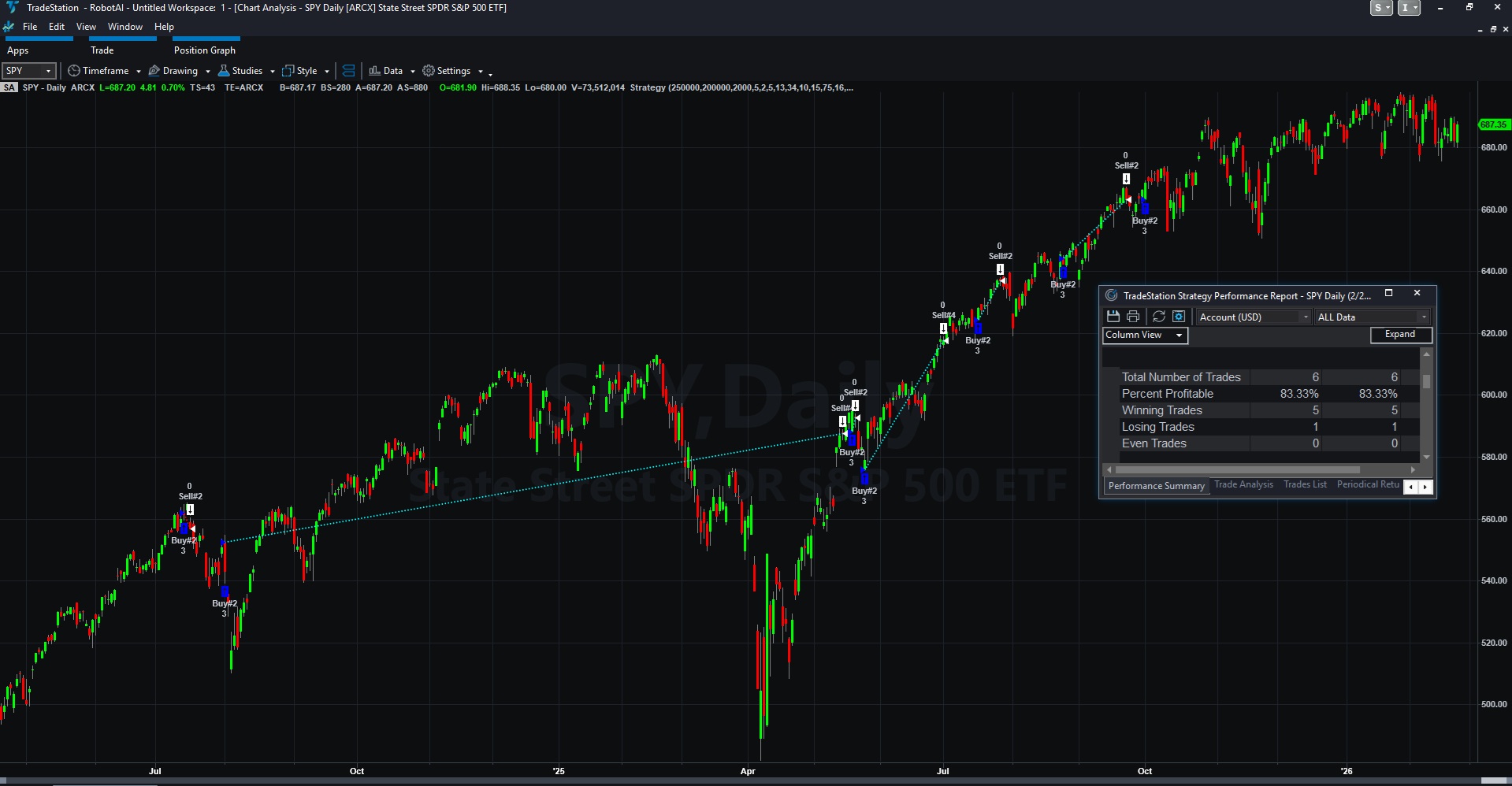
TradeExecutor.AI exemplifies this approach by running one thoroughly backtested strategy on TradeStation without discretionary overrides. The system doesn't adjust its logic based on oil prices, bond yields, or Dow movements — it simply executes the same rules that generated its historical performance.
14 levels from Gut to Executor. We don't expect anyone to blindly jump in — do your due diligence. Submit symbols, track your predictions, and prove your discipline.
 Start Your Path →
Should You Change Your Strategy When Oil Crashes?
No, you should never change a proven strategy based on short-term market movements or sector rotations. Oil crashes, bond yield shifts, and equity surges are normal market conditions that any robust strategy should handle without modification.
Strategy changes should only occur after thorough backtesting reveals structural flaws or changing market conditions that persist over months or years. Reacting to daily volatility by adjusting your approach guarantees inconsistent results and eliminates any edge your original strategy provided.
Today's oil retreat and Dow surge represent exactly the type of market noise that destroys discretionary traders. Energy volatility has occurred hundreds of times throughout market history. A properly backtested strategy has already encountered these conditions and demonstrated how it performs during similar periods.
The traders who succeed long-term stick to their proven systems regardless of whether oil moves up or down 5% in a session. They understand that consistency, not cleverness, generates sustainable profits.
What Is an Execution Leak in Trading?
Execution leak represents the performance difference between your strategy's backtested results and your actual trading returns caused by human interference, emotional decisions, and poor timing. Most traders lose 2-4% annually through execution leaks even when using profitable strategies.
Common sources of execution leak include:
- Skipping trades because they "don't feel right" based on current headlines
- Exiting positions early due to fear during volatile sessions
- Adding extra risk during winning streaks or reducing size after losses
- Overriding stop losses because "this time is different"
- Changing strategies mid-stream based on short-term performance
Today's market action creates perfect conditions for execution leak. Discretionary traders see oil falling and the Dow surging, then make emotional adjustments that deviate from their tested approach. Each override compounds over time, turning winning strategies into mediocre results.
Rules-based execution eliminates these leaks by removing human decision-making from the trade execution process. The system follows identical logic every day, whether oil crashes or rallies, regardless of market headlines or emotional pressure.
How TradeExecutor.AI Removes Human Error
TradeExecutor.AI removes human error by executing one backtested strategy on TradeStation without discretionary overrides, emotional adjustments, or real-time strategy changes. The system follows identical entry and exit logic whether oil moves up or down 5% in a session.
The platform operates on three core principles:
Deterministic execution: Same market conditions always produce identical trading decisions. No human judgment calls or "feel" for the market. Single strategy focus: Rather than switching between multiple approaches based on market conditions, the system perfects one thoroughly tested methodology. Transparent performance: Every trade, winner and loser, gets documented with complete position details and timing. No cherry-picked results or hypothetical performance claims.This approach particularly shines during volatile sessions like today's oil retreat and equity surge. While discretionary traders debate whether to chase the Dow rally or exit energy positions, TradeExecutor.AI simply checks its predetermined criteria and executes accordingly.
The one-time payment structure aligns incentives properly — the system succeeds only when users generate consistent results over time, not through frequent strategy changes or additional product sales.
Today's market volatility will pass, but your need for consistent execution remains constant. Oil will crash again, the Dow will surge again, and bond yields will shift again. The question is whether your trading approach can handle these normal market conditions without human interference destroying your edge.
Tested. Trusted. Transparent.
How much is your execution leak costing you?
Most traders lose more to overrides than to bad strategy. Calculate yours in 30 seconds.
Calculate Your LeakTradeExecutor.ai — deterministic automated execution engine
← Back to Insights