Oil Volatility Exposes the Fatal Flaw in Discretionary Trading
The Dow surged over 270 points to hit a fresh record as oil prices retreated, but behind the celebration lies a deeper truth: energy volatility just exposed thousands of traders who let emotion override execution. While headlines celebrate the market's resilience, the real story is happening in trading accounts where discretionary decisions turned winning strategies into costly mistakes.
TL;DR: Energy volatility reveals the critical difference between rules-based and discretionary trading. Automated systems execute predetermined parameters regardless of oil's 5% overnight swings, while discretionary traders second-guess their strategy exactly when consistency matters most. The choice determines whether market volatility works for you or against you.The community submitted 1 prediction for AAPL. Every week, the most popular symbol gets publicly reviewed — good or bad.
Submit a Symbol →Does Your Strategy Follow Rules or Hype?
Your strategy follows rules when it executes the same way regardless of headlines, oil prices, or market sentiment. A rules-based strategy operates on predetermined parameters: entry signals, exit conditions, position sizing, and risk management protocols that never change based on current events.
Discretionary trading follows hype when decisions depend on interpreting news, adjusting position sizes based on "feel," or overriding signals because something "doesn't look right." The oil pullback created thousands of these moments where traders abandoned their methodology for market intuition.
Consider yesterday's energy sector moves. A rules-based system that identified energy weakness two weeks ago continued executing its exit strategy regardless of today's headlines. The discretionary trader? They likely held positions longer hoping for a bounce, then panic-sold near the lows when oil futures gapped down overnight.
The difference compounds over time. Rules-based execution eliminates the human failure point between signal generation and trade execution, while discretionary trading introduces variables that can't be backtested or replicated.
"Down $200 on a day trade. Not much. But I refused to take it. 'It's only $200, it'll come back.' $200 became $400. Then $700. Then $1,200. I finally sold. Six hours of holding. Six hours of hoping...."
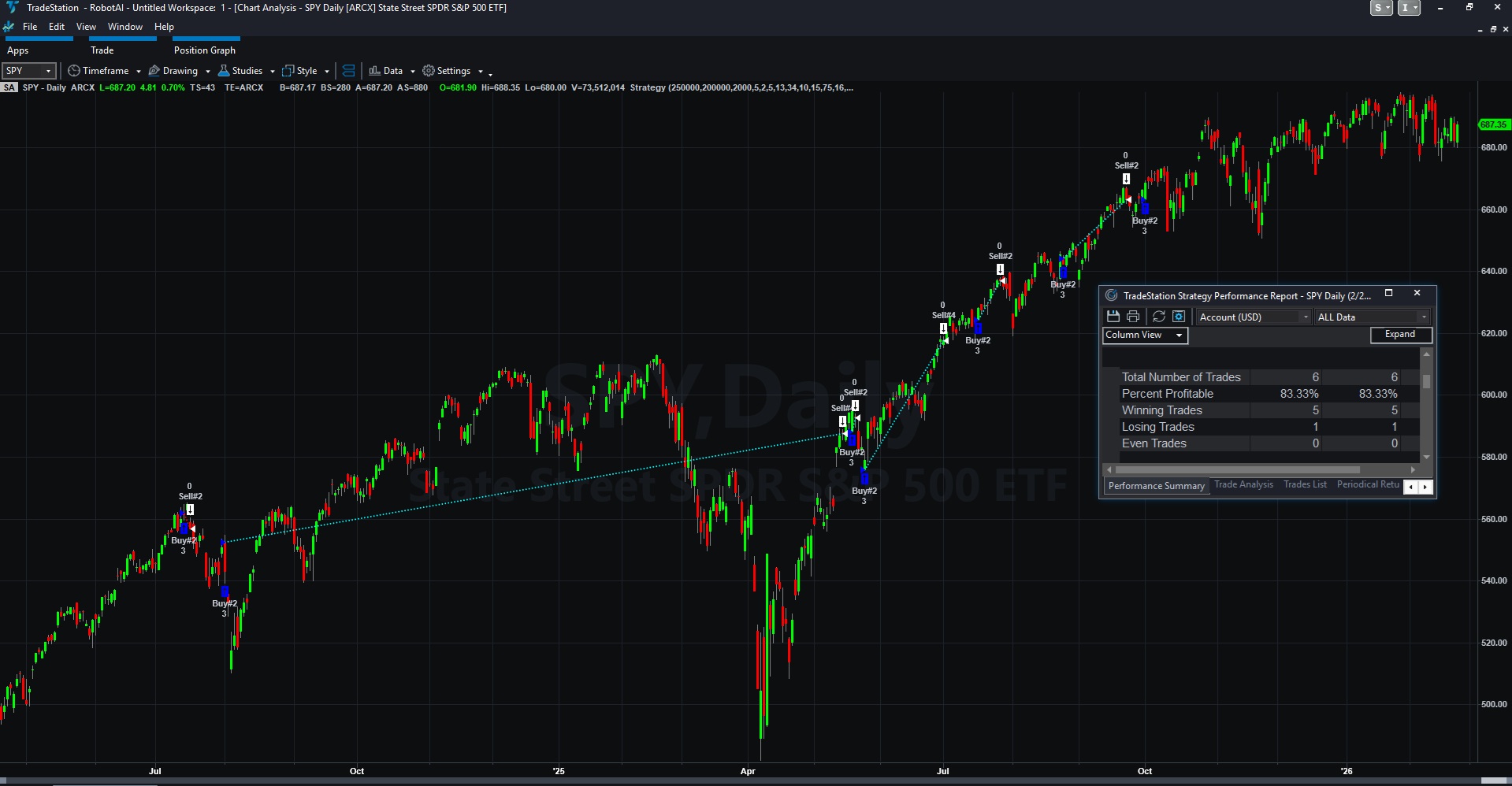
What Happens When Discretionary Traders See Oil Drop 5% Overnight?
Discretionary traders typically abandon their original plan and make reactive decisions based on immediate market conditions. The overnight oil drop triggers a cascade of emotional responses: fear of further losses, urgency to "do something," and the dangerous belief that this time requires different action.
Here's the typical discretionary response sequence: First, they question their original thesis despite valid technical signals. Second, they adjust position sizes mid-trade, usually reducing winners and holding losers. Third, they override exit signals, hoping volatility will reverse in their favor. Finally, they execute trades based on news flow rather than predetermined criteria.
Yesterday's oil volatility created perfect conditions for these mistakes. Energy stocks that showed technical weakness weeks ago suddenly became "oversold bounce candidates" in discretionary minds. The same traders who avoided energy during its decline started buying the dip based on headline sentiment rather than systematic signals.
This reactive approach introduces execution leak—the performance gap between a strategy's theoretical returns and actual trading results. Every override decision, every "gut feel" adjustment, every news-based modification widens this gap.
How Does Automated Trading Handle Volatility?
Automated trading handles volatility by executing predetermined responses without emotional interference or real-time interpretation. When oil drops 5% overnight, an automated system checks its existing positions against predefined exit criteria, evaluates new opportunities using the same screening parameters it always uses, and executes trades based on technical signals rather than headline sentiment.
The automated approach eliminates decision fatigue during volatile periods. While discretionary traders debate whether oil's drop represents opportunity or danger, rules-based systems simply execute their programmed responses. Entry signals trigger position establishment. Exit signals trigger position closure. Risk management protocols adjust position sizes based on volatility measurements, not trader emotions.
TradeExecutor.AI demonstrates this principle in practice. The system doesn't read CNBC headlines or interpret energy sector news. Instead, it processes price data, volume patterns, and technical indicators through the same analytical framework regardless of market conditions. Oil volatility becomes just another data point rather than a reason to abandon systematic execution.
This consistency proves especially valuable during market extremes. Volatile periods create the most opportunities for systematic strategies, but they also trigger the strongest emotional responses in discretionary traders. Automated execution captures these opportunities without the psychological overhead that derails human decision-making.
14 levels from Gut to Executor. We don't expect anyone to blindly jump in — do your due diligence. Submit symbols, track your predictions, and prove your discipline.
 Start Your Path →
Should You Change Your Strategy When Oil Crashes?
You should never change your strategy based on single-sector volatility or short-term market events. Strategy modifications require extensive backtesting across multiple market conditions, not reactive adjustments to current headlines. Oil crashes happen regularly—1990, 2008, 2014, 2020, and now 2024—and successful trading systems account for these events in their original design.
Changing strategies during volatility typically produces the opposite of intended results. Traders abandon working methodologies at precisely the moments when systematic execution provides the greatest advantage. The oil crash creates opportunities for systems designed to capitalize on energy sector dislocations, but only if the strategy maintains its original parameters.
Consider the mathematical reality: if your strategy required modification every time a major sector experienced volatility, it wasn't a robust strategy to begin with. Technology crashes, energy collapses, financial sector meltdowns, and healthcare disruptions occur regularly in market cycles. Effective strategies incorporate these possibilities rather than requiring real-time adjustments.
TradeExecutor's approach illustrates this principle. The system underwent extensive backtesting across multiple energy crises, ensuring its methodology remains consistent regardless of oil price movements. This testing revealed that strategy modifications during volatile periods typically reduced long-term performance even when they felt psychologically necessary.
What Is an Execution Leak in Trading?
Execution leak is the performance gap between your strategy's theoretical returns and your actual trading results. Every manual override, emotional decision, and real-time strategy modification contributes to this leak. The gap typically widens during volatile periods when discretionary decisions feel most urgent but prove most costly.
Execution leaks manifest in several specific ways. Position sizing changes based on recent performance rather than predetermined risk parameters. Entry and exit timing modifications based on news flow rather than technical signals. Strategy abandonment during drawdown periods when systematic execution becomes psychologically difficult. Trade frequency changes based on market conditions rather than signal generation.
Yesterday's energy volatility created ideal conditions for execution leaks. Traders who maintained disciplined approaches for months suddenly found themselves adjusting position sizes, overriding exit signals, and making news-based decisions. Each modification moved their actual results further from their strategy's backtested performance.
The cumulative impact proves significant over time. Studies show execution leaks can reduce strategy performance by 3-7% annually, with most of the damage occurring during volatile periods that represent less than 20% of total trading days. Eliminating these leaks often provides more performance improvement than finding better entry signals.
Why Rules-Based Systems Don't Panic
Rules-based systems don't panic because they don't interpret market events—they simply process data through predetermined analytical frameworks. Panic requires emotional interpretation of market conditions, something algorithmic systems cannot experience. When oil drops 5% overnight, a rules-based system sees price movement, volume changes, and volatility measurements rather than crisis or opportunity.
The absence of interpretation eliminates psychological biases that compromise human decision-making during stress. Confirmation bias, loss aversion, recency bias, and overconfidence all disappear when systems execute predefined instructions rather than making real-time judgments. The oil volatility that triggers fear responses in human traders represents nothing more than data points to process through existing algorithms.
This emotional neutrality proves especially valuable during extreme market conditions. While discretionary traders debate the implications of energy sector weakness for broader market health, automated systems continue executing their established methodology. They don't speculate about Federal Reserve responses, inflation impacts, or geopolitical consequences—they simply identify and execute trades based on their programmed criteria.
TradeExecutor.AI embodies this principle through its deterministic approach. Same market inputs always produce same system outputs, regardless of external market sentiment or news flow. The system's response to oil volatility today will match its response to similar conditions in backtesting, creating predictable and replicable results that discretionary trading cannot achieve.
---
Energy volatility will continue creating opportunities for systematic traders and traps for discretionary ones. The choice between rules-based execution and emotional decision-making determines which category describes your results. TradeExecutor.AI eliminates the human failure point between market analysis and trade execution, ensuring your strategy performs as designed rather than as modified by market stress.
Tested. Trusted. Transparent.How much is your execution leak costing you?
Most traders lose more to overrides than to bad strategy. Calculate yours in 30 seconds.
Calculate Your LeakTradeExecutor.ai — deterministic automated execution engine
← Back to Insights