Oil Rally Falters, Markets Swing — But Your Trading Rules Don't Have to
The S&P 500 posted gains today while oil's recent rally lost steam and Nvidia disappointed despite beating earnings expectations. In hours like these, discretionary traders are scrambling to adjust positions, second-guessing every move as energy volatility whipsaws through portfolios.
TL;DR: Rules-based trading systems execute the same strategy regardless of oil volatility or earnings surprises. While discretionary traders panic and override their plans during market swings, automated systems eliminate the human failure point between signal and execution, producing consistent results that can be backtested and verified.The difference between surviving these volatile sessions and getting chopped up isn't about having better market predictions. It's about whether your rules-based strategy executes exactly as designed, or whether fear and greed corrupt your execution when markets move fast.
The community submitted 1 prediction for AAPL. Every week, the most popular symbol gets publicly reviewed — good or bad.
Submit a Symbol →Does Your Strategy Follow Rules or Headlines?
A true rules-based approach treats today's oil volatility and Nvidia's post-earnings decline as just another set of price inputs. The strategy either triggers based on predetermined criteria or it doesn't. No exceptions. No "but this time is different" overrides.
Discretionary traders, however, are right now asking themselves: "Should I hold energy positions if oil keeps falling?" "Is Nvidia's weakness signaling broader tech trouble?" These questions lead to emotional decisions that deviate from proven strategies. One trader might panic-sell energy exposure at exactly the wrong moment. Another might chase Nvidia's decline, hoping for a bounce that never comes.
Rules-based systems don't ask these questions because they don't need to. The rules account for volatility, earnings reactions, and sector rotations through backtested parameters. When oil moves 5% overnight, the system responds according to its programming—nothing more, nothing less.
"Down $200 on a day trade. Not much. But I refused to take it. 'It's only $200, it'll come back.' $200 became $400. Then $700. Then $1,200. I finally sold. Six hours of holding. Six hours of hoping...."
Should You Change Your Strategy When Oil Crashes?
No. Changing strategy mid-execution is where most traders destroy their long-term performance, regardless of whether oil crashes 10% or rallies 20% in a week.
Every strategy experiences drawdown periods. Oil's volatility might trigger stop losses or reduce position sizes based on predetermined rules, but it shouldn't trigger strategy abandonment. The energy sector has experienced dozens of similar volatility spikes over the past decade. Successful traders had rules for handling these scenarios before they happened.
Consider what's happening right now in trading rooms across the country. Discretionary traders are debating whether to cut energy positions, hedge with oil futures, or rotate into defensive sectors. Each decision introduces execution leaks—the gap between intended strategy and actual trades. These leaks compound over time, turning profitable strategies into mediocre results.
TradeExecutor.AI eliminates this decision paralysis by executing the same strategy regardless of current market narratives. The system doesn't read CNBC headlines or debate whether oil's rally is sustainable. It processes price data according to predetermined rules, period.
What Happens When Nvidia Earnings Disappoint?
Automated systems process earnings reactions as price movements, not as reasons to override strategy rules. When Nvidia declined despite beating estimates, rules-based systems either maintained existing positions (if rules weren't triggered) or adjusted according to predetermined criteria.
Discretionary traders, meanwhile, are interpreting Nvidia's reaction through multiple lenses: "Is this broader tech weakness?" "Should I reduce semiconductor exposure?" "Are AI stocks finally cooling off?" Each interpretation leads to different trading decisions, most of which weren't part of the original strategy.
The execution leak here is massive. A trader might have planned to hold tech positions through earnings season, but Nvidia's unexpected decline triggers fear-based selling. Or they might chase the decline, hoping to buy weakness, only to watch positions move against them. Neither action was part of the original plan.
Rules-based execution treats Nvidia's price movement like any other: if predetermined technical or fundamental criteria are met, the system acts. If not, it maintains existing positions. No interpretation required. No emotional override possible.
How Does Automated Trading Handle Market Volatility?
Automated trading systems handle volatility through predefined parameters that account for multiple market scenarios, including days like today when oil rallies falter and individual stocks react unexpectedly to earnings.
Volatility doesn't surprise automated systems because volatility is built into their design. Stop-loss levels, position sizing rules, and entry criteria all account for normal market fluctuations. When the S&P 500 swings 1-2% intraday while individual sectors move in opposite directions, the system processes each price movement independently according to established rules.
Human traders experience volatility as stress. They see oil falling and wonder if they should hedge energy positions. They watch Nvidia decline and question whether tech exposure is too high. Each worry introduces potential execution errors that automated systems simply cannot make.
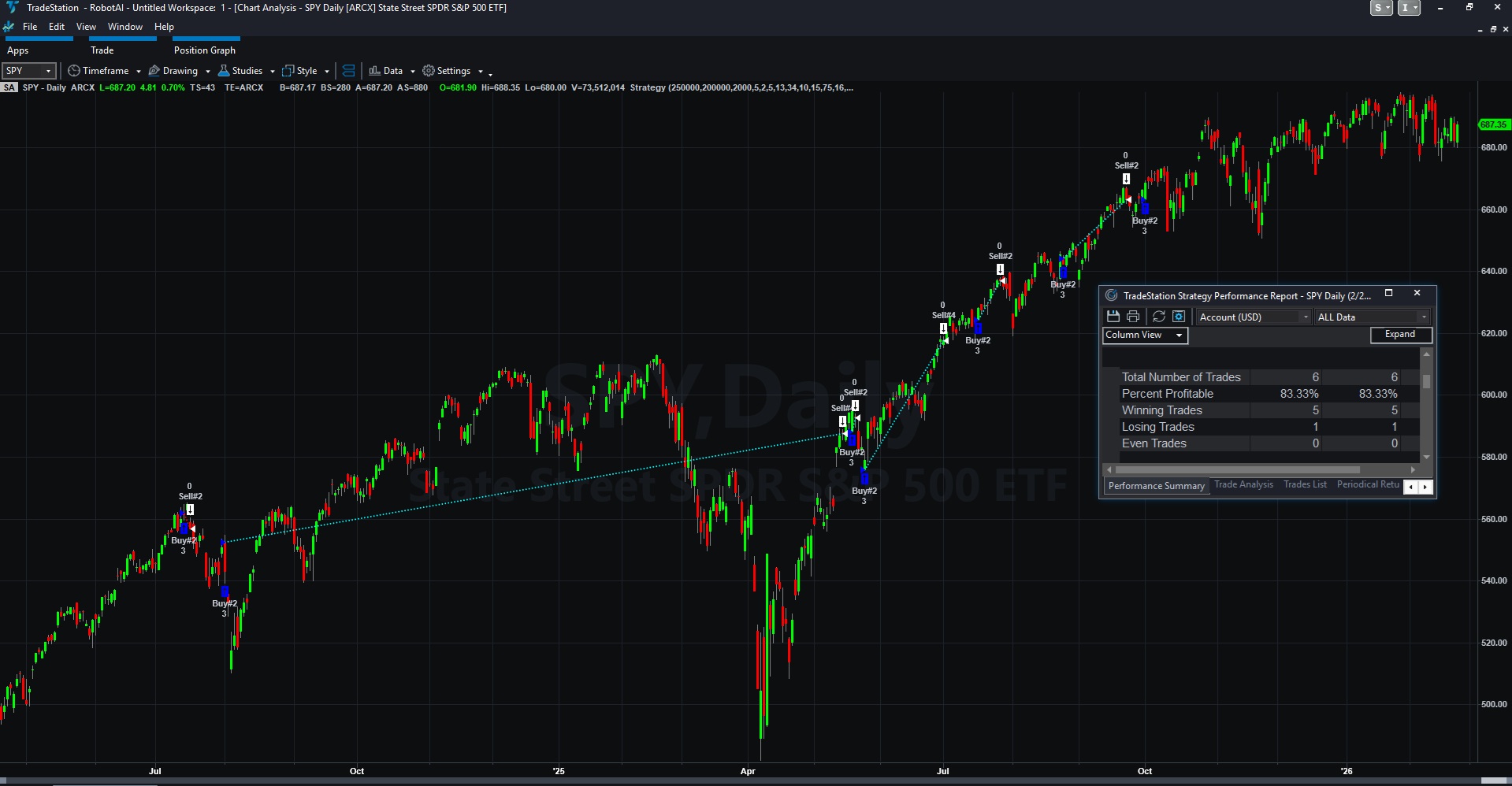
TradeExecutor.AI's deterministic approach means identical market conditions always produce identical trading decisions. Today's oil volatility might trigger specific position adjustments, but those adjustments follow the same rules that governed similar volatility events in the past. The system's response can be backtested, verified, and trusted because it's completely predictable.
What Is an Execution Leak in Trading?
An execution leak is the performance gap between your intended strategy and your actual trades, caused by emotional decisions, poor timing, or second-guessing during volatile markets like today's oil and tech moves.
Execution leaks accumulate every time you deviate from predetermined rules. When oil rallies faltered this morning, some traders probably cut energy positions at suboptimal prices. When Nvidia declined despite strong earnings, others likely panic-sold tech holdings they planned to maintain. Each deviation creates a small performance drag that compounds over time.
Research shows most traders lose money not because their strategies are flawed, but because they execute those strategies poorly under pressure. The gap between backtested strategy returns and actual trading results often exceeds 3-5% annually due to execution leaks.
Rules-based systems eliminate execution leaks entirely because they cannot deviate from predetermined rules. The system executes exactly as programmed, whether markets are calm or chaotic. This consistency produces real-world results that match backtested performance, a rare achievement in discretionary trading.
Why One Platform, One Strategy Works
Complexity kills consistency. Traders who run multiple strategies across different platforms create more opportunities for execution errors, especially during volatile sessions when oil sectors and tech stocks move independently.
TradeExecutor.AI focuses exclusively on TradeStation with one proven strategy. This singular focus eliminates the confusion that destroys performance when traders try to manage multiple systems simultaneously. You're not deciding which strategy to use when oil volatility spikes—you're running the same proven approach that's been backtested across thousands of similar scenarios.
Single-platform execution also reduces technical failures that create execution leaks. No broker arbitrage decisions. No platform compatibility issues. No wondering which system to trust when markets move fast. One platform, one strategy, one set of rules applied consistently regardless of market conditions.
Today's mixed signals—rising indices, falling oil, disappointing Nvidia—would typically stress-test any trader's ability to stay disciplined. With automated execution, these conditions are just another day's worth of price data to process according to established rules.
The TradeStation integration ensures every trade executes exactly as intended, without the hesitation, second-guessing, or emotional interference that plague discretionary approaches during volatile markets.
Ready to eliminate execution leaks from your trading? Explore how rules-based automation handles every market condition with mathematical precision, not emotional reaction.
Tested. Trusted. Transparent.How much is your execution leak costing you?
Most traders lose more to overrides than to bad strategy. Calculate yours in 30 seconds.
Calculate Your LeakTradeExecutor.ai — deterministic automated execution engine
← Back to Insights