When Oil Spikes 5%, Does Your Trading Strategy Follow Rules or Hype?
Oil just jumped on Trump's Iran deadline news while stocks slide across the board. Right now, discretionary traders are staring at screens, second-guessing their positions, and wondering if they should override their original plan.
TL;DR: Rules-based trading systems execute the same way whether oil moves up 5% or down 5%. Discretionary traders change their behavior based on headlines, creating execution leaks that compound over time. Automated execution removes the human decision point where most trading profits disappear.The difference between profitable and unprofitable trading often comes down to one moment: when your original signal conflicts with breaking news. A rules-based strategy eliminates that moment of doubt entirely.
Should You Change Your Strategy When Oil Crashes?
No. Strategy changes should happen during backtesting, not during live market hours when emotions run high.
When oil moves violently, discretionary traders face an impossible choice. Their original analysis said buy at $75, but now headlines scream about geopolitical risk. The human brain, wired for survival, interprets market volatility as physical danger. Stress hormones flood the system. Rational analysis becomes nearly impossible.
Rules-based systems don't read headlines. They read price, volume, and predetermined conditions. If the system was programmed to buy oil futures when price breaks above the 20-period moving average with volume confirmation, it executes that trade whether Trump tweets about Iran or stays silent. The algorithm doesn't know the difference between a 2% move and a 5% move in emotional terms—only in mathematical ones.
This deterministic approach seems cold until you examine the results. The same inputs always produce the same outputs, creating a trackable, improvable system instead of a collection of ad-hoc decisions.
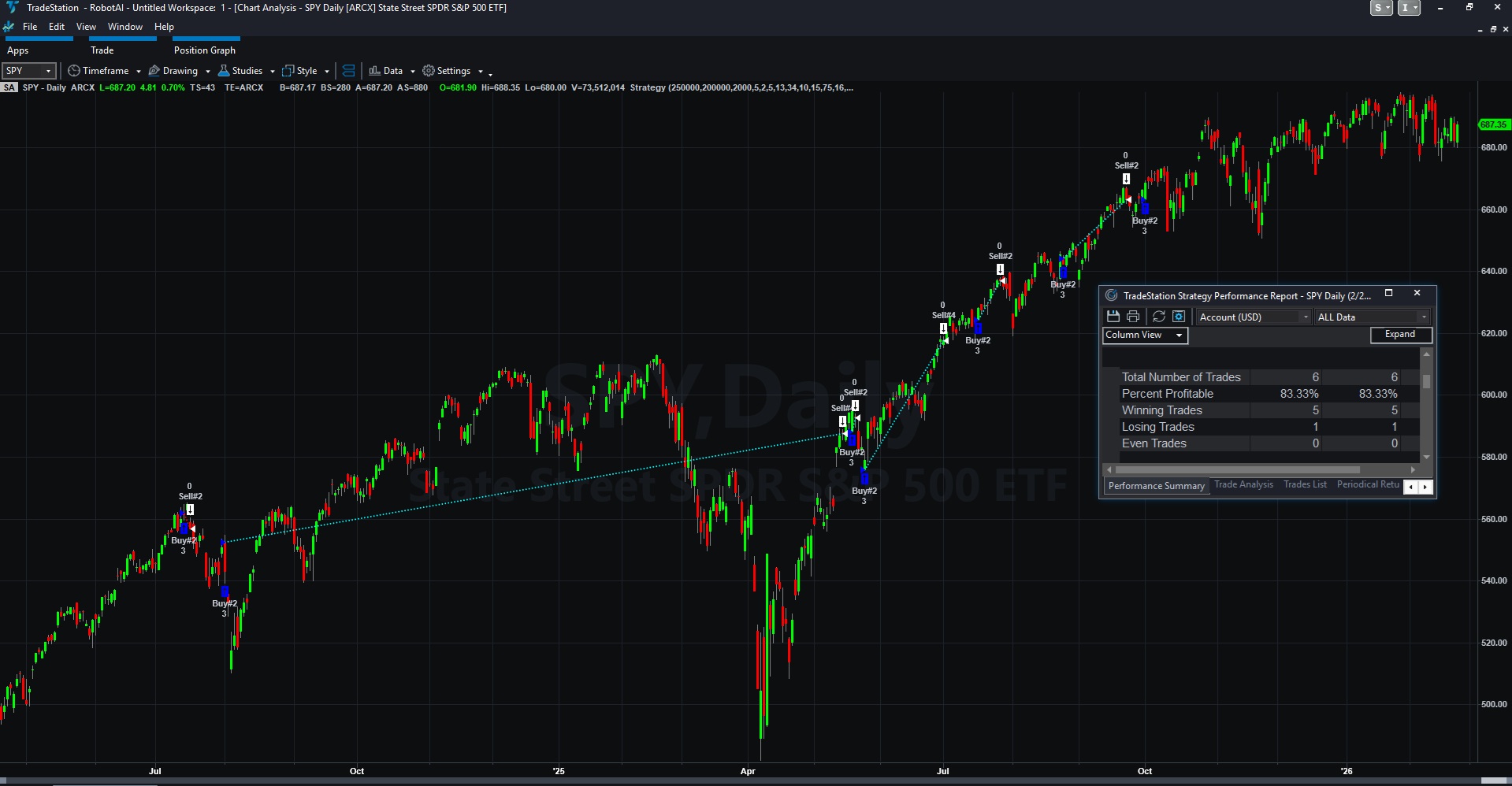
What Is an Execution Leak in Trading?
Execution leak is the performance gap between your theoretical strategy returns and your actual account returns, caused by human intervention at critical moments.
Most traders focus on finding better entry signals while ignoring the larger problem: they don't execute their existing signals consistently. A strategy that backtests at 15% annual returns might produce 8% in live trading because the human operator "knows better" during volatile periods.
The Iran deadline news creates a perfect execution leak scenario. Oil traders who planned to enter positions at specific technical levels now hesitate. "Maybe I should wait for more clarity," they think. "What if tensions escalate further?" Each moment of hesitation represents money left on the table or unnecessary risk taken.
TradeExecutor.AI eliminates this leak by removing the human decision point entirely. The system receives the same market data, applies the same rules, and executes the same way regardless of external news flow. No hesitation, no override, no second-guessing.
How Does Automated Trading Handle Volatility?
Automated trading treats volatility as data, not drama. The system measures price movement in mathematical terms without emotional interpretation.
Consider tonight's market action in specific terms. Oil futures moved from $74.20 to $77.85—a 4.9% spike. For a discretionary trader, this creates analysis paralysis. Should they chase the momentum? Wait for a pullback? Exit existing positions to "preserve capital"?
An automated system running on TradeStation processes this information differently. If the strategy includes volatility filters, it might reduce position size when average true range exceeds predetermined levels. If the strategy focuses on breakout patterns, it might increase allocation when price moves beyond established ranges. The key difference: these responses were programmed during calm periods, not improvised during stressful ones.
The system doesn't "feel" the urgency of breaking news. It doesn't experience FOMO when oil gaps higher or fear when stocks gap lower. It simply executes the predetermined response to each market condition.
Why Do Most Traders Override Their Systems During News Events?
Most traders override their systems because they confuse information with insight, believing real-time news provides an edge over their tested strategy.
The Iran deadline represents information everyone receives simultaneously. CNBC broadcasts the same headlines to millions of traders. Social media amplifies the narrative within minutes. The idea that processing this information faster or "better" than other market participants provides an advantage is largely illusory.
Yet discretionary traders consistently believe they can incorporate breaking news into better trading decisions than their original plan. This overconfidence creates the override temptation that destroys otherwise profitable strategies.
Professional trading firms learned this lesson decades ago. They separate research teams from execution teams specifically to prevent real-time bias from contaminating systematic approaches. The trader executing oil futures strategies doesn't make decisions based on geopolitical analysis—they follow predetermined rules created by strategy developers working with historical data.
What Makes Rules-Based Execution Different?
Rules-based execution creates identical responses to identical market conditions, eliminating the variability that destroys trading performance over time.
When oil spikes on Iran news, human traders experience different stress levels, risk tolerances, and confidence levels depending on their recent performance, personal circumstances, and market interpretation. The same trader might respond boldly to a 5% oil spike in January but cautiously to an identical move in March, based purely on intervening experiences.
TradeExecutor.AI responds identically to identical conditions every single time. The strategy processes price movement, volume patterns, and technical indicators through the same mathematical framework regardless of the underlying news catalyst. This consistency compounds over hundreds of trades, creating performance that matches backtested expectations.
The transparency element matters equally. Every trade execution follows documented rules that can be reviewed, analyzed, and improved. No "gut feeling" trades exist in the performance record. No unexplainable decisions during volatile periods. Just mathematical responses to market conditions, executed without emotion or override.
This approach transforms trading from reactive scrambling into systematic business execution. Instead of wondering "What should I do about Iran tensions?", the question becomes "Are my predetermined rules handling current market conditions effectively?" The first question has no reliable answer. The second question can be answered with data.
Calculate your execution leak at TradeExecutor.ai, or explore how one strategy, one platform, and zero override capability handles whatever headline dominates tomorrow's market open.
Tested. Trusted. Transparent.How much is your execution leak costing you?
Most traders lose more to overrides than to bad strategy. Calculate yours in 30 seconds.
Calculate Your LeakTradeExecutor.ai — deterministic automated execution engine
← Back to Insights