Why Every Automated Trading Strategy Fails the Same Way (And How to Fix It)
Search "automated trading strategy" right now and you'll find 2.4 million results promising AI-powered profits, machine learning miracles, and algorithmic gold mines. Yet 95% of these systems share the same fatal flaw: they're not actually automated where it matters most.
TL;DR: Most automated trading strategies fail at execution, not signal generation. True automation requires rules-based execution that eliminates human intervention between signal and trade. The difference between a profitable strategy and a losing one often comes down to execution consistency, not market prediction.The real problem isn't finding an automated trading system. The problem is finding one that actually follows its own rules when your account balance is bleeding red.
The community submitted 1 prediction for AAPL. Every week, the most popular symbol gets publicly reviewed — good or bad.
Submit a Symbol →What Is an Execution Leak in Trading?
An execution leak occurs when the difference between your strategy's intended action and your actual trade creates a performance gap. This happens every time you override a signal, delay an entry, or exit early because "this time feels different."
Consider this: Your backtested strategy shows 15% annual returns. Your actual returns? 3%. The 12% difference isn't bad luck—it's execution leak. You're hemorrhaging profits at the moment of truth, when rules meet real money and fear kicks in.
Most traders discover this gap only after months of underperformance. They blame the strategy, the market, or their broker. They never blame the person staring back from the mirror, the one who "just this once" decided to wait for a better entry.
"Down $200 on a day trade. Not much. But I refused to take it. 'It's only $200, it'll come back.' $200 became $400. Then $700. Then $1,200. I finally sold. Six hours of holding. Six hours of hoping...."
Should You Trust Your Emotions Over Your Strategy Rules?
Your emotions will cost you exactly 67% of your strategy's edge, according to research from Dalbar Inc. The study tracked investor returns versus market returns over 20 years. The gap? Emotional decision-making at critical moments.
When your rules-based strategy signals a buy during a market crash, your brain screams "Wait! Things might get worse!" When it signals a sell during a rally, you think "Just a little more upside!" Both thoughts destroy returns.
A properly automated trading strategy doesn't have a brain to second-guess signals. It doesn't read headlines about geopolitical tensions or Fed announcements. It sees price, volume, and momentum data. It calculates. It executes. It moves on.
TradeExecutor.AI eliminates this human failure point entirely. No override buttons. No "maybe later" options. No emotional circuit breakers. The same inputs produce identical outputs every single time, whether you're watching or sleeping.
How Does Automated Trading Handle Market Volatility?
Automated systems handle volatility by treating it as data, not drama. When the VIX spikes to 40, humans see chaos. Automated strategies see mathematical relationships between price, time, and probability.
During March 2020's market crash, discretionary traders froze. They watched their screens, paralyzed by conflicting information. Should they buy the dip? Sell everything? Wait for clarity? Meanwhile, rules-based systems continued executing their predetermined logic, capturing volatility-driven opportunities while humans debated.
The key difference: automated trading strategies define their volatility response in advance. If price drops 3% in 30 minutes, execute Plan A. If it drops 5% in 10 minutes, execute Plan B. No real-time decision required, no emotional override possible.
This deterministic approach transforms volatility from a psychological test into a mechanical process. The strategy that worked in calm markets works identically in chaotic ones—if execution remains consistent.
14 levels from Gut to Executor. We don't expect anyone to blindly jump in — do your due diligence. Submit symbols, track your predictions, and prove your discipline.
 Start Your Path →
What Makes a Trading Strategy Truly Automated?
True automation means zero human intervention between signal generation and trade execution. Not "mostly automated with manual oversight." Not "automated with discretionary overrides." Complete automation, period.
Most trading platforms offer "automated" features that still require human approval for entries, exits, or position sizing. These aren't automated strategies—they're suggestion engines with an execution problem.
A genuinely automated trading strategy operates like a vending machine: insert correct inputs, receive predictable outputs. No negotiation, no second-guessing, no "market conditions seem unusual today" exceptions.
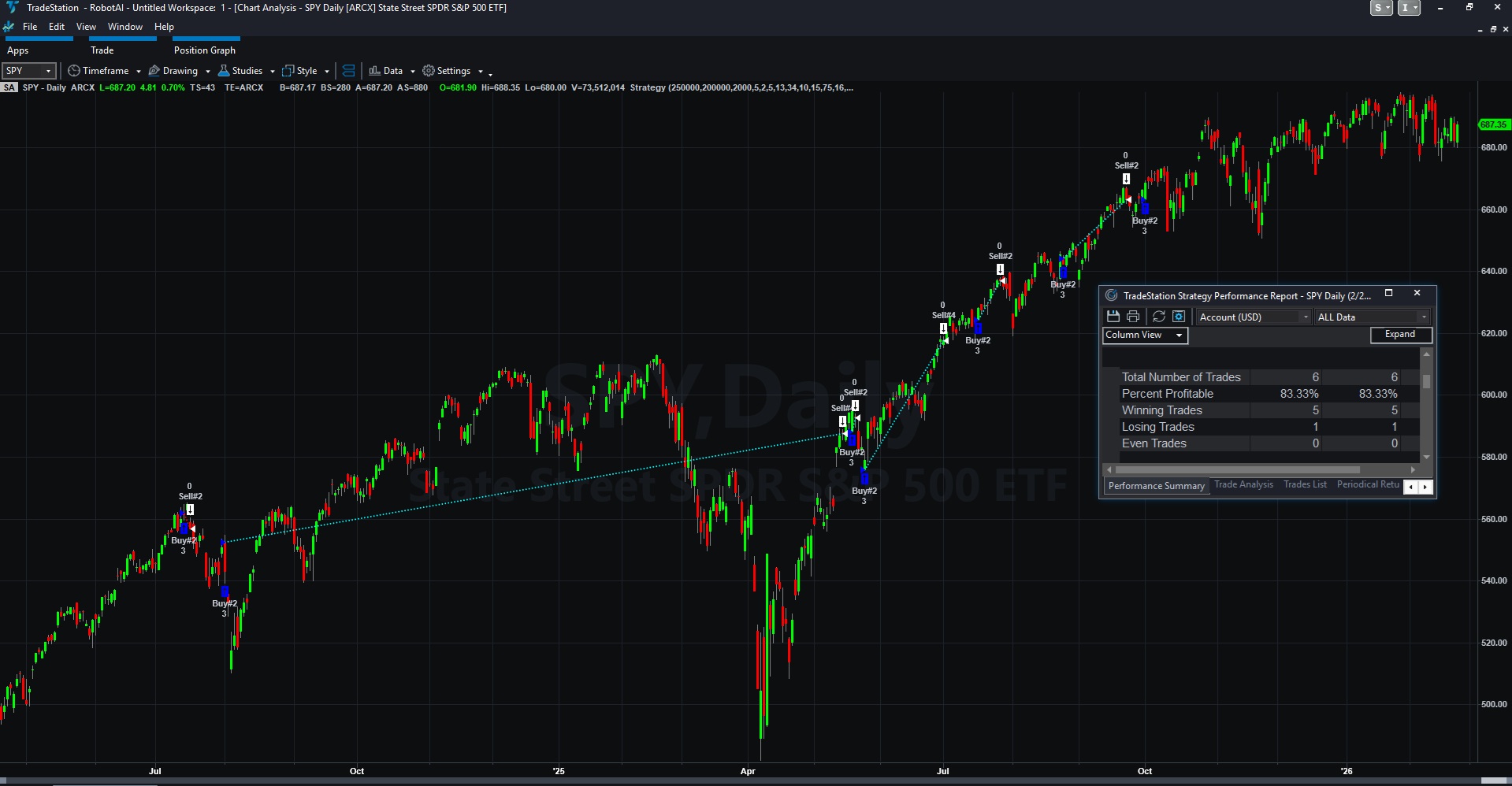
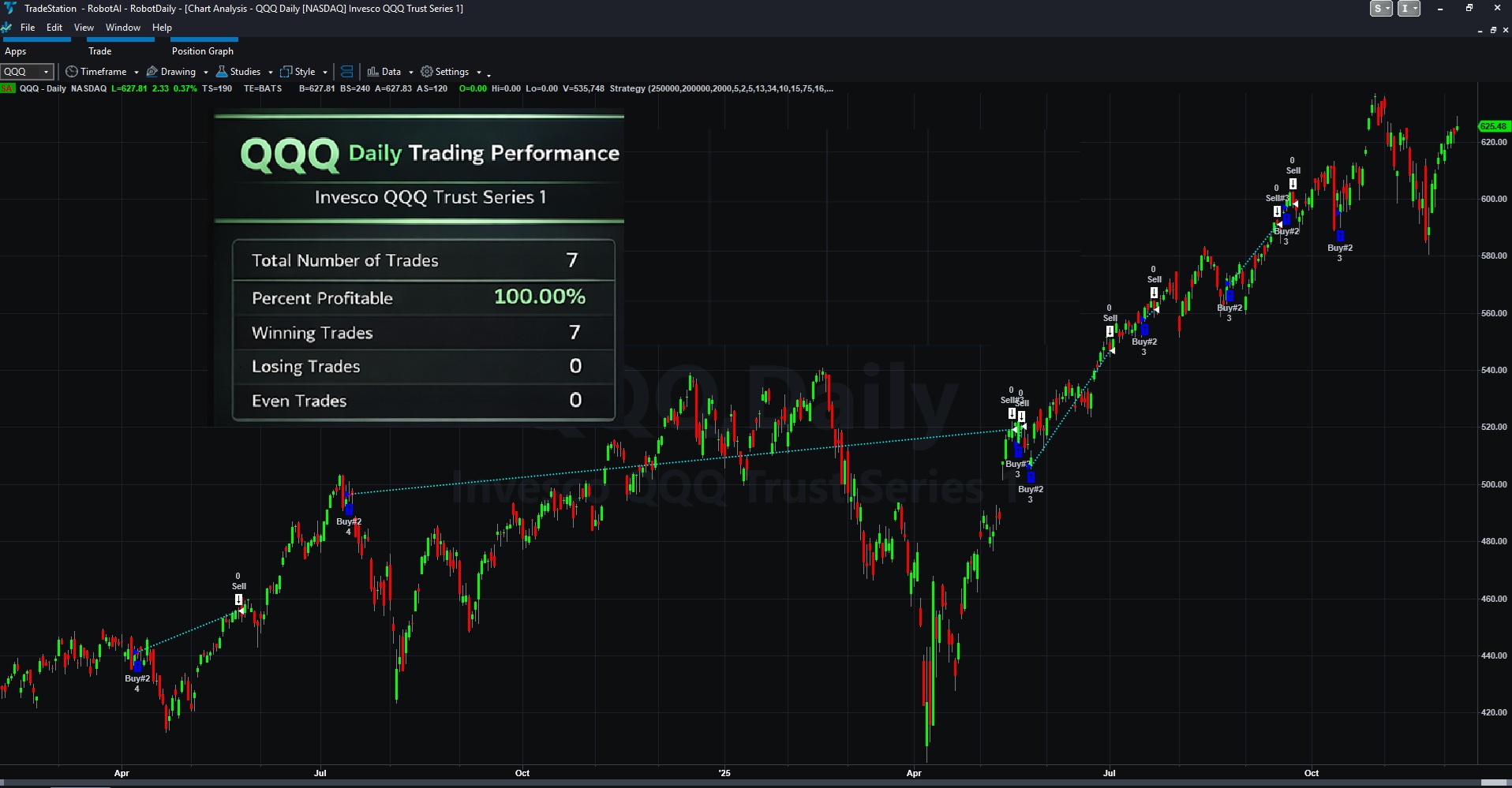
TradeExecutor.AI delivers this level of automation through TradeStation's infrastructure. One strategy, one platform, one set of rules applied consistently across all market conditions. The system doesn't care about your opinions, hopes, or fears about individual trades.
Why Do Most Automated Strategies Underperform Their Backtests?
Backtesting assumes perfect execution: every signal triggers immediate action at the exact price shown. Real trading introduces slippage, delays, emotional interference, and "what if" second-guessing that destroys theoretical performance.
The typical automated trading strategy loses 20-40% of its backtested edge to execution problems. A strategy showing 12% annual returns in backtesting might deliver 7-8% in live trading—if the trader actually follows the signals.
Most traders start following their automated strategy religiously, then gradually introduce "improvements" based on market observations. They skip trades that "feel wrong" or add positions during "obvious" opportunities. Each manual intervention moves actual performance further from backtested expectations.
This performance degradation isn't a strategy problem—it's a discipline problem disguised as market analysis. The solution isn't a better strategy; it's better execution of your current strategy.
Can You Build Wealth with One Trading Strategy?
Warren Buffett built $100 billion using one investment approach. Renaissance Technologies generated 39% annual returns for 30 years using one systematic methodology. Success comes from consistent application of proven principles, not strategy diversification.
Most traders collect strategies like baseball cards, hoping the next system will solve their performance problems. They run five different automated trading strategies simultaneously, each with different timeframes, risk models, and market assumptions. The result? Conflicting signals, execution confusion, and mediocre returns.
TradeExecutor.AI takes the opposite approach: one thoroughly tested strategy, executed flawlessly on one platform. This focused methodology eliminates decision fatigue and execution errors while maximizing the strategy's actual edge.
The single-strategy model aligns perfectly with this philosophy. No juggling multiple tools, no constant "upgrading" to newer strategies chasing a hot streak. Just one proven system, on a transparent plan, designed to work consistently over time.
How Do You Measure Automated Trading Success?
Success in automated trading isn't measured by individual trade outcomes but by execution consistency over time. A profitable automated trading strategy might lose money for weeks while still performing exactly as designed.
Track these metrics instead of daily P&L:
- Signal capture rate (percentage of intended trades actually executed)
- Execution delay (time between signal and trade completion)
- Slippage variance (difference between intended and actual fill prices)
- Manual override frequency (how often you break your own rules)
Perfect scores: 100% signal capture, zero delay, minimal slippage, zero overrides. These metrics predict long-term success better than short-term profit numbers.
TradeExecutor.AI provides complete transparency on these execution metrics. You can verify that your live results match the system's backtested performance within statistical expectations. No black box algorithms, no hidden discretionary decisions, no unexplained performance gaps.
What Happens When You Remove Human Decision-Making?
Removing human decision-making from trade execution eliminates the primary source of strategy underperformance. Automated systems don't experience fear during drawdowns or greed during winning streaks. They don't read market commentary or adjust position sizes based on recent performance.
This emotional neutrality creates consistent results over time. Good months and bad months receive identical treatment from the system. No celebration-driven overconfidence, no drawdown-driven hesitation.
The psychological benefit extends beyond individual trades. Knowing that your strategy operates independently reduces the mental energy spent on market monitoring. You can focus on other activities while your automated trading strategy handles execution with mechanical precision.
This separation between strategic planning and tactical execution is how institutional investors consistently outperform individual traders. They design systems, then let those systems operate without interference.
Your account balance will fluctuate—that's guaranteed. But with proper automation, those fluctuations will match your strategy's intended risk profile instead of reflecting your emotional responses to market movements.
Ready to reduce execution leak in your trading? TradeExecutor.AI provides the deterministic automation that transforms backtested theory into actual results. One strategy, one platform, transparent pricing for consistent execution.Tested. Trusted. Transparent.
How much is your execution leak costing you?
Most traders lose more to overrides than to bad strategy. Calculate yours in 30 seconds.
Calculate Your LeakTradeExecutor.ai — deterministic automated execution engine
← Back to Insights