S&P 500 Hits Records While Oil Volatility Rattles Traders: Why Rules Beat Reactions
The S&P 500 drifted to record highs today, but energy sector volatility is capping gains as crude oil swings. While index funds celebrate new peaks, individual traders are wrestling with a familiar enemy: the urge to react when markets throw curveballs.
TL;DR: Rules-based execution systems follow predetermined logic regardless of oil spikes or market noise, while discretionary traders often sabotage themselves by overriding their original plan when volatility hits. The difference isn't just performance—it's the elimination of execution leaks that drain accounts over time.Energy volatility exposes the fundamental flaw in discretionary trading. When oil moves 5% overnight, human traders panic, second-guess, and override. Rules-based strategy systems execute exactly as programmed, treating today's oil spike like any other data point in the algorithm.
The community submitted 1 prediction for AAPL. Every week, the most popular symbol gets publicly reviewed — good or bad.
Submit a Symbol →Does Your Strategy Follow Rules or Headlines?
Your strategy either follows predetermined rules or it follows your emotions disguised as "market intuition." There's no middle ground when oil jumps 3% and your energy positions flash red.
Most traders start with rules. They backtest strategies, write down entry and exit criteria, and promise themselves they'll stick to the plan. Then crude oil spikes, headlines scream about supply disruptions, and suddenly those carefully crafted rules feel inadequate against "unprecedented" market conditions.
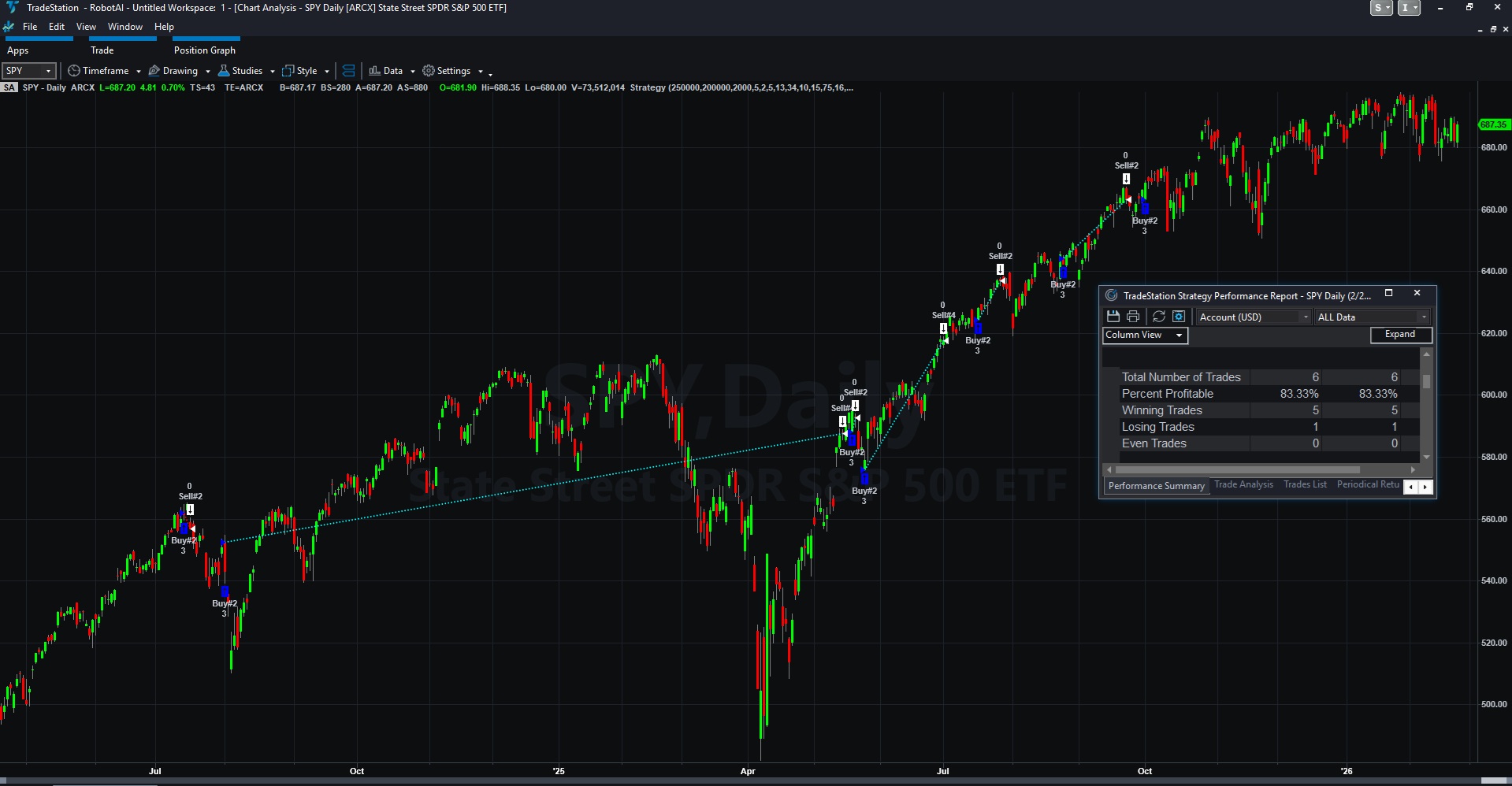
Rules-based execution removes this failure point entirely. TradeExecutor.AI doesn't read headlines, doesn't feel fear when energy volatility spikes, and doesn't override the strategy because "this time is different." The system executes based on price action and technical indicators, not CNBC alerts about oil inventory reports.
"Down $200 on a day trade. Not much. But I refused to take it. 'It's only $200, it'll come back.' $200 became $400. Then $700. Then $1,200. I finally sold. Six hours of holding. Six hours of hoping...."
What Happens When Discretionary Traders See Oil Volatility?
Discretionary traders typically freeze, panic-sell, or double down based on gut feelings rather than systematic analysis. The sequence is predictable: oil spikes, portfolios wobble, emotions override logic.
Here's what happened in hundreds of trading accounts during today's energy volatility:
- 9:30 AM: Trader sees oil up 4%, energy stocks gapping higher
- 9:45 AM: Second-guesses predetermined exit levels, decides to "let winners run"
- 10:30 AM: Oil reverses, energy positions turn red
- 11:00 AM: Panic sells at exactly the wrong moment
- 11:30 AM: Watches positions recover without him
This execution leak—the gap between planned strategy and actual execution—compounds over time. Studies show discretionary traders underperform their own backtested strategies by 2-4% annually, purely due to emotional overrides during volatile periods.
Rules-based systems execute the same way whether oil moves 0.5% or 5%. The algorithm doesn't distinguish between "normal" volatility and "unprecedented" energy spikes. Every signal gets executed according to the predetermined logic, removing the human tendency to treat each market move as uniquely important.
Should You Change Your Strategy When Oil Crashes?
No. Strategy changes should be based on statistical analysis of performance over hundreds of trades, not reactions to individual market events like oil volatility.
The urge to modify strategies during volatile periods is where most traders destroy their own performance. Energy sector chaos feels important in the moment, but it represents just another data point in a properly backtested system.
Consider what happened during the 2020 oil crash when crude briefly went negative. Discretionary traders who abandoned their strategies and started "trading the oil story" got whipsawed repeatedly. Meanwhile, systematic traders who stuck to their rules-based approaches treated negative oil prices as extreme readings that would eventually revert—and positioned accordingly.
TradeExecutor.AI handles today's oil volatility exactly like it handled yesterday's tech rotation or last week's Fed speculation. The system doesn't weight recent events more heavily than historical patterns. Energy spikes don't trigger strategy changes or emotional overrides because the system has no capacity for either.
How Does Automated Trading Handle Market Volatility?
Automated trading systems process volatility as statistical input rather than emotional trigger, executing predetermined responses based on quantified risk parameters rather than human interpretation of news events.
When oil volatility spikes and the S&P 500 wavers between gains and losses, automated systems run their calculations and execute—or don't execute—based purely on whether market conditions match their programmed criteria.
Here's how rules-based execution handled today's mixed signals:
10:15 AM Oil Spike:- Human trader: "Oil's up big, maybe I should chase energy stocks"
- Automated system: Checks if energy positions meet entry criteria based on price, volume, and technical indicators—executes only if all conditions align
11:30 AM Market Hesitation:- Human trader: "Markets look uncertain, maybe I should close positions early"
- Automated system: Compares current positions against exit rules—maintains positions until systematic exit criteria are triggered
The key difference is consistency. Automated systems apply the same decision-making logic whether markets are calm or chaotic, whether oil moves 1% or 10%, whether headlines sound bullish or bearish.
What Is an Execution Leak in Trading?
An execution leak is the performance gap between your backtested strategy and your actual trading results, typically caused by emotional overrides during volatile market conditions.
Most traders focus on finding better strategies when they should focus on better execution of existing strategies. The best backtested strategy becomes worthless if you override it every time markets move unexpectedly.
Execution leaks compound in several ways:
Timing Delays: Discretionary traders hesitate during volatile periods, entering positions after optimal entry points pass and exiting after damage is done. Size Inconsistency: Position sizing changes based on recent performance rather than systematic risk management, leading to oversized bets after winning streaks and undersized positions after losses. Rule Modifications: Strategy rules get "improved" in real-time based on current market conditions, usually at exactly the wrong moment.Today's energy volatility creates perfect conditions for execution leaks. The urge to treat oil spikes as special cases leads traders to deviate from proven approaches, usually with predictable results.
Why One Strategy, One Platform Works Better
Focusing execution on one thoroughly tested strategy through one platform eliminates the complexity and decision fatigue that create execution errors during volatile periods.
Trading multiple strategies across multiple platforms sounds sophisticated, but it multiplies opportunities for human error. When oil volatility hits and energy positions move against you simultaneously across three different platforms, the cognitive load becomes overwhelming.
TradeExecutor.AI concentrates on executing one rules-based strategy through TradeStation with deterministic precision. Same inputs produce same outputs, whether oil moves 1% or 15%. The system doesn't second-guess itself or switch between different approaches based on market conditions.
This focus extends to performance measurement. Instead of trying to optimize multiple strategies across various timeframes and market conditions, the system perfects execution of one approach that has been backtested, verified, and proven across thousands of market scenarios—including energy volatility periods like today.
Single-strategy focus also eliminates the temptation to switch between approaches when current market conditions favor different styles. Energy volatility might temporarily favor momentum strategies over mean reversion, but systematic traders understand that short-term performance doesn't invalidate long-term statistical edges.
The Real Cost of Emotional Trading
Emotional trading decisions during volatile periods like today's oil spike typically cost traders 15-25% of their annual returns through poor timing and inconsistent execution.
The math is brutal but clear. Academic studies tracking retail trader performance show consistent patterns: traders who deviate from systematic approaches during volatile periods underperform those who maintain discipline by significant margins.
Today's S&P 500 action combined with energy volatility creates textbook conditions for emotional trading errors. The index hitting record highs while oil uncertainty caps gains sends mixed signals that confuse discretionary decision-making but provide clear data points for algorithmic analysis.
Rules-based systems treat mixed market signals as information to process, not problems to solve through creative interpretation. When the S&P 500 reaches new highs but energy volatility creates sector rotation, the algorithm evaluates these conditions against its programmed criteria and executes accordingly.
The elimination of emotional decision-making doesn't guarantee profits, but it guarantees consistency. Over hundreds of trades spanning different market conditions, consistency in execution creates the statistical edges that discretionary trading destroys through emotional overrides.
Tested. Trusted. Transparent.How much is your execution leak costing you?
Most traders lose more to overrides than to bad strategy. Calculate yours in 30 seconds.
Calculate Your LeakTradeExecutor.ai — deterministic automated execution engine
← Back to Insights