Software Stocks Tank, Oil Soars: Does Your Strategy Follow Rules or Hype?
CNBC's latest market update tells a familiar story: software shares are slumping while oil jumps, sending stocks retreating from their recent records. Energy volatility strikes again, and somewhere, a discretionary trader is staring at their screen wondering whether to abandon their plan.
The brutal truth: Your trading strategy either follows predetermined rules, or it follows market hype and fear. Rules-based systems execute the same way whether oil moves up 5% or down 5%. Human traders? They panic, override, and leak profits with every emotional decision.Energy sector volatility exposes the fatal flaw in discretionary trading—the gap between having a plan and actually following it. TradeExecutor's rules-based strategy eliminates this execution leak by removing the human failure point entirely.
What Happens When Discretionary Traders See Oil Volatility?
Discretionary traders abandon their rules the moment markets move against expectations. When oil jumps 5% overnight, they start questioning everything: their position sizing, their exit strategy, their fundamental thesis.
Here's the typical sequence: Check the news. Read three conflicting analyst opinions. Adjust position size based on fear. Override the planned exit. Hope for the best. Repeat this cycle 50 times per month, and you've guaranteed systematic underperformance.
The execution leak compounds with every override. A trader might have a solid strategy that backtests profitably, but their live results tell a different story because they can't execute it consistently when volatility strikes.
How Does Automated Trading Handle Volatility?
Automated trading systems execute identical logic regardless of external market chaos. The software doesn't read headlines about software stocks tanking. It doesn't panic when energy futures gap up at market open.
Rules-based execution means the same inputs always produce the same outputs. If the system's rules dictate a position entry at specific price levels, those orders execute whether the broader market is celebrating or panicking. No exceptions, no emotions, no second-guessing.
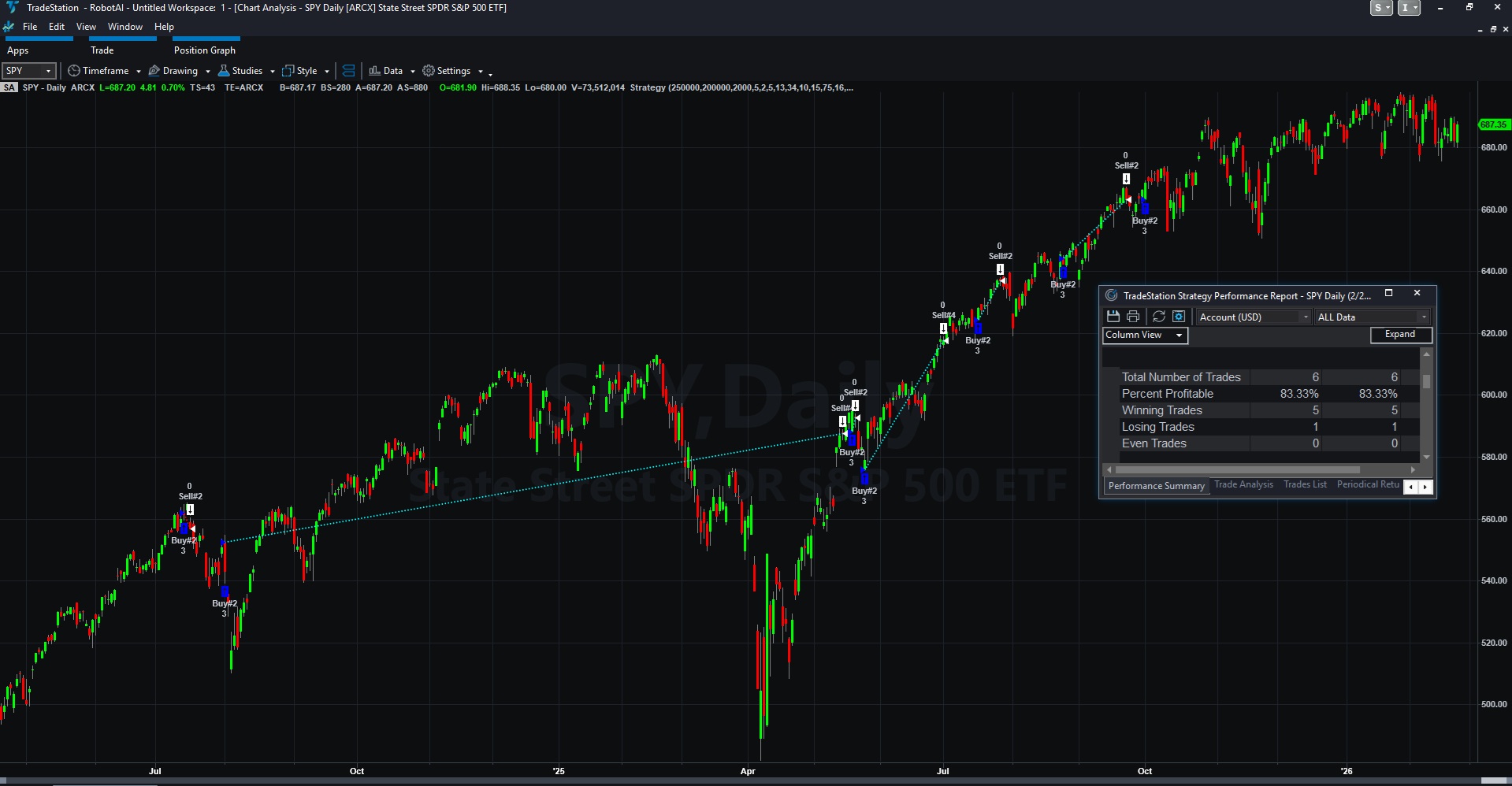
TradeExecutor.AI demonstrates this principle perfectly: one strategy, one platform, zero discretionary overrides. The system that backtested profitably over historical periods executes with identical logic during live market sessions.
Should You Change Your Strategy When Oil Crashes?
Strategy modifications should never happen in real-time based on market movements. Effective trading strategies get developed and tested during calm periods, not adapted on the fly when energy stocks are moving 10% in a single session.
The urge to modify strategy during volatility represents pure emotion, not logic. Every rule change based on recent market action introduces recency bias—the dangerous assumption that whatever just happened will continue happening.
Rules-based systems ignore this temptation entirely. The strategy parameters remain constant whether oil crashes 15% or rallies 20%. The system executes the same logic that produced positive expected value during backtesting periods.
What Is an Execution Leak in Trading?
An execution leak represents the performance gap between a strategy's backtested returns and its live trading results. This gap emerges when traders fail to execute their predetermined rules consistently.
Execution leaks compound through multiple failure points: entering positions late due to hesitation, exiting early due to fear, adjusting position sizes based on recent wins or losses, and skipping trades that "feel" wrong despite meeting all criteria.
Quantifying execution leaks reveals sobering statistics. Studies show discretionary traders typically capture only 60-70% of their strategy's theoretical returns due to inconsistent execution. The remaining 30-40% leaks out through emotional decision-making.
Rules-based execution eliminates these leaks by removing human discretion entirely. The system executes every signal that meets the predefined criteria, regardless of market conditions or recent performance.
Why Do Most Traders Fail During Market Volatility?
Most traders fail during volatility because they confuse activity with progress. When markets move violently, the natural human response involves increased monitoring, more frequent adjustments, and constant strategy questioning.
Successful trading requires the opposite approach: predetermined rules, consistent execution, and emotional detachment from short-term outcomes. Volatility tests discipline, not intelligence. The smartest traders often perform worst during chaotic periods because they overthink every decision.
TradeExecutor.AI removes this psychological burden by automating the entire execution process. The system doesn't experience stress when software stocks crater or energy futures spike. It simply executes the predetermined logic that backtesting validated.
Does Backtested Performance Predict Live Results?
Backtested performance predicts live results only when execution remains identical between testing and live trading. Most traders achieve different live results because they can't replicate their backtesting discipline during actual market sessions.
The gap between backtested and live performance directly correlates with execution consistency. Strategies with simple, objective rules translate more effectively to live trading than complex systems requiring subjective interpretation.
Deterministic execution bridges this gap completely. When the same code that generated backtesting results executes live trades, performance correlation approaches 100%. No human interpretation, no emotional modifications, no execution variations.
How TradeExecutor Eliminates the Execution Gap
TradeExecutor.AI eliminates execution gaps through complete automation on the TradeStation platform. The same algorithmic logic that processes historical data for backtesting handles live market data for trade execution.
This deterministic approach ensures backtested results accurately predict live performance. No trader psychology, no discretionary overrides, no execution delays based on market fear or greed. The system executes trades based purely on price and indicator data.
One-time payment structure aligns incentives properly. TradeExecutor succeeds when traders achieve consistent results, not when they generate excessive trading volume or pay recurring fees that drain account equity over time.
The platform provides complete transparency: traders can review every rule, understand every decision point, and verify every backtest result. No black box algorithms, no hidden parameters, no mysterious execution logic.
When software stocks slump and oil prices spike, rules-based systems maintain their discipline while discretionary traders abandon their plans. The choice between systematic execution and emotional trading determines long-term success more than market knowledge or analytical skill.
TradeExecutor.AI proves that removing human discretion from trade execution eliminates the primary cause of trading failure. One strategy, one platform, zero emotions. Tested. Trusted. Transparent.
How much is your execution leak costing you?
Most traders lose more to overrides than to bad strategy. Calculate yours in 30 seconds.
Calculate Your LeakTradeExecutor.ai — deterministic automated execution engine
← Back to Insights