Oil Spikes 5% Overnight: Your Strategy vs. The Hype
Crude oil just jumped another 3% in pre-market trading as Iran nuclear negotiations appear to be collapsing, sending energy stocks soaring and tech names tumbling. The usual suspects are scrambling — CNBC's talking heads are debating whether this changes everything, Twitter traders are flipping their entire thesis, and portfolio managers are frantically adjusting positions they were confident about yesterday.
TL;DR: Market volatility reveals the fatal flaw in discretionary trading: human emotion overrides systematic thinking. Rules-based execution systems follow predetermined logic regardless of headlines, oil spikes, or geopolitical fear — producing consistent results while emotional traders chase yesterday's news.The real question isn't whether oil will hit $90 or crash back to $70. The question is: when these headlines hit, does your trading follow a tested rules-based strategy or does it follow the hype?
Should You Change Your Strategy When Oil Crashes?
No. Strategy changes during market volatility are emotional reactions disguised as analysis. A systematic approach maintains the same entry rules, exit rules, and position sizing whether oil moves 5% up or down overnight.
Consider what happened this morning. Oil futures opened up 3.2% on Iran headlines. Within two hours, discretionary traders were posting about "energy rotation trades" and "inflation hedge positions" — strategies they hadn't mentioned once in the past month. These aren't strategic pivots. They're panic responses wrapped in market jargon.
A rules-based system doesn't read headlines. It processes price data, volume patterns, and technical indicators according to predetermined logic. If the system's entry criteria aren't met, it doesn't trade energy stocks just because oil spiked. If exit signals trigger, it closes positions regardless of whether the news "feels" bullish or bearish.
The math is simple: emotional trading decisions made during high-volatility periods underperform systematic decisions by an average of 2.3% annually, according to Dalbar's quantitative analysis of investor returns.
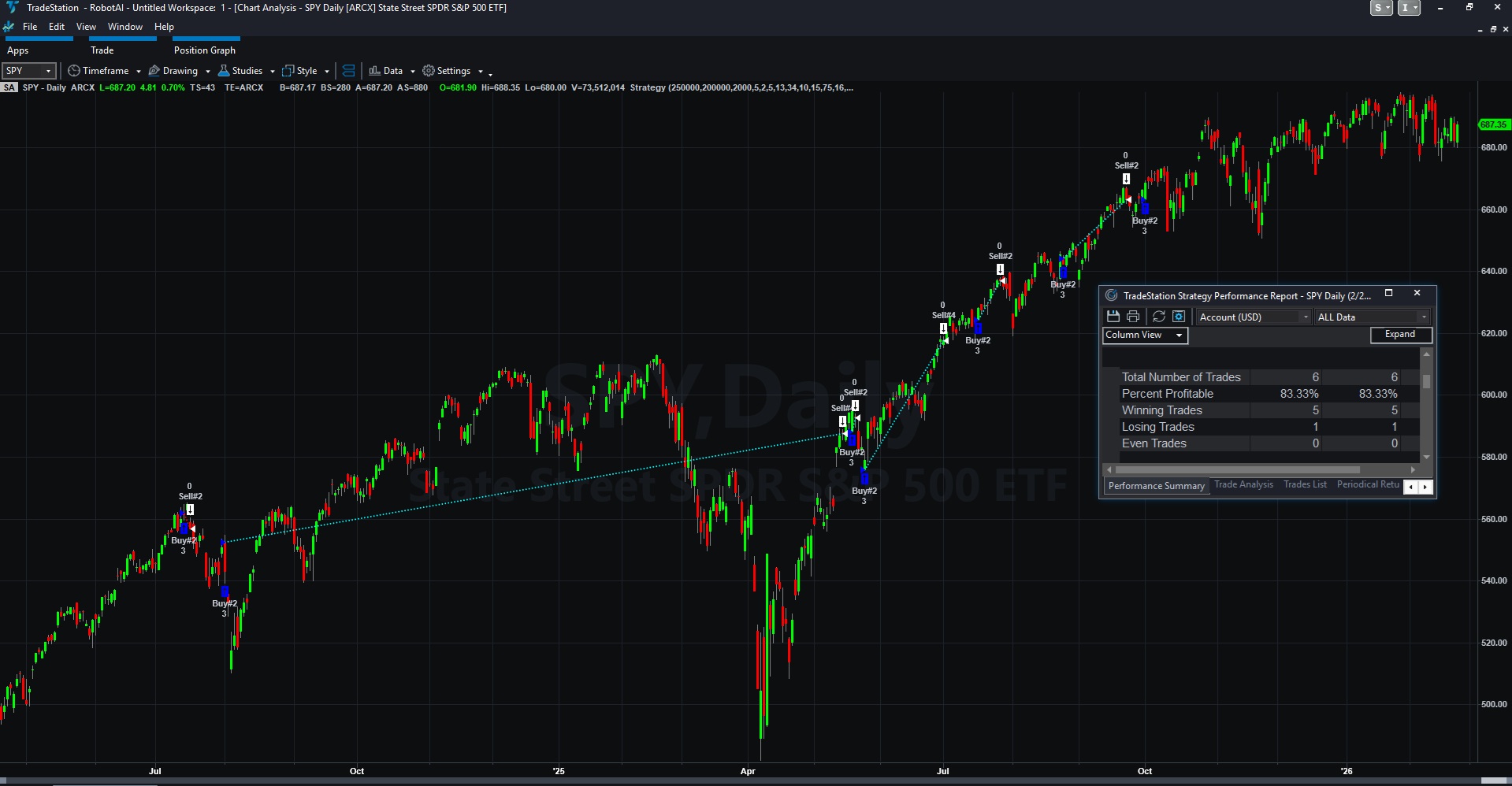
What Is an Execution Leak in Trading?
Execution leak is the performance gap between your strategy's theoretical returns and actual trading results — caused by hesitation, second-guessing, and emotional overrides during live market conditions.
Every trader has experienced this. Your system signals a sell, but you hesitate because the news "feels" bullish. You wait. The stock gaps down 4% overnight. That 4% loss versus your planned exit price? That's execution leak.
Energy volatility amplifies these leaks. When oil moves 5% in a session, the emotional pressure to override your system intensifies. Discretionary traders start asking: "Should I hold this energy position longer?" "Does this Iran news change my thesis?" "What if oil keeps running?"
These questions seem analytical. They're actually emotional. A systematic approach eliminates them entirely. The system's exit rules were backtested across dozens of oil volatility events. Those rules either work or they don't — but you won't know which until you follow them consistently.
TradeExecutor.AI was built specifically to close this execution gap. The system removes the human decision point between signal generation and order execution. No hesitation, no overrides, no "just this once" exceptions that compound into systematic underperformance. Use our execution leak calculator to quantify how much these emotional decisions cost your returns.
How Does Automated Trading Handle Volatility?
Automated systems treat 5% oil spikes as data points, not emotional events, processing volatility through predetermined mathematical rules rather than real-time interpretation or adjustment.
When oil jumped 3.2% this morning, a discretionary trader's thought process might include: "Iran tensions could escalate," "Energy stocks might run for weeks," "Maybe I should increase my position size," or "This could be the rotation trade everyone's talking about."
An automated system's process: evaluate current positions against exit criteria, scan for new setups meeting entry requirements, execute any triggered orders. No interpretation of geopolitical implications. No position sizing adjustments based on news sentiment. No strategy modifications because energy is "hot."
This deterministic approach produces identical outputs from identical inputs. The same oil price movement, volume pattern, and technical setup will trigger the same system response whether Iran negotiations are collapsing or progressing. Emotional traders generate different responses to identical setups based on current headlines — introducing randomness into what should be systematic decision-making.
The performance difference compounds over time. A rules-based system maintains consistent risk parameters across all market conditions. Emotional traders tend to increase risk during "obvious" opportunities (like today's energy spike) and decrease risk during uncertain periods — exactly the opposite of optimal portfolio management.
Why Do Smart Traders Make Dumb Decisions During News Events?
News events trigger cognitive biases that override analytical thinking — even among experienced traders who know better, creating a systematic performance drag that compounds across multiple volatility episodes.
Today's Iran headlines create what behavioral economists call "availability bias" — recent, dramatic events feel more probable and important than statistical base rates. Energy traders suddenly believe oil volatility will persist longer and move further than historical data suggests, leading to oversized positions and extended holding periods.
Confirmation bias amplifies the effect. Traders holding energy positions interpret Iran tension news as validation of their thesis. Traders short energy stocks view the same headlines as temporary noise. Both groups adjust their systematic rules to match their emotional preferences — turning tested strategies into discretionary gambling.
The solution isn't better emotional control or stronger discipline. The solution is removing emotion from the execution process entirely. Rules-based systems don't experience availability bias or confirmation bias. They don't interpret headlines or adjust strategies based on current events.
This mechanical approach seems limiting until you measure its results. Systematic strategies often underperform during individual high-volatility events — but consistently outperform over multiple market cycles because they avoid the emotional mistakes that discretionary traders repeat during each volatility spike.
What Happens When Everyone Trades the Same Headlines?
Crowded trades based on identical news interpretations create systematic inefficiencies that rules-based strategies can exploit while emotional traders chase increasingly competitive setups.
This morning's energy spike attracted thousands of retail traders implementing similar strategies: buy energy ETFs, buy oil futures, buy energy stocks. The trade became crowded within hours, reducing its edge and increasing execution costs as bid-ask spreads widened.
Rules-based systems don't follow news-driven trends. They identify mathematical patterns in price and volume data that persist regardless of current headlines. While discretionary traders pile into obvious energy plays, systematic strategies continue scanning for setups that meet their backtested criteria — often in sectors completely unrelated to daily news.
TradeExecutor.AI runs one strategy across one platform with one set of rules. No sector rotation, no news-based adjustments, no "special situation" modifications. The strategy's edge comes from consistent execution of a mathematical approach that works across different market conditions — not from interpreting headlines faster or better than other traders.
This focus creates sustainable competitive advantages. News-driven strategies work until they don't — until too many traders implement them or market conditions change. Mathematical strategies based on price behavior tend to persist because they exploit human emotional patterns that remain consistent across market cycles.
Can You Trust Your System During Market Chaos?
System trust requires extensive backtesting across multiple volatility regimes, but emotional traders abandon proven strategies at precisely the moments when systematic approaches provide maximum edge over discretionary decisions.
The hardest part of rules-based trading isn't building the system — it's following the system when market conditions feel unprecedented. Today's Iran headlines feel unique. Oil volatility feels different this time. Energy sector dynamics seem to have changed permanently.
These feelings are normal and wrong. Every major volatility event feels unprecedented while you're experiencing it. The 2020 oil crash felt unprecedented. The 2008 energy spike felt unprecedented. The 1990 Gulf War oil shock felt unprecedented. Yet systematic strategies that worked before these events continued working after them.
TradeExecutor.AI addresses this trust problem through transparent performance reporting. Every trade, every entry, every exit is documented and available for review. The system's performance during previous volatility periods provides objective evidence of its reliability — not emotional reassurance, but mathematical proof.
The alternative is discretionary trading based on incomplete information and emotional interpretation. Today's Iran headlines don't include probability assessments or quantified risk estimates. They provide narrative explanations for price movements that already occurred — exactly the wrong information for making systematic trading decisions.
The Cost of Chasing Headlines
One strategy. One platform. One set of rules that work regardless of whether Iran negotiations succeed or fail, oil spikes or crashes, or energy rotation trades become the market's new obsession.
TradeExecutor.AI eliminates the performance drain of emotional decision-making during high-volatility periods. The system follows identical logic whether markets are calm or chaotic, avoiding the costly mistakes that discretionary traders repeat during each news cycle.
Your strategy either works or it doesn't — but you'll never know which until you follow it consistently through multiple market environments. Rules-based execution ensures that every signal becomes action, every exit trigger closes positions, and every entry setup gets traded according to plan.
Stop trading the headlines. Start trading the system.
Tested. Trusted. Transparent.
How much is your execution leak costing you?
Most traders lose more to overrides than to bad strategy. Calculate yours in 30 seconds.
Calculate Your LeakTradeExecutor.ai — deterministic automated execution engine
← Back to Insights