When Markets Rally 900 Points: Does Your Strategy Follow Rules or Headlines?
The Dow just shot up 900 points. The S&P 500 crossed 7,100 for the first time. Iran opened the Strait of Hormuz, oil prices shifted, and every financial news outlet is buzzing with analysis, predictions, and hot takes about what comes next.
The bottom line: Markets move fast, but your trading decisions shouldn't chase headlines. A rules-based strategy executes the same way whether the Dow rises 900 points or falls 900 points — no emotional overrides, no second-guessing, no execution leaks caused by human hesitation.Should You Change Your Strategy When Geopolitical News Breaks?
No. Changing your strategy based on breaking news is exactly how traders turn winning systems into losing ones.
When Iran announced the Strait of Hormuz would remain open, energy traders faced a classic dilemma: stick to their predetermined rules or react to the headlines. The traders who stuck to their rules executed their planned positions. The ones who started second-guessing? They hesitated, missed entries, or worse — flipped their entire approach mid-stream.
Rules-based execution doesn't care about news headlines. If your strategy says buy at a specific technical level, the system buys. If it says sell, the system sells. The geopolitical backdrop might explain why the market moved, but it doesn't change what your tested strategy tells you to do.
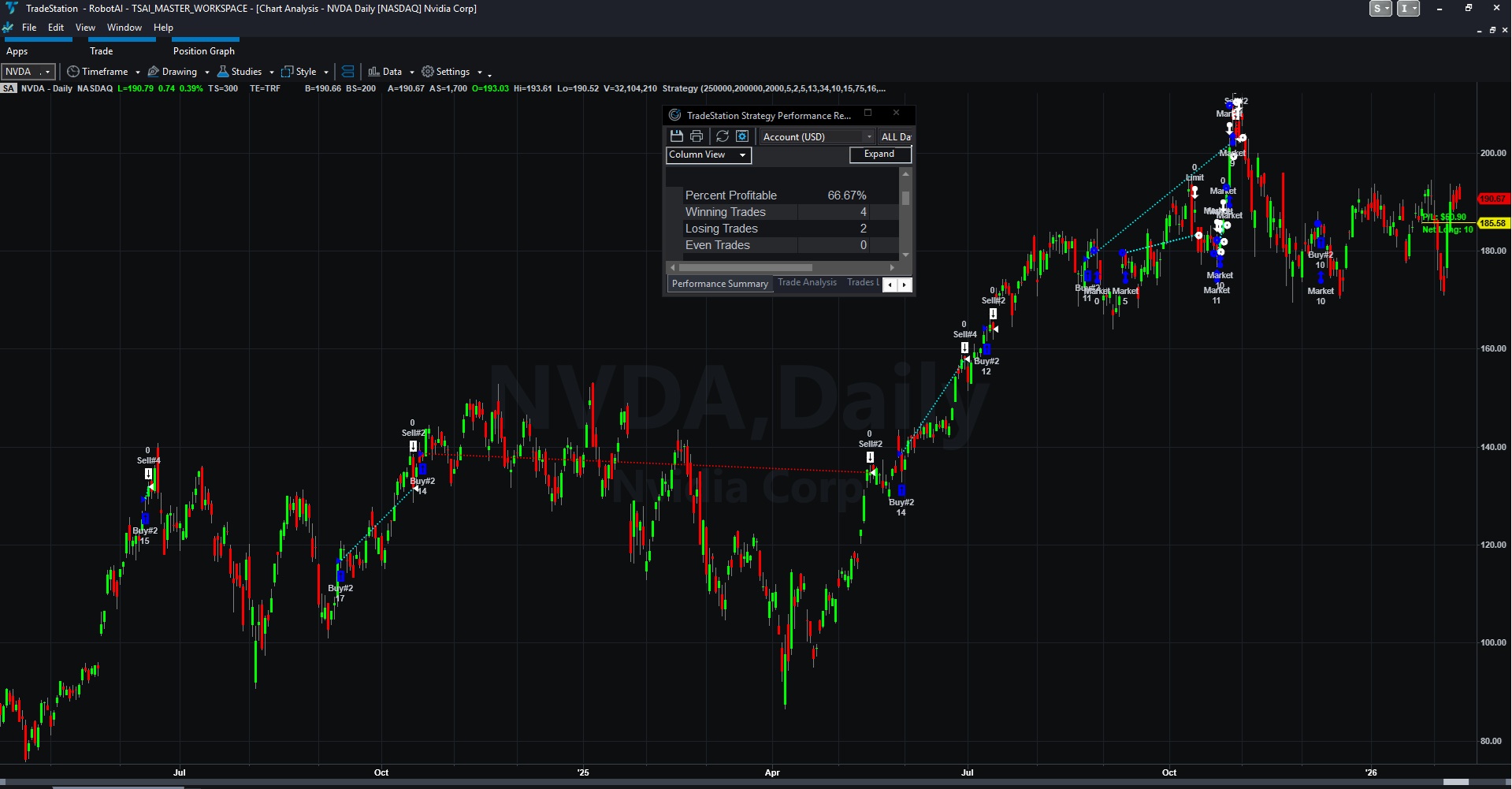
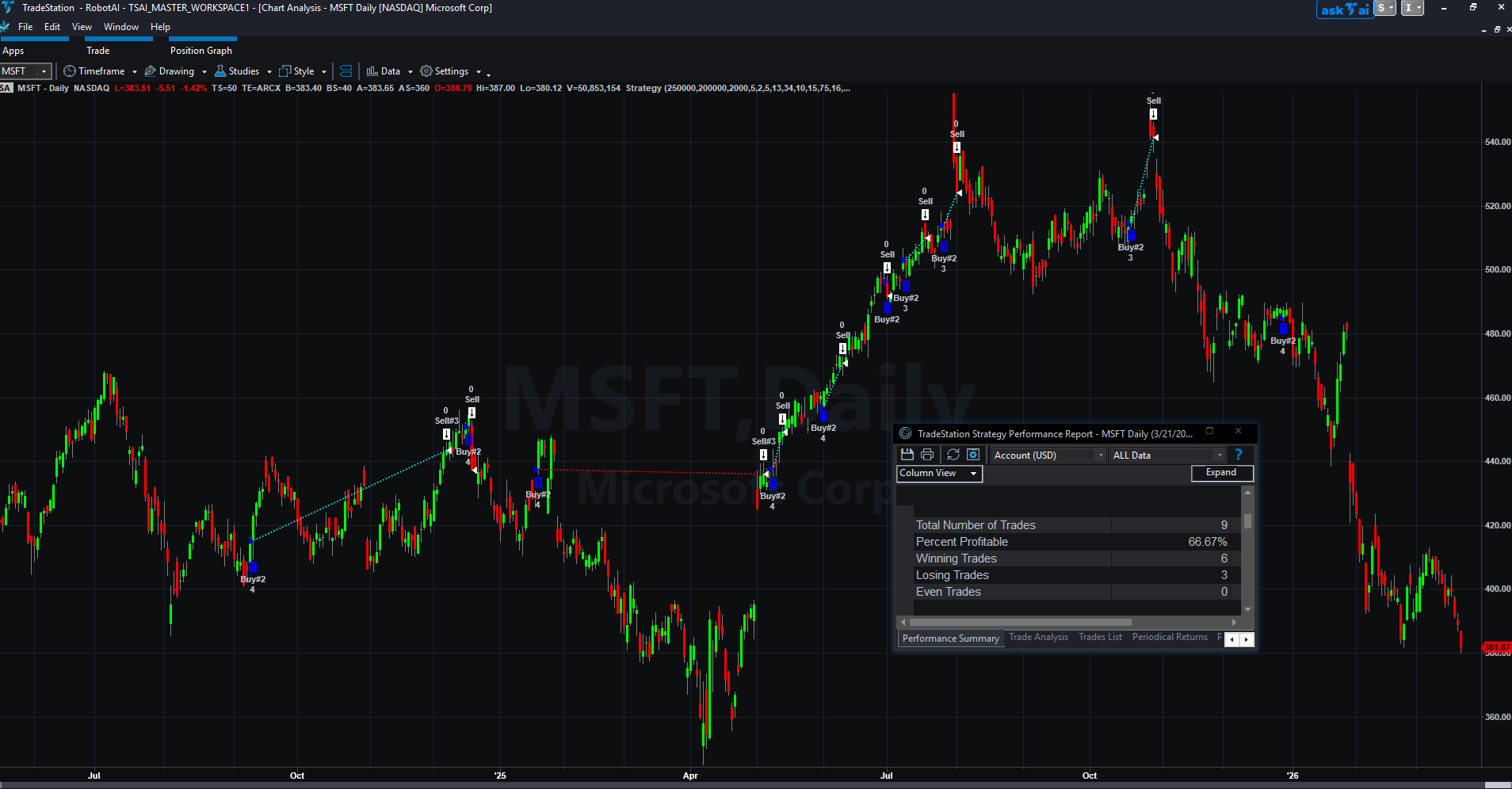
This is why TradeExecutor.AI focuses on one strategy, executed deterministically on one platform. Same inputs, same outputs, every single time. No discretionary overrides when CNN starts flashing "Breaking News" alerts.
What Happens When Traders Chase Headlines Instead of Rules?
Traders who chase headlines create execution leaks — the gap between what their strategy says to do and what they actually do.
Here's what happened to discretionary traders during today's rally: The Dow jumped 200 points in the first hour. Traders who planned to wait for their signal at 43,800 suddenly thought, "Maybe I should jump in now before it runs away." So they bought at 43,900 instead. Then the market pulled back to 43,750 before continuing higher.
That's a 150-point execution leak on a single trade. Multiply that across dozens of trades per month, and you're looking at serious performance degradation.
Meanwhile, automated systems executed exactly where they were programmed to execute. No FOMO, no fear of missing the move, no emotional override. The strategy that was backtested and verified is the same strategy that executed live.
How Does Automated Trading Handle Market Volatility?
Automated trading handles volatility by ignoring it entirely and focusing on predefined trigger points.
When the S&P 500 crossed 7,100 for the first time, human traders started asking questions: "Is this a breakout or a false signal? Should I take profits? Should I add to positions?" These questions create hesitation, and hesitation creates execution problems.
Automated systems don't ask questions. They follow instructions. If the strategy says enter a position when specific conditions align, the system enters. If it says exit when certain criteria are met, the system exits. The fact that we're hitting all-time highs doesn't change the code.
This deterministic approach is what separates rules-based execution from the emotional rollercoaster most traders ride. TradeExecutor.AI removes the human failure point between signal and action. Your strategy either works or it doesn't — but at least you'll know because you're actually trading the strategy you tested.
Why Do Most Traders Fail at Following Their Own Rules?
Most traders fail because they treat their trading rules as suggestions rather than requirements.
They'll spend weeks backtesting a strategy, see positive results, then abandon those same rules the moment the market does something unexpected. Today's 900-point Dow rally is a perfect example. Traders who had stop-losses at specific levels suddenly started thinking, "Maybe I should hold through this rally." Traders who planned to take profits at certain targets thought, "Maybe I should let this run."
Every deviation from your tested strategy is a bet that your real-time emotions are smarter than your backtested logic. The data suggests otherwise.
Rules-based execution eliminates this problem entirely. The system doesn't know it's a historic day. It doesn't know the Strait of Hormuz was in the news. It knows only what the market data says and what the strategy requires. That's how you maintain consistency across all market conditions.
What Is an Execution Leak in Trading?
An execution leak is the performance gap between your strategy's theoretical results and your actual trading results, typically caused by emotional decision-making or hesitation.
Most traders don't realize how much money they lose to execution leaks. They'll blame their strategy for underperforming, when the real problem is they're not actually trading their strategy. They're trading a modified, emotionally-influenced version of their strategy.
For example: Your strategy says buy XYZ at $100. But when XYZ hits $100, you hesitate because the news headlines are scary. You wait until $101.50 to convince yourself it's "safe." Then you sell at $103 instead of your planned $105 target because you get nervous. Your strategy showed a theoretical 5% gain, but you only captured 1.5%.
That 3.5% difference is your execution leak. Multiply this across hundreds of trades, and your execution leaks will destroy any edge your strategy might have had.
TradeExecutor.AI exists specifically to eliminate execution leaks. One strategy, executed exactly as designed, every single time.
Does Emotional Trading Get Worse During Major Market Moves?
Yes. Emotional trading intensifies during major market moves because the stakes feel higher and the fear of missing out becomes overwhelming.
Today's 900-point rally triggered every emotional trading instinct: FOMO for those not positioned, greed for those who were positioned, and analysis paralysis for those trying to figure out what comes next. These emotions create terrible trading decisions.
Professional traders know that their worst decisions come during their most emotional moments. That's why institutional trading increasingly relies on algorithmic execution. Remove the emotion, remove the mistakes.
Individual traders can access the same advantage through rules-based automated execution. No more staring at the screen wondering whether to pull the trigger. No more second-guessing your strategy because the market feels different today. The strategy either works or it doesn't — but at least you're actually trading it.
The One Thing That Separates Consistent Traders From Everyone Else
Consistent traders follow the same process regardless of market conditions, news headlines, or emotional impulses.
They don't have good days and bad days based on how they feel. They have good days and bad days based on whether the market aligns with their strategy. Some days their approach works, some days it doesn't, but they're always trading the same approach.
This consistency is what creates long-term edge in trading. Not perfect market calls, not genius-level analysis, not insider information. Just the discipline to do the same thing the same way, every single time.
That's exactly what TradeExecutor.AI delivers: the same strategy, executed the same way, on the same platform, regardless of whether the Dow is up 900 points or down 900 points. Backtested performance, verified results, transparent execution.
---
Ready to eliminate execution leaks from your trading? Your strategy's backtested performance means nothing if you can't execute it consistently in live markets.
Tested. Trusted. Transparent.
How much is your execution leak costing you?
Most traders lose more to overrides than to bad strategy. Calculate yours in 30 seconds.
Calculate Your LeakTradeExecutor.ai — deterministic automated execution engine
← Back to Insights