S&P 500 Hits Records While Traders Chase Headlines: Why Rules Beat Reactions
The S&P 500 closed at fresh highs today as investors shrugged off Iran conflict concerns, proving once again that markets move faster than human emotions can process. While CNBC tracks every tick and Twitter buzzes with hot takes, the real question isn't what happened — it's whether your trading strategy survived the whipsaw intact.
The bottom line: Markets reward discipline, not reactions. Rules-based strategies execute the same way whether headlines scream about geopolitical chaos or record highs, while discretionary traders leak profits chasing news that's already priced in by the time they act.Does Your Strategy Follow Rules or Headlines?
Your strategy should execute identically whether the news cycle screams war or celebration. Rules-based systems don't read headlines, don't panic during overnight gaps, and don't second-guess entries because "something feels different this time."
Consider what happened this week: Iran tensions spiked futures overnight, gap-down opened seemed inevitable, then markets reversed to new highs within hours. A discretionary trader might have:
- Canceled a planned long entry due to "geopolitical uncertainty"
- Sold positions early to "lock in gains before things get worse"
- Sat out entirely because "the market doesn't make sense right now"
Meanwhile, a rules-based system executed exactly as backtested. If the strategy called for a long entry at a specific price level with defined risk parameters, it took that trade regardless of the headline du jour.
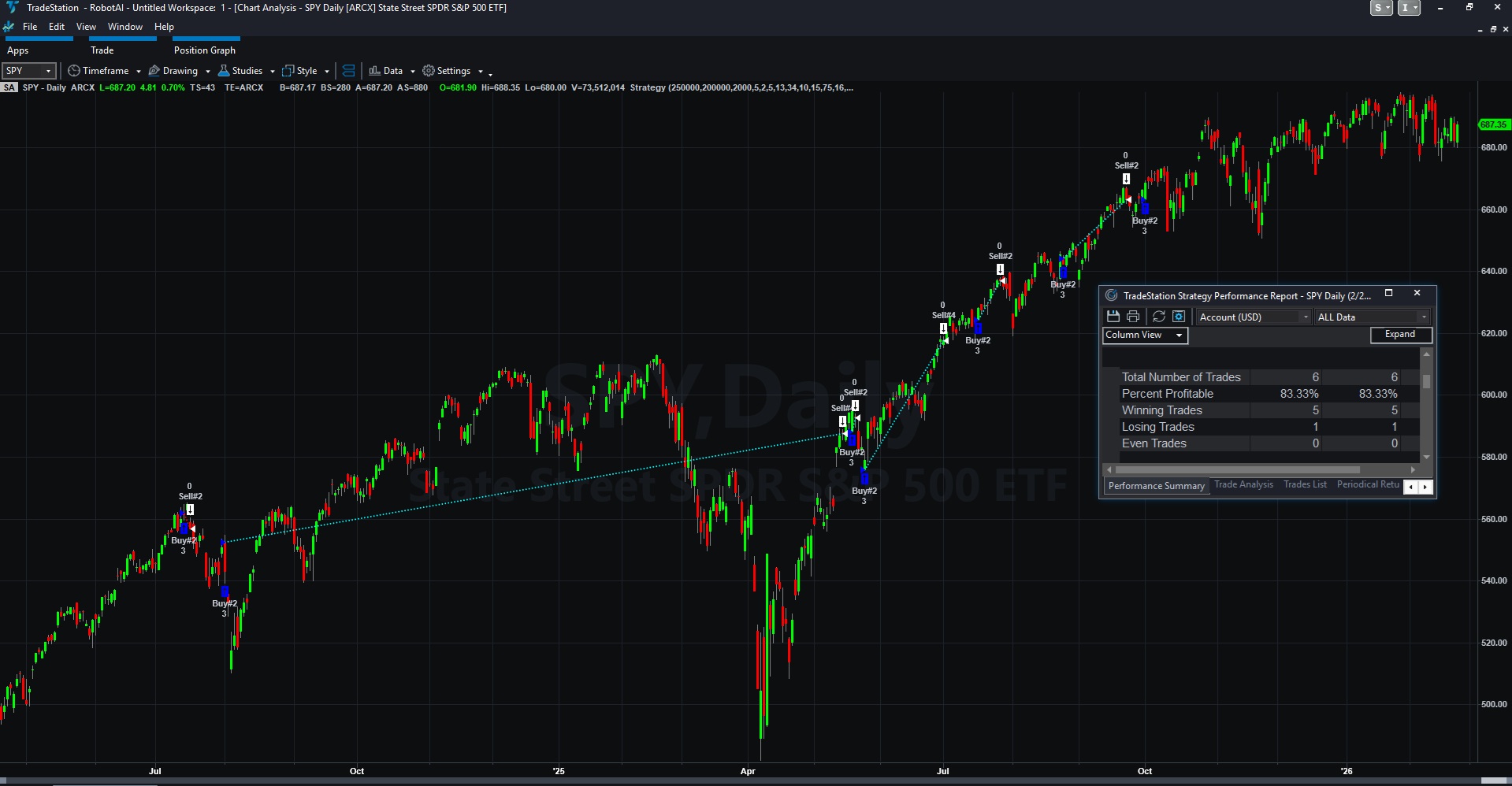
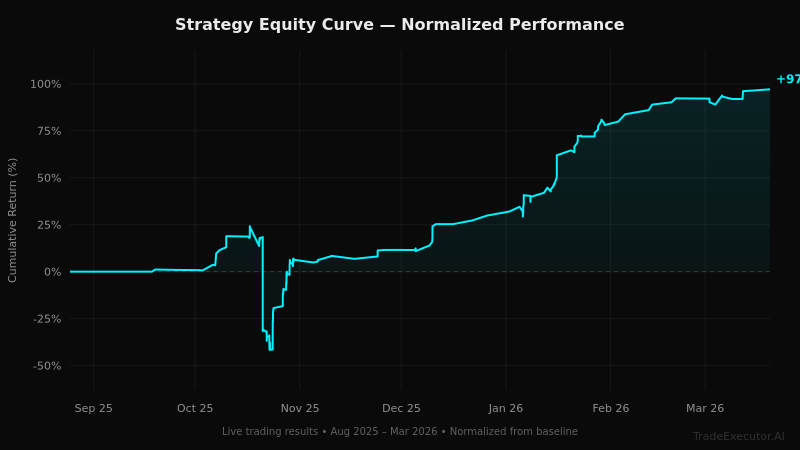
What Happens When Traders React to Breaking News?
Reactive trading creates systematic execution leaks that compound over time. Every override, every "just this once" decision, every emotional adjustment moves your live results further from your backtested expectations.
The Iran headline provides a perfect case study. Assume your strategy signaled a long entry Monday morning. The discretionary trader sees geopolitical risk and decides to "wait for clarity." The automated system sees price action and executes according to pre-defined rules.
By market close, the S&P 500 hit new records. The discretionary trader missed the move entirely, then faces a worse choice: chase the breakout at higher prices or wait for a pullback that may not come. The automated system captured the full move because it never questioned the original signal.
This pattern repeats across every major news event: COVID lockdowns, Federal Reserve announcements, earnings surprises, election results. Headlines create emotional noise; rules capture systematic edge.
How Does Automated Trading Handle Market Volatility?
Automated systems treat volatility as data, not drama. When markets gap or spike, the system calculates position size, stop placement, and entry timing using the same mathematical framework regardless of the underlying cause.
TradeExecutor.AI demonstrates this principle in practice. The platform executes one thoroughly backtested strategy on TradeStation without discretionary overrides. If the strategy parameters indicate a trade setup, the system executes. If not, it waits. No exceptions, no emotional adjustments, no "reading the room."
Consider position sizing during volatile periods. A panicked trader might reduce size because "things feel risky" or increase size because "this is the big one." The automated system calculates position size using volatility-adjusted parameters that account for current market conditions mathematically, not emotionally.
The result: consistent risk management that doesn't degrade when headlines get scary or euphoric.
Should You Override Your System During Major News Events?
Never. The moment you override your system, you're no longer trading your backtested strategy — you're trading your emotions with cherry-picked rules as decoration.
Every override teaches your brain that the system is optional when stakes feel high. This creates a psychological pattern where you'll find reasons to intervene precisely when discipline matters most. The trader who skips "just one trade" because of Iran concerns will skip the next one because of inflation data, then the next because earnings season feels different.
Professional systematic traders understand this principle viscerally. Renaissance Technologies doesn't turn off their algorithms because Jim Simons has a hunch. Two Sigma doesn't add discretionary overlays when headlines get dramatic. They trust their backtested edge more than their real-time emotions.
Your strategy either works across all market conditions included in your backtest, or it doesn't work at all. There's no middle ground where selective application improves results.
What Is an Execution Leak in Trading?
An execution leak occurs every time your live trading deviates from your backtested plan. These deviations accumulate like death by a thousand cuts, slowly degrading performance until your live results bear little resemblance to your paper expectations.
Common execution leaks include:
- Skipping trades due to "market conditions"
- Taking partial profits early to "lock in gains"
- Moving stops based on "gut feelings"
- Adding size because a setup "looks really good"
- Waiting for "confirmation" before entering
Each leak seems reasonable in isolation. Who wouldn't want to avoid geopolitical risk? Who wouldn't take profits before a potential reversal? The problem: these micro-decisions compound into macro-destruction of your systematic edge.
Research from implementation shortfall studies shows that execution leaks can cost systematic strategies 1-3% annually in performance drag. Over time, this difference separates profitable strategies from mediocre ones.
Why One Strategy, One Platform, One Payment Model Works
Complexity creates more opportunities for execution leaks. Multiple strategies mean multiple decisions about which one to follow when. Multiple platforms create technical friction that delays execution. Subscription models create sunk-cost pressure to overtrade.
TradeExecutor.AI eliminates these friction points through radical simplification: one thoroughly backtested strategy, direct integration with TradeStation, and a one-time payment that removes ongoing financial pressure to generate activity.
This model aligns perfectly with systematic trading principles. Your backtesting didn't test multiple strategies simultaneously — it tested one approach across thousands of market scenarios. Your optimal execution doesn't require platform arbitrage — it requires consistent, immediate order placement. Your profitability doesn't depend on trade frequency — it depends on capturing your edge when it appears.
The Iran headline that moved markets today joins thousands of similar events in market history. The traders who profited consistently weren't the ones with the best predictions about geopolitical outcomes. They were the ones with the most reliable execution of proven strategies.
Calculate Your True Execution Cost
Stop measuring your strategy by its best backtested results. Start measuring it by the gap between those results and your actual trading outcomes. That gap represents your execution leak — the real cost of discretionary overrides, emotional decisions, and "market feel" adjustments.
TradeExecutor.AI was built to eliminate this gap entirely. Rules-based execution means your live results match your backtested expectations because the same systematic approach drives both. No emotions, no overrides, no exceptions.
Ready to see how automated execution handles whatever headlines tomorrow brings? Explore our rules-based strategy that treats market chaos as just another data point.
Tested. Trusted. Transparent.How much is your execution leak costing you?
Most traders lose more to overrides than to bad strategy. Calculate yours in 30 seconds.
Calculate Your LeakTradeExecutor.ai — deterministic automated execution engine
← Back to Insights