The S&P 500 Just Proved Why Your Trading Strategy Needs Rules, Not Reactions
The S&P 500 dipped Friday but still locked in a solid weekly gain despite Iran ceasefire uncertainty rattling markets. While traders scrambled to interpret headlines and adjust positions, one truth became crystal clear: the gap between market noise and market reality separates winning strategies from losing ones.
TL;DR: Rules-based execution eliminates the costly gap between signal and action that destroys returns during volatile periods. When markets move on headlines like ceasefire news, rules-based strategy systems execute predetermined responses while discretionary traders second-guess their way into losses.Friday's action perfectly illustrates why systematic execution beats human judgment every single time markets move unexpectedly.
Does Your Strategy Follow Rules or Headlines?
Rules-based strategies execute predetermined responses to market conditions regardless of current headlines. Discretionary trading, by contrast, adjusts positions based on news interpretation and emotional reactions to volatility.
The Iran ceasefire news created the perfect test case. Traders who followed rules maintained their positions based on technical signals and risk parameters. Those who traded headlines found themselves whipsawed between fear and greed as the story developed throughout the day.
Consider what happened Friday morning: initial ceasefire optimism pushed futures higher, then reality set in about fragility concerns. Discretionary traders who bought the news and sold the concern gave up profits to transaction costs and timing errors. Rule-following systems simply executed their predetermined logic without emotional interference.
This execution leak—the difference between intended trades and actual results—compounds over time. A strategy that wins 55% of backtests might only win 48% in live trading when human emotions interfere with execution.
What Happens When Automated Trading Faces Geopolitical News?
Automated trading systems process geopolitical events through predefined risk management protocols, not headline interpretation. The system either has a rule for the scenario or it doesn't—there's no middle ground for "maybe" or "it depends."
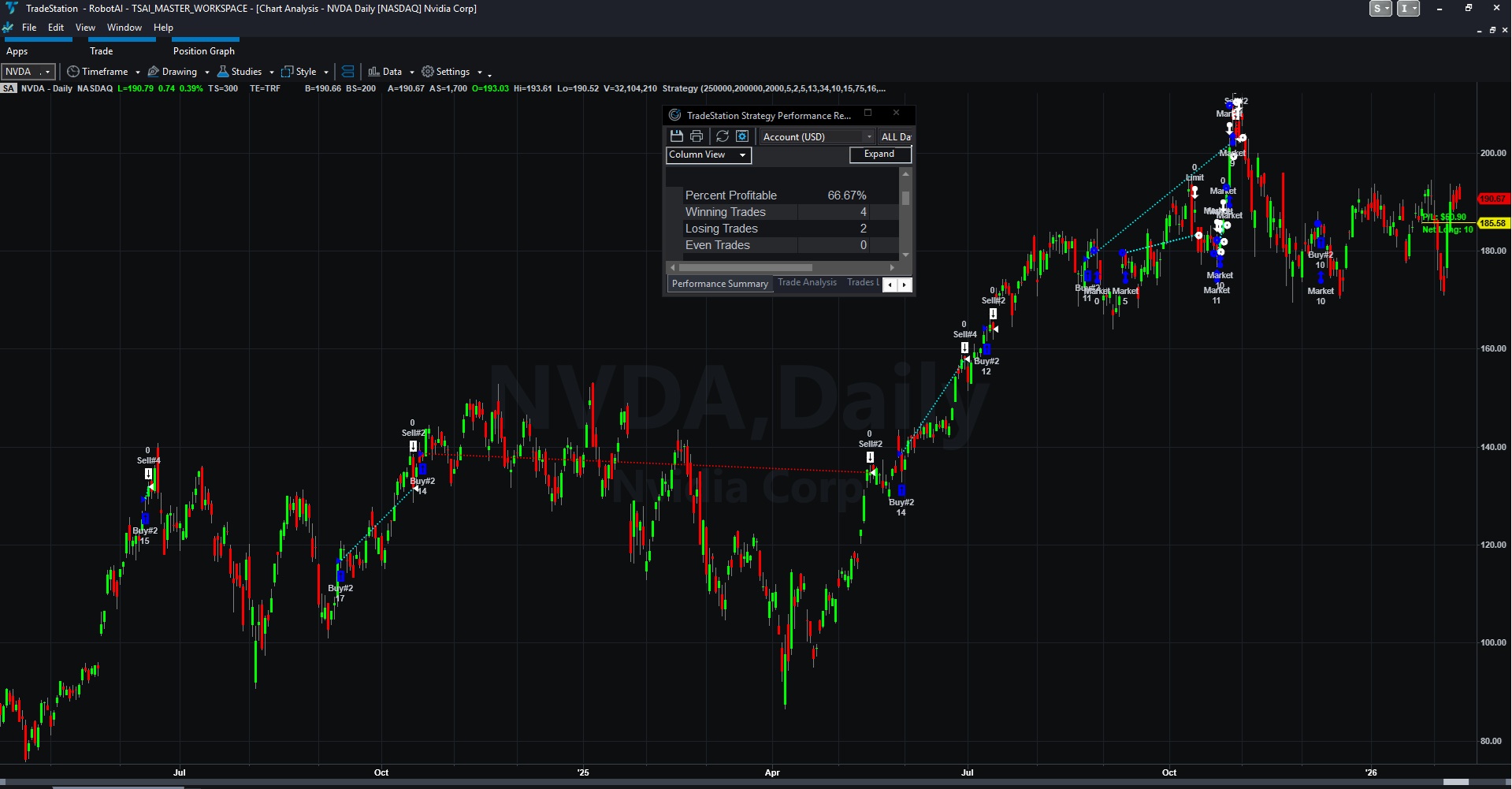
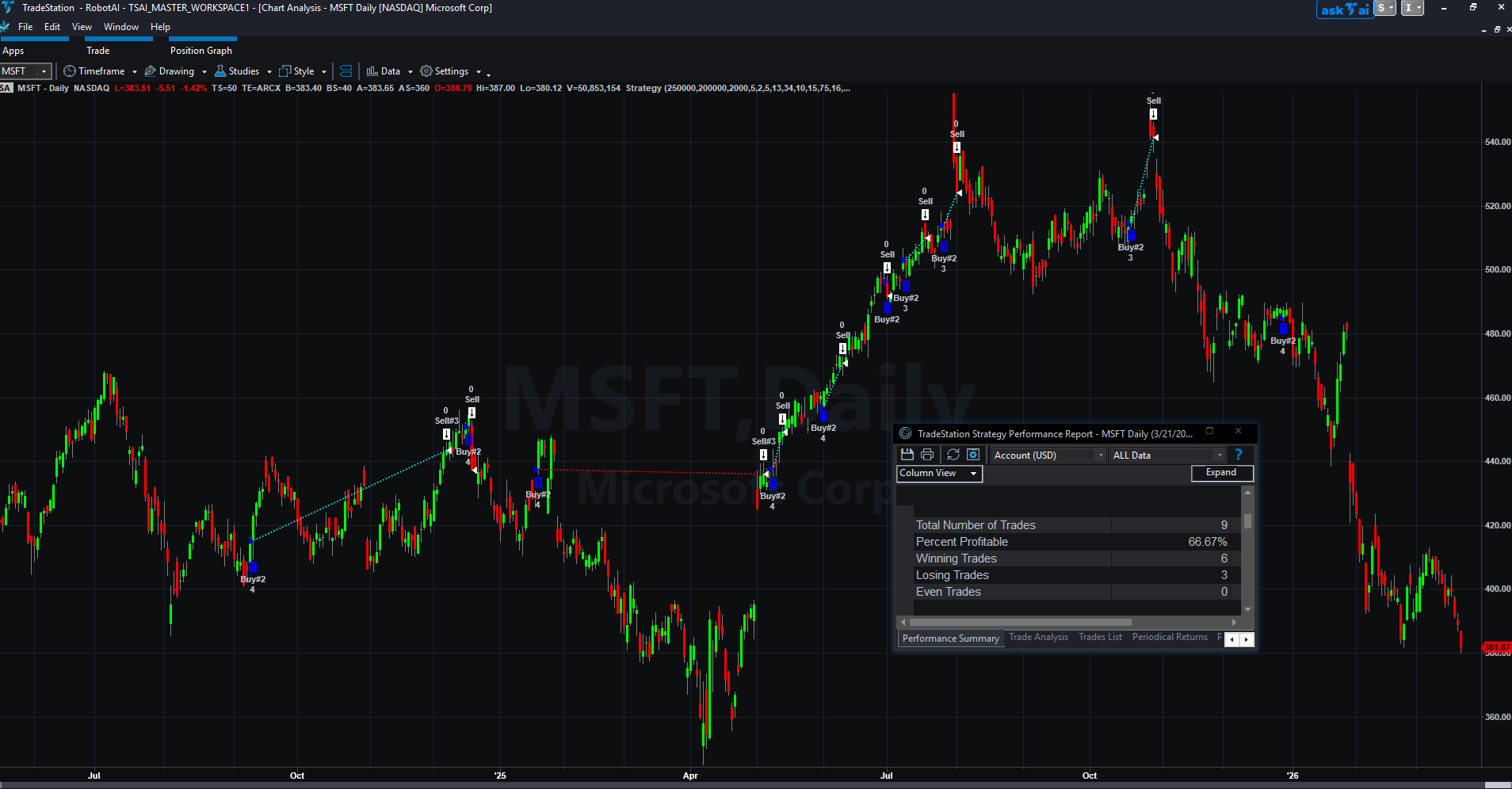
TradeExecutor.AI demonstrated this principle Friday by maintaining position sizing rules despite headline volatility. When predetermined stop-loss levels triggered, the system executed immediately. When entry signals fired based on technical criteria, positions opened regardless of Iran news sentiment.
The key difference lies in response time and consistency. Human traders spend valuable seconds or minutes processing news, questioning their strategy, and hesitating at execution moments. Automated systems execute within milliseconds of signal generation.
Geopolitical events create two types of market moves: legitimate trend changes and temporary noise. Rules-based systems treat both identically—they follow their programmed logic. Discretionary traders attempt to distinguish between them in real-time, usually incorrectly.
Should You Override Your System During Market Uncertainty?
Never override a properly backtested system during uncertain periods. Overrides inject the exact human judgment errors that systematic trading eliminates.
Friday's price action tempted many traders to "help" their systems by taking profits early or avoiding new entries. These seemingly logical interventions typically reduce long-term returns by interfering with the statistical edge that made the strategy profitable during testing.
TradeExecutor's architecture prevents override temptation by removing manual intervention capabilities entirely. Once the strategy begins execution, human emotions cannot interfere with predetermined rules. The system treats every trading day identically, whether markets face Iran ceasefire news or routine economic data.
Uncertainty feels uncomfortable, but systematic strategies profit from uncertainty's predictable patterns. Volatility creates the price dislocations that systematic entries and exits exploit. Removing volatility would eliminate most systematic trading profits.
The urge to override intensifies during exactly the moments when following rules matters most. Profitable systematic trading requires accepting short-term discomfort for long-term statistical advantage.
14 levels from Gut to Executor. We don't expect anyone to blindly jump in — do your due diligence. Submit symbols, track your predictions, and prove your discipline.
 Start Your Path →
How Does Rules-Based Execution Handle Weekly Volatility?
Rules-based execution treats weekly volatility as input data for position sizing and risk management calculations, not emotional triggers requiring strategy changes. The system measures actual volatility against historical ranges and adjusts position sizes accordingly.
This week's S&P 500 action—lower Friday but strong weekly performance—illustrates how systematic approaches process conflicting signals. The system doesn't care about the weekly narrative. It responds to current price, volume, and volatility measurements against predetermined thresholds.
Consider the execution differences: discretionary traders might reduce position sizes due to Iran uncertainty or increase them due to weekly strength. Rules-based systems calculate position sizes using volatility formulas and risk parameters that account for both scenarios automatically.
The weekly gain despite Friday's decline confirms that systematic patience outperforms reactive adjustments. Strategies designed to capture multi-day trends don't panic over single-day reversals.
What Is an Execution Leak in Trading?
Execution leak measures the performance difference between theoretical strategy results and actual trading outcomes. Even a profitable strategy becomes unprofitable when execution leaks exceed the statistical edge.
Common execution leaks include: delayed entries due to second-guessing, early exits from fear, position sizing errors under stress, and complete trade avoidance during volatility. Friday's Iran news created all four leak types for discretionary traders.
TradeExecutor.AI eliminates execution leaks by removing human decision points between signal generation and trade execution. The system cannot hesitate, second-guess, or avoid trades based on comfort levels. Every signal receives identical treatment regardless of market conditions.
Measuring execution leak requires comparing intended trades with actual results across hundreds of trades. Most traders never perform this analysis, allowing substantial leaks to persist indefinitely. Systematic execution makes measurement simple: actual results should match backtest results within statistical margins.
The TradeStation Advantage for Systematic Trading
TradeStation provides the infrastructure reliability that systematic trading requires. One platform, one data feed, one execution pathway eliminates the complexity that creates execution errors.
The platform's backtesting capabilities ensure strategy rules translate accurately from testing to live execution. What backtests on TradeStation executes identically in live markets, assuming proper position sizing and risk management.
TradeExecutor operates exclusively on TradeStation to maintain this translation accuracy. Multiple platforms introduce timing differences, data discrepancies, and execution variations that compromise systematic performance.
Friday's volatile session demonstrated TradeStation's execution reliability during high-volume periods. While other platforms experienced delays or connection issues, systematic strategies continued operating without interruption.
This reliability becomes crucial during exactly the market conditions when profits concentrate—periods of elevated volatility and increased opportunity.
The market's reaction to Iran ceasefire news proves that successful trading requires systems, not opinions. While discretionary traders debated headline implications, rules-based execution simply followed predetermined logic toward statistical profits.
TradeExecutor.AI removes every human failure point between market signal and trade execution. One strategy, tested across thousands of market conditions, executes identically whether markets face geopolitical uncertainty or routine trading sessions.
Ready to eliminate execution leaks from your trading? Explore how systematic execution handles every market scenario with mathematical precision.
Tested. Trusted. Transparent.
How much is your execution leak costing you?
Most traders lose more to overrides than to bad strategy. Calculate yours in 30 seconds.
Calculate Your LeakTradeExecutor.ai — deterministic automated execution engine
← Back to Insights