Stocks Rise on Iran Ceasefire Hopes: Why Your Trading Strategy Needs Rules, Not Headlines
Stocks climbed for the second consecutive day as markets rallied on hopes that an Iran ceasefire can hold, according to CNBC's live market updates. Oil prices softened, defense stocks pulled back, and traders scrambled to reposition portfolios based on breaking geopolitical developments.
The bottom line: While discretionary traders chase headlines and second-guess their positions, rules-based strategy execution removes emotion and human error from every trade decision. Deterministic systems follow the same logic whether markets rise on peace talks or fall on war fears — because profitable trading depends on systematic execution, not reactive decision-making.Does Your Strategy Follow Rules or Hype?
Your trading strategy either operates on predetermined rules or it operates on emotion disguised as analysis. Most traders think they follow rules until headlines like "Iran ceasefire hopes" hit their screens and suddenly they're adjusting position sizes, closing profitable trades early, or abandoning their system entirely.
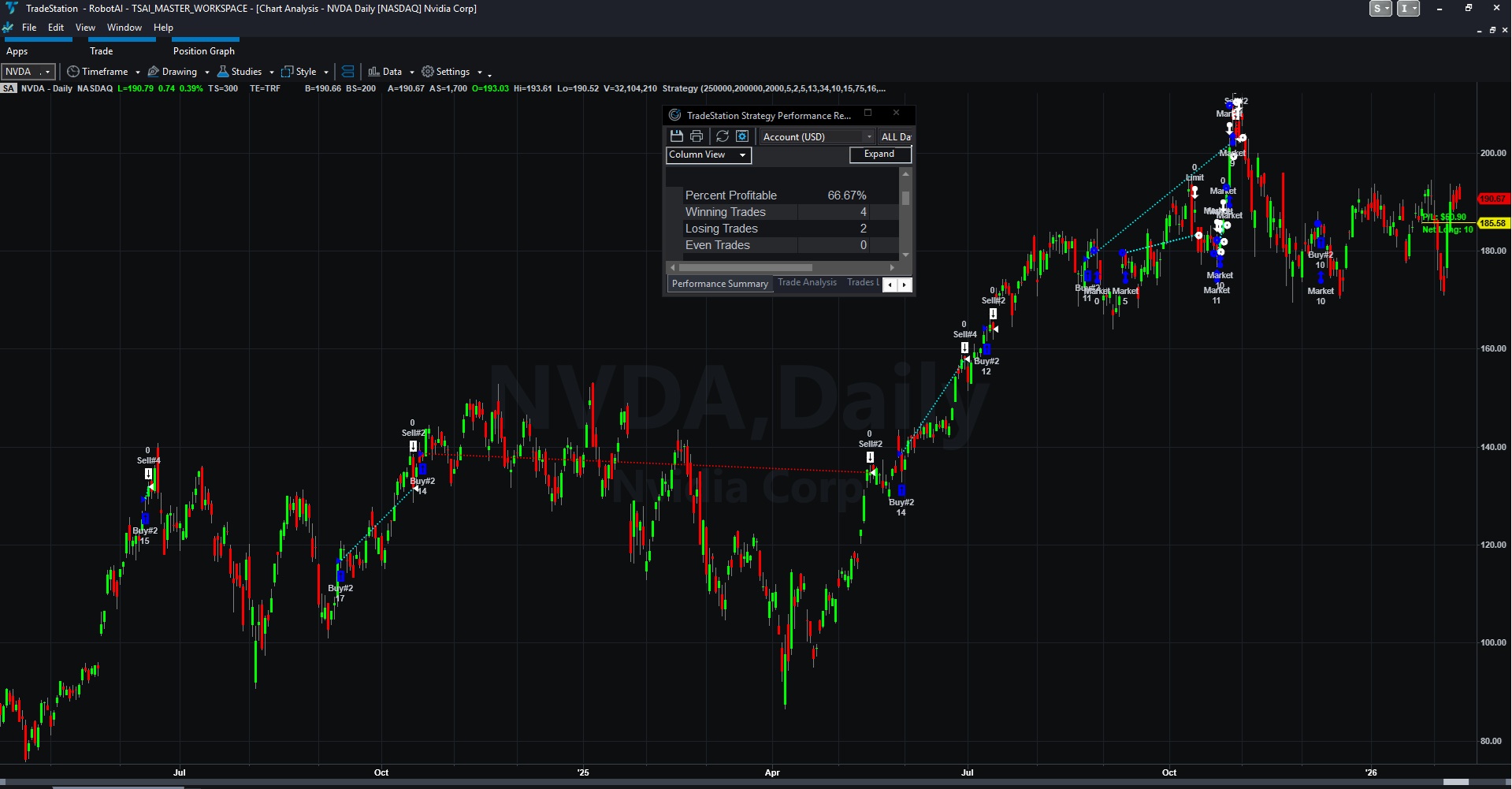
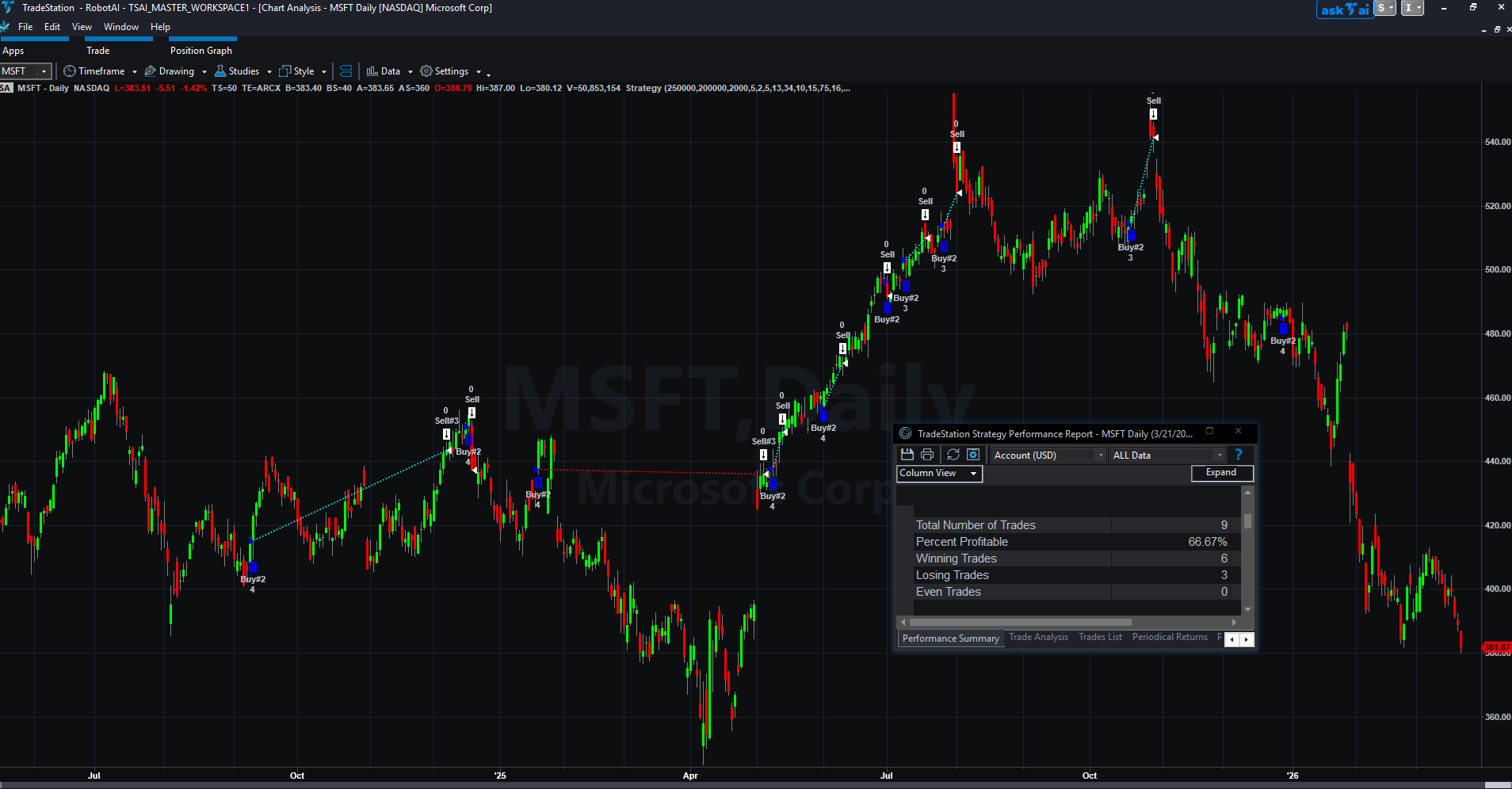
Rules-based execution means the same inputs produce identical outputs regardless of market noise. When TradeExecutor.AI processes a sell signal during a geopolitical rally, it executes that trade with the same precision it showed during the previous 847 trades. No override buttons, no "but this time is different" exceptions, no discretionary adjustments based on CNBC headlines.
The difference shows up in your account balance. Discretionary traders who modify their approach based on news flow create execution leak — the gap between theoretical strategy returns and actual trading results. Studies show this gap averages 1.5-3% annually for individual traders who can't resist tinkering with proven systems.
How Does Automated Trading Handle Market Volatility?
Automated trading systems process volatility as data, not drama. When markets swing on geopolitical developments, algorithmic execution maintains the same entry criteria, position sizing formulas, and exit rules that generated positive backtested results.
Consider today's scenario: stocks rallying on Iran ceasefire hopes while oil prices decline. A discretionary trader might think "This changes everything — maybe I should close my energy positions and rotate into cyclicals." An automated system evaluates whether current price action triggers any predefined rules. If no rules activate, no trades execute.
TradeExecutor.AI demonstrates this principle across thousands of market conditions. The system doesn't interpret news or predict geopolitical outcomes. Instead, it identifies when price patterns match historically profitable setups and executes trades according to tested parameters. Same strategy, same execution logic, same risk management — regardless of whether headlines mention Iran, inflation, or interest rates.
This approach eliminates the cognitive bias that causes traders to abandon profitable strategies during temporary drawdowns or modify position sizes based on fear and greed rather than mathematical logic.
What Happens When Traders Override Their Systems?
Traders who override their systems destroy their edge through emotional decision-making disguised as market insight. Research from Dalbar shows individual investors underperform their own mutual fund holdings by 1.7% annually because they buy and sell at precisely the wrong times based on current events and market sentiment.
The override impulse strikes hardest during volatile periods. When stocks rally on ceasefire news, discretionary traders often reduce position sizes in trending trades because "the rally feels overdone." When markets crash on conflict escalation, they frequently exit systematic strategies because "this time the fundamentals changed." Both decisions eliminate the mathematical edge that systematic approaches create.
Rules-based systems prevent these value-destroying decisions by removing human judgment from execution. Every trade follows identical logic whether markets rise or fall. Position sizing remains consistent with backtested parameters. Exit criteria don't change based on news headlines or trader emotions.
The TradeStation platform enables this disciplined approach through automated execution that operates independently of human psychology. Orders execute based on price triggers and technical conditions, not subjective interpretations of geopolitical developments or market sentiment shifts.
Should You Modify Strategies Based on Current Events?
You should never modify proven strategies based on current events because exceptional market conditions are already embedded in historical backtesting data. Every profitable systematic approach has encountered geopolitical crises, economic recessions, interest rate cycles, and unexpected news events during development and testing phases.
Professional traders understand that markets have experienced similar volatility patterns repeatedly throughout history. The 1990-1991 Gulf War created oil price spikes and market uncertainty. The 2003 Iraq invasion triggered comparable geopolitical risk premiums. Current Iran developments represent another iteration of familiar market dynamics, not unprecedented conditions requiring strategy modifications.
Systematic strategies succeed because they identify recurring patterns that persist across different market environments. These patterns reflect human psychology and institutional behavior that remains consistent regardless of specific news catalysts driving short-term price movements.
Modifying rules based on current events introduces subjective bias that destroys systematic edge. Instead of following tested logic, traders begin making decisions based on incomplete information and emotional responses to uncertainty. This approach consistently produces inferior results compared to systematic execution.
What Is an Execution Leak in Trading?
Execution leak represents the performance gap between theoretical strategy returns and actual trading results caused by human intervention in systematic processes. This leak typically ranges from 1-4% annually and accumulates through small decisions that seem logical individually but destroy systematic edge collectively.
Common execution leak sources include adjusting position sizes based on market sentiment, closing profitable trades early during volatile periods, skipping valid signals because "the setup doesn't feel right," and modifying exit criteria based on news events. Each intervention seems rational but introduces emotional decision-making into mathematical processes.
TradeExecutor.AI eliminates execution leak by removing human discretion from trade implementation. Every signal generates identical position sizing, entry timing, and exit management regardless of market conditions or news flow. The system executes 100% of valid signals with mathematical precision rather than subjective interpretation.
This consistency compounds over time because systematic approaches rely on probability edges across many trades rather than perfect prediction of individual outcomes. Missing profitable signals or modifying successful trades based on current events destroys the statistical foundation that makes systematic trading profitable.
How TradeExecutor Handles Today's Market Environment
TradeExecutor.AI processes today's Iran ceasefire rally using the same technical analysis framework that guides every trading decision. The system evaluates price action, volume patterns, and momentum indicators without interpreting geopolitical implications or predicting future conflict developments.
If current market conditions trigger valid entry signals according to backtested criteria, TradeExecutor executes those trades with predetermined position sizes and risk management parameters. If no valid signals emerge, the system remains inactive regardless of headline-driven price movements or trader sentiment shifts.
This approach has processed thousands of similar market environments during backtesting and live trading periods. Geopolitical developments create short-term volatility but don't change the underlying technical patterns that systematic strategies exploit for consistent profits.
The platform's integration with TradeStation ensures seamless order execution without manual intervention or discretionary modifications. Every trade receives identical treatment whether markets rise on peace hopes or fall on conflict escalation, maintaining the systematic edge that generates long-term profitability.
Ready to eliminate execution leak from your trading results? Calculate your current gap between strategy performance and actual returns, or explore our systematic approach that has maintained consistent execution across every market environment.
Tested. Trusted. Transparent.
How much is your execution leak costing you?
Most traders lose more to overrides than to bad strategy. Calculate yours in 30 seconds.
Calculate Your LeakTradeExecutor.ai — deterministic automated execution engine
← Back to Insights