Oil Crashes 5%, Dow Surges 1,200 Points: Does Your Strategy Follow Rules or Headlines?
The Dow just exploded 1,200 points higher while oil prices collapsed on news of a U.S.-Iran ceasefire. Energy stocks whipsawed. Traders scrambled to adjust positions. Meanwhile, somewhere in Texas, a rules-based strategy executed its pre-programmed logic without reading a single headline.
TL;DR: Geopolitical volatility exposes the fatal flaw in discretionary trading — emotion-driven decisions that deviate from proven systems. Rules-based execution removes the human failure point between signal and action, following predetermined logic regardless of whether oil moves up 5% or down 5% overnight.The real question isn't whether your portfolio gained or lost money today. The question is whether your trading decisions followed a tested system or the chaos of breaking news.
What Happens When Discretionary Traders See Breaking News?
Discretionary traders abandon their plans the moment CNBC flashes "BREAKING NEWS" across the screen. They see oil down 5% and immediately start second-guessing their energy positions, calculating whether to cut losses or double down.
The human brain processes fear faster than logic. When oil crashes from $78 to $74 in two hours, the amygdala fires before the prefrontal cortex can reference historical data showing that energy moves of this magnitude occur roughly every six weeks. Discretionary traders feel compelled to "do something" — usually the wrong thing.
A typical discretionary trader's morning might look like this: See the Iran ceasefire headline, panic about energy exposure, manually close oil positions at a loss, then watch oil recover 3% by lunch while the Dow gives back half its gains. The execution leak — the gap between what the strategy should do and what the trader actually does — just cost real money.
Rules-based systems don't read headlines. They don't feel urgency. They execute predetermined logic based on price action, volume patterns, and mathematical relationships that remain consistent regardless of whether the volatility comes from Iran, China, or Federal Reserve announcements.
Should You Change Your Strategy When Oil Crashes?
No. Changing your strategy mid-stream because of single-day volatility is like changing your route to work because you hit one red light. Strategy modifications should come from systematic analysis of long-term performance data, not from emotional reactions to market moves.
Energy volatility is a feature of markets, not a bug that requires constant strategy adjustments. Oil has experienced 5%+ daily moves in 23% of trading days over the past five years. Traders who modify their approach every time energy markets spike or crash are essentially running 83 different strategies per year instead of one consistent system.
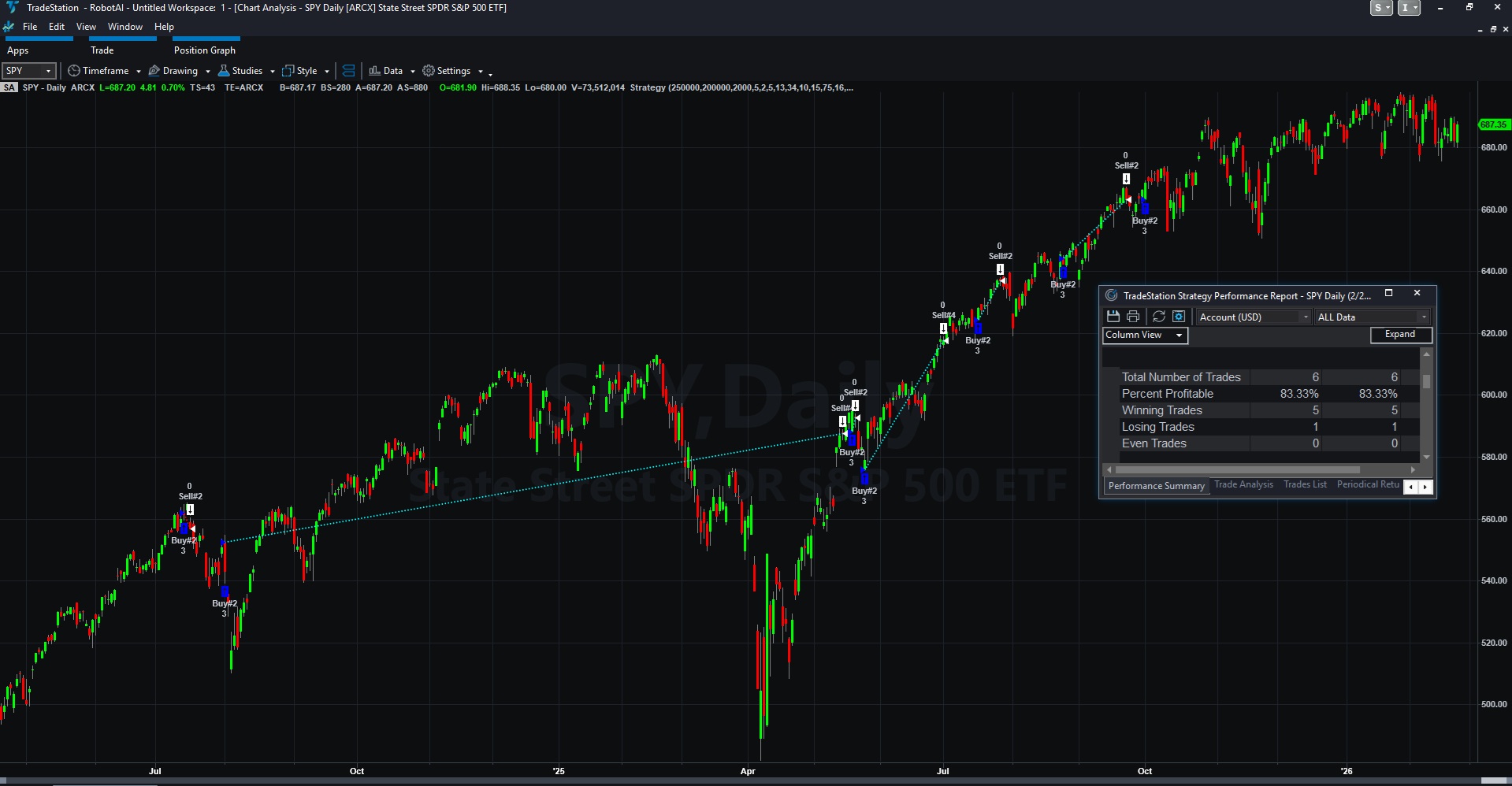
The TradeExecutor.AI approach eliminates this decision paralysis entirely. One strategy. One platform. One set of rules that govern every trade regardless of external noise. When oil crashes, the system checks its predetermined conditions: Does the price action trigger an entry signal? Does it hit a stop loss? Does it meet exit criteria? The answers don't change based on headlines.
Consider the alternative: A discretionary trader might have energy positions that were profitable yesterday, panic-sell them at today's open, then watch them recover by afternoon. The same trader might skip energy entries next week because they're "still nervous about geopolitical risk," missing profitable opportunities because their emotions are stuck on today's news cycle.
How Does Automated Trading Handle Volatility?
Automated trading handles volatility through predefined mathematical relationships that treat a 5% oil crash the same way they treat any other price movement — as data points that either trigger actions or don't. The system doesn't distinguish between "normal" volatility and "geopolitical" volatility.
When oil drops from $78 to $74, an automated system processes this information in milliseconds: Is this move large enough to trigger a stop loss? Does it create a new entry opportunity based on mean reversion logic? Do related energy stocks now meet oversold criteria? The answers come from backtested parameters, not from reading Iranian diplomatic statements.
The execution speed matters as much as the emotional neutrality. While discretionary traders are still processing the news and debating whether to act, automated systems have already evaluated every position, executed necessary trades, and moved on to monitoring the next set of conditions.
TradeExecutor.AI processes these decisions without the cognitive load that overwhelms human traders during volatile periods. The system doesn't experience decision fatigue after making 15 trades in a chaotic morning. It doesn't need coffee breaks or time to "process" what just happened in energy markets.
14 levels from Gut to Executor. We don't expect anyone to blindly jump in — do your due diligence. Submit symbols, track your predictions, and prove your discipline.
 Start Your Path →
What Is an Execution Leak in Trading?
An execution leak is the performance gap between what your strategy should theoretically produce and what you actually achieve through manual implementation. It's the difference between backtested results and real-world outcomes caused by human hesitation, emotion, and inconsistency.
Execution leaks manifest in multiple ways during volatile periods like today's oil crash. A trader might hesitate for 30 seconds before executing a stop loss, turning a 2% loss into a 2.8% loss. They might exit a position early because they're "nervous about overnight risk," missing a profitable continuation. They might skip the next setup because they're still processing losses from the previous trade.
These leaks compound over time. A 0.5% execution leak per trade doesn't sound significant until you realize it represents 10-15% of annual returns for most strategies. Over five years, execution leaks can reduce cumulative returns by 40-60% compared to perfect implementation.
Rules-based systems eliminate execution leaks by removing the human decision point entirely. When conditions are met, trades execute. When they're not met, nothing happens. There's no 30-second hesitation, no "gut feeling" that overrides the system, no emotional hangover from previous trades affecting current decisions.
Why One Strategy Beats Strategy Shopping?
One consistently implemented strategy outperforms constant strategy switching because it eliminates the performance drag of transition periods and reduces the temptation to abandon systems during temporary drawdowns. Strategy shoppers are always optimizing for yesterday's market conditions.
When oil crashes and the Dow surges, strategy shoppers start researching "momentum strategies" or "energy rotation systems." By the time they've backtested, implemented, and funded a new approach, market conditions have changed again. They end up perpetually chasing performance that's already happened instead of positioning for what's coming next.
The mathematics are clear: A mediocre strategy implemented perfectly beats an excellent strategy implemented poorly. Most traders have access to profitable systems. Few have the discipline to follow them consistently through volatile periods like today's oil crash and market surge.
TradeExecutor.AI solves this problem through singular focus. One rules-based strategy, backtested across multiple market regimes, implemented without deviation on TradeStation. When energy markets crater or explode, the system doesn't second-guess itself or start browsing alternative approaches. It follows the same logical framework that guided decisions during calm periods.
The Real Cost of Emotional Trading Decisions
Emotional trading decisions cost more than individual trade profits or losses — they destroy the statistical edge that makes systematic trading profitable over time. When traders deviate from their rules based on news events, they're essentially gambling instead of trading.
Today's oil crash provides a perfect case study. Emotional traders saw the headlines and made immediate decisions based on fear or excitement rather than systematic analysis. Some probably sold energy positions at the worst possible moment. Others might chase the Dow's surge by buying momentum stocks at temporary peaks.
The hidden cost appears in the data over months and years. Emotional decisions cluster around high-volatility events, which means traders are most likely to deviate from their systems exactly when systematic discipline matters most. They follow their rules during boring, sideways markets but abandon them during the volatile periods that determine annual performance.
Rules-based execution eliminates this pattern entirely. The system makes the same quality decisions whether oil moves 0.5% or 5%, whether the Dow gains 50 points or 1,200 points. Consistency during extreme events is where systematic traders build their long-term edge over discretionary approaches.
Your trading results depend less on predicting whether Iran will make peace or whether oil will crash tomorrow. They depend more on whether your execution method can maintain discipline when everyone else is panicking or celebrating.
Tested. Trusted. Transparent.
How much is your execution leak costing you?
Most traders lose more to overrides than to bad strategy. Calculate yours in 30 seconds.
Calculate Your LeakTradeExecutor.ai — deterministic automated execution engine
← Back to Insights