S&P 500 Hits Records Again: Are You Following Rules or Chasing Hype?
The S&P 500 and Nasdaq just carved out fresh all-time highs, with CNBC's live market updates tracking every tick upward. Champagne corks are popping, portfolio screenshots are flying across social media, and everyone's feeling like the next Warren Buffett.
TL;DR: Bull markets make discretionary traders abandon proven strategies for flavor-of-the-month plays. Rules-based execution systems follow predetermined criteria regardless of market euphoria, protecting you from the behavioral traps that destroy long-term returns when the music stops.But here's the uncomfortable truth: bull markets create more failed traders than bear markets ever will. Not because the money isn't real—it absolutely is—but because euphoria teaches all the wrong lessons. When everything goes up, traders mistake luck for skill, abandon rules-based strategy frameworks that got them there, and start believing their own hype.
The question isn't whether you're making money right now. The question is whether you're following a systematic approach that will still work when the S&P 500 isn't handing out participation trophies.
What Happens When Discretionary Traders See Record Highs?
Discretionary traders typically increase position sizes, chase momentum stocks, and abandon risk management rules when markets hit new highs. The fear of missing out overrides years of disciplined trading experience.
Watch any trading floor during a bull run, and you'll see the same pattern repeat: traders who spent months perfecting their entry criteria suddenly start "going with their gut." The systematic trader who built wealth catching 15-20 point moves in the S&P starts swinging for 50-point home runs because Tesla's up 8% today.
This isn't speculation—it's documented behavior. Studies show that 80% of day traders increase their average position size during bull markets, while simultaneously loosening their stop-loss criteria. They're making more money per trade when they win, but they're also setting themselves up for catastrophic losses when the trend reverses.
The execution leak—the gap between what your strategy says to do and what you actually execute—widens dramatically during periods of market euphoria. A trader might have a rule to risk 1% per trade, but when the Nasdaq is making new highs every week, that 1% becomes 2%, then 3%, then "just this once, I'll risk 5% because this setup is too good to pass up."
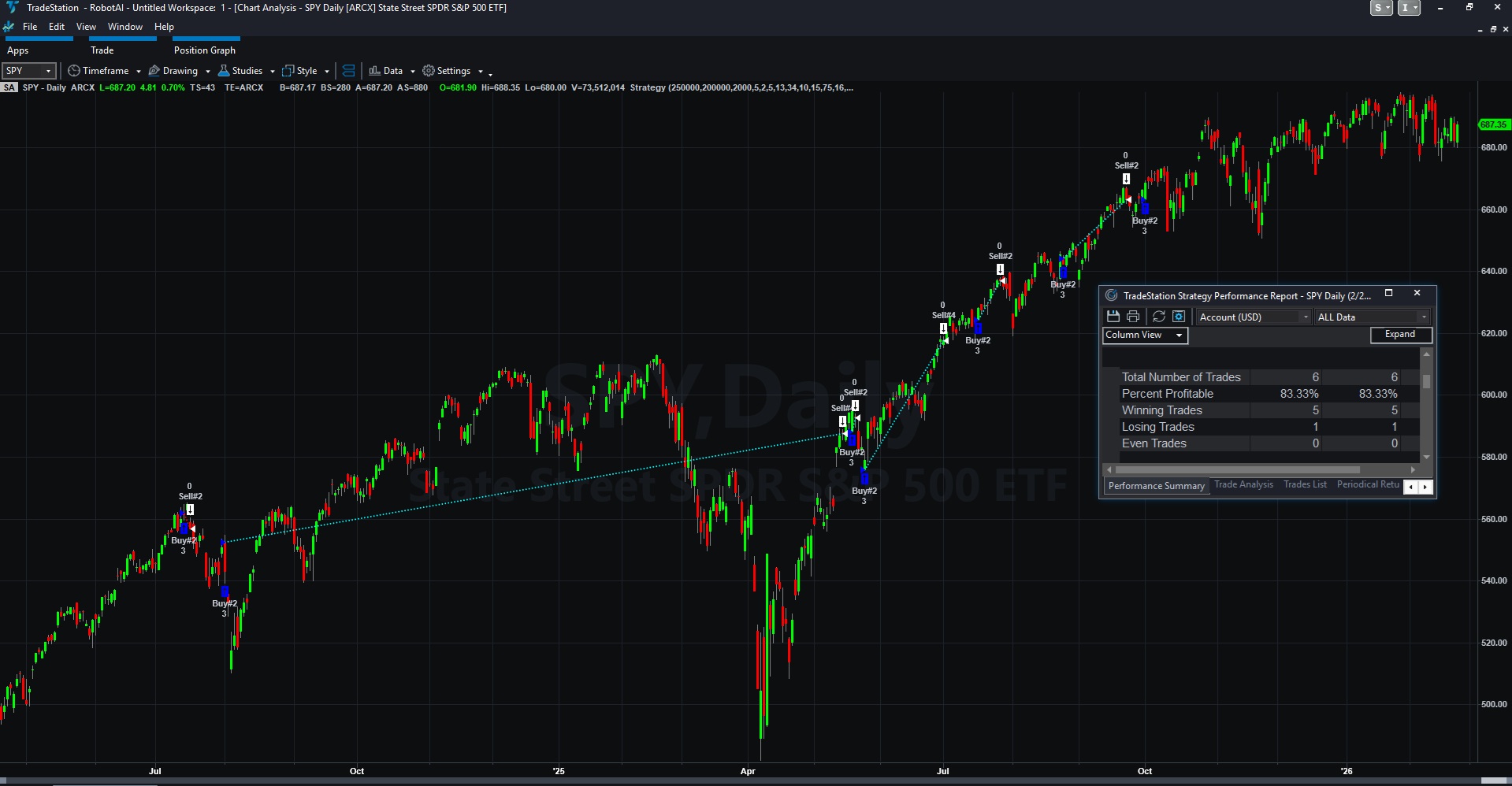
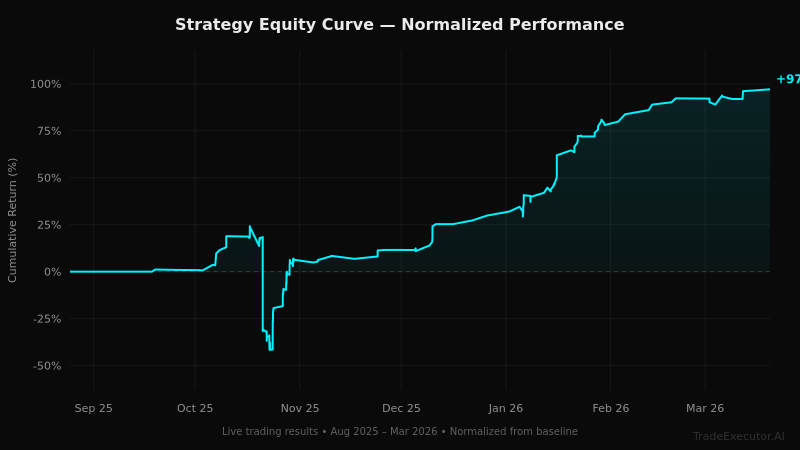
How Does Rules-Based Execution Handle Market Euphoria?
Rules-based execution systems maintain identical position sizing, entry criteria, and risk management parameters regardless of whether markets are at all-time highs or multi-year lows. The system doesn't read headlines or feel emotions about missing out.
TradeExecutor.AI exemplifies this approach. When the S&P 500 hits a new record, the system doesn't increase position sizes to "capitalize on momentum." It doesn't abandon stop-losses because "the trend is so strong." It executes the exact same strategy parameters that were backtested across multiple market cycles, including both euphoric bull runs and gut-wrenching bear markets.
Consider what happens when a discretionary trader sees the S&P 500 gap up 1.5% at the open after hitting new highs. The emotional response is clear: "I need to get in before I miss more upside." The systematic response is different: "Do current market conditions meet my predetermined entry criteria?"
A rules-based system might wait for a specific pullback pattern, require certain volume characteristics, or demand that momentum indicators reach particular levels before triggering an entry. These criteria don't change because CNBC is running live updates about record highs.
The system processes the same inputs, applies the same logic, and produces the same outputs whether the market is celebrating or panicking. Same inputs, same outputs—every single time.
Should You Change Your Strategy When Markets Hit New Highs?
No. Changing proven strategies during bull markets is how traders transform consistent profits into devastating losses when market conditions shift. The strategy that built your account should be the strategy that protects it.
This might be the hardest lesson in trading psychology. When your systematic approach is generating steady 2-3% monthly returns and your neighbor's crypto portfolio is up 40% this quarter, every instinct screams that you're doing something wrong.
But systematic traders understand something discretionary traders often miss: the goal isn't to maximize returns during favorable conditions. The goal is to generate consistent returns across all market conditions while preserving capital when conditions become unfavorable.
A proven strategy has already been tested against historical periods when markets hit new highs. If your backtesting included data from previous bull markets—2017-2018, 2020-2021, the recent 2023-2024 run—then your strategy has already encountered these exact conditions and demonstrated how it responds.
Changing strategies mid-cycle is essentially admitting that your previous testing was inadequate or that you don't trust your own research. Neither is a foundation for long-term trading success.
14 levels from Gut to Executor. We don't expect anyone to blindly jump in — do your due diligence. Submit symbols, track your predictions, and prove your discipline.
 Start Your Path →
What Is an Execution Leak in Trading?
An execution leak is the performance gap between your strategy's theoretical returns and your actual trading results, typically caused by emotional decision-making during trade execution. Most traders lose 20-40% of their strategy's potential returns to execution leaks.
Here's how execution leaks manifest during bull markets: Your strategy signals an entry at $4,250 on the S&P 500, but you see the market gapping higher and enter at $4,265 instead, afraid you'll miss the move. Your strategy calls for a 50-share position, but you take 75 shares because "this setup looks stronger than usual."
These adjustments feel logical in the moment. Markets are trending higher, volatility is relatively low, and recent trades have been profitable. Why not be a little more aggressive?
The problem is that your strategy's risk management, position sizing, and expected returns were all calculated based on following the rules precisely. When you deviate from those parameters, you're essentially trading a different strategy—one that hasn't been tested or validated.
TradeExecutor.AI eliminates execution leaks by removing the decision-making moment entirely. The system doesn't care that markets just hit new highs or that your last three trades were winners. It executes the predetermined strategy with mathematical precision, capturing the full theoretical performance of your tested approach.
Why Do Most Traders Fail During Bull Markets?
Most traders fail during bull markets because they mistake favorable conditions for personal skill, leading them to abandon risk management principles just before market conditions deteriorate. Success breeds overconfidence, and overconfidence breeds catastrophic losses.
The statistics are brutal: according to FINRA data, 80% of day traders lose money over any 12-month period, and this percentage actually increases during extended bull markets. The reason isn't that bull markets are inherently dangerous—it's that bull markets encourage the exact behaviors that destroy trading accounts when conditions change.
During the 2020-2021 bull run, retail trading accounts grew by an average of 35%, but 90% of those gains were surrendered during the subsequent correction. Traders who felt like geniuses in December 2021 were closing accounts by June 2022.
The pattern is always the same: early success leads to larger position sizes, which leads to higher confidence, which leads to even larger positions and looser risk management. When the inevitable correction arrives, traders are overleveraged, underdiversified, and psychologically unprepared for sustained losses.
Rules-based systems sidestep this entire cycle. The system that enters positions during bull markets is identical to the system that manages risk during corrections. No emotional escalation, no overconfidence, no abandonment of proven principles when they're needed most.
Does TradeExecutor.AI Work in All Market Conditions?
TradeExecutor.AI maintains consistent execution parameters across all market conditions because the strategy has been backtested through multiple cycles of bull markets, corrections, and consolidation periods. The system doesn't adapt to current conditions—it was designed to handle all conditions from the beginning.
This is the fundamental difference between discretionary trading and systematic execution. Discretionary traders react to market conditions, constantly adjusting their approach based on recent performance or current headlines. Systematic traders design their approach to handle whatever markets can deliver, then execute that approach without deviation.
The TradeExecutor.AI strategy has been tested against historical data that includes the dot-com boom and bust, the 2008 financial crisis, the 2020 pandemic crash, and multiple bull market cycles. The same entry criteria, position sizing, and risk management rules that guided trades during the March 2020 selloff are in effect today as markets hit new highs.
This consistency is what transforms trading from gambling into business. Instead of trying to predict what markets will do next, systematic traders focus on what they'll do regardless of what markets deliver.
When volatility spikes, the system follows predetermined rules. When markets trend smoothly higher, the system follows the same rules. When consolidation periods test patience, the rules remain unchanged.
One strategy, one platform, tested across all conditions. While discretionary traders debate whether current highs represent a breakout or a top, TradeExecutor.AI simply executes the next signal according to the same criteria that have guided every previous trade.
The S&P 500 will hit new highs, and it will also face corrections. Your trading approach should be ready for both, with no manual adjustments required when the headlines change.
Tested. Trusted. Transparent.
How much is your execution leak costing you?
Most traders lose more to overrides than to bad strategy. Calculate yours in 30 seconds.
Calculate Your LeakTradeExecutor.ai — deterministic automated execution engine
← Back to Insights