The S&P 500 Hit Another Record, But Most Stocks Are Down: Are You Trading Rules or Hype?
The S&P 500 just notched another record high, but here's the catch: most individual stocks actually declined on the day. Tech giants carried the entire market while the majority of companies moved backward. It's a perfect example of why headlines can mislead your trading decisions.
TL;DR: Markets hitting records while most stocks decline reveals the difference between following rules and chasing hype. Rules-based execution ignores the noise and follows predetermined criteria, while discretionary trading gets caught up in contradictory signals and emotional responses to confusing market action.This exact scenario separates disciplined traders from those riding emotional waves. When market internals contradict headline numbers, human traders freeze, second-guess, or make impulsive moves. A rules-based strategy processes the same data points it always processes, immune to the cognitive dissonance that paralyzes manual execution.
The community submitted 1 prediction for AAPL. Every week, the most popular symbol gets publicly reviewed — good or bad.
Submit a Symbol →What Happens When Headlines Contradict Your Strategy?
Rules-based systems execute trades based on predetermined criteria, regardless of whether headlines suggest bullish or bearish sentiment. When the S&P 500 hits records while breadth deteriorates, a systematic approach evaluates its specific entry and exit conditions without getting distracted by the narrative.
Human traders face a different reality. They read "record high" and feel pressure to chase momentum. Then they notice declining stocks and wonder if they should wait. This internal debate creates hesitation at crucial moments. By the time they decide, the opportunity has passed or turned against them.
The execution leak begins the moment you start questioning your system because of external noise. Every second spent debating whether to follow your rules costs money, whether through missed entries, delayed exits, or complete abandonment of planned trades.
"Down $200 on a day trade. Not much. But I refused to take it. 'It's only $200, it'll come back.' $200 became $400. Then $700. Then $1,200. I finally sold. Six hours of holding. Six hours of hoping...."
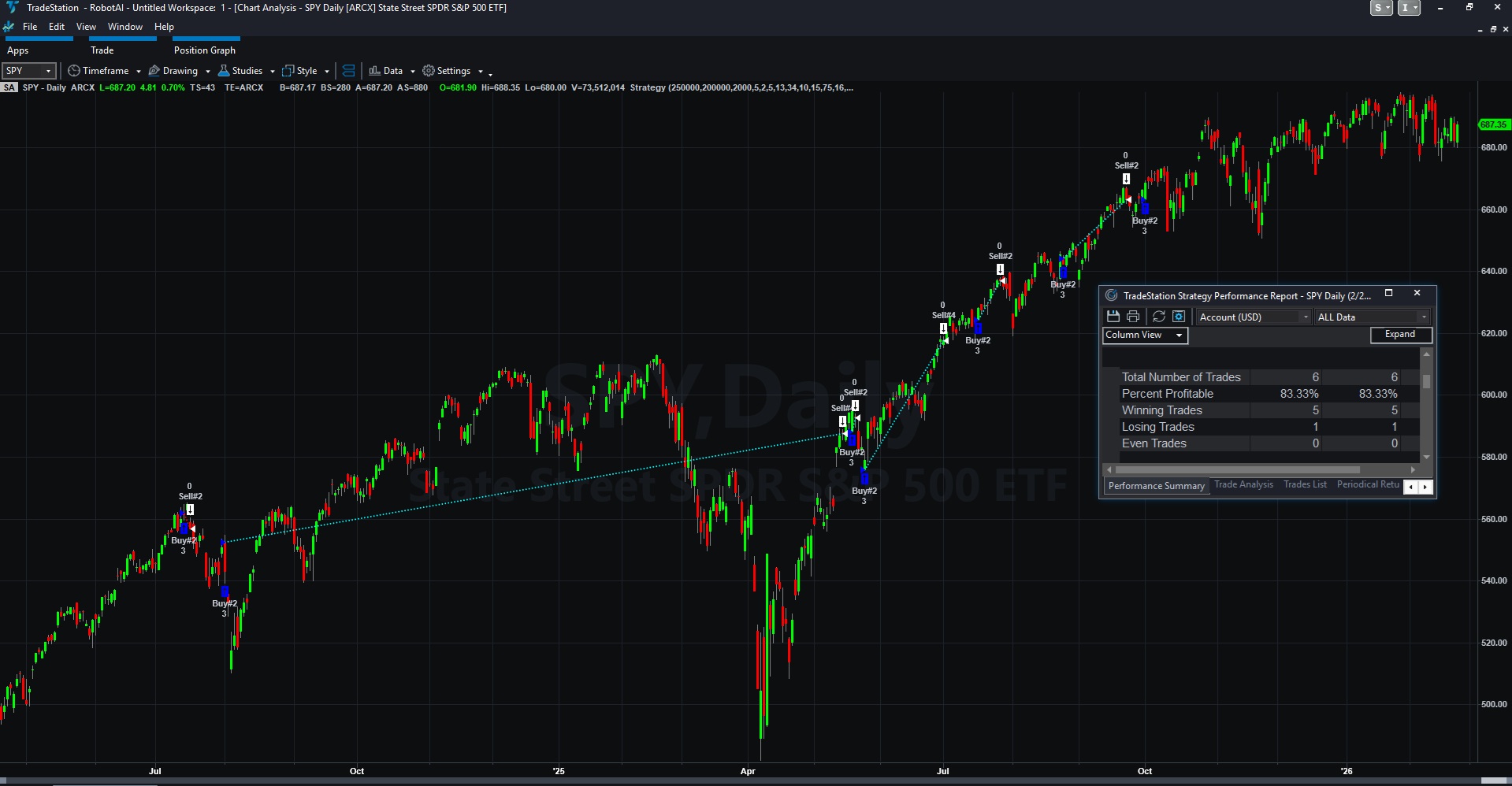
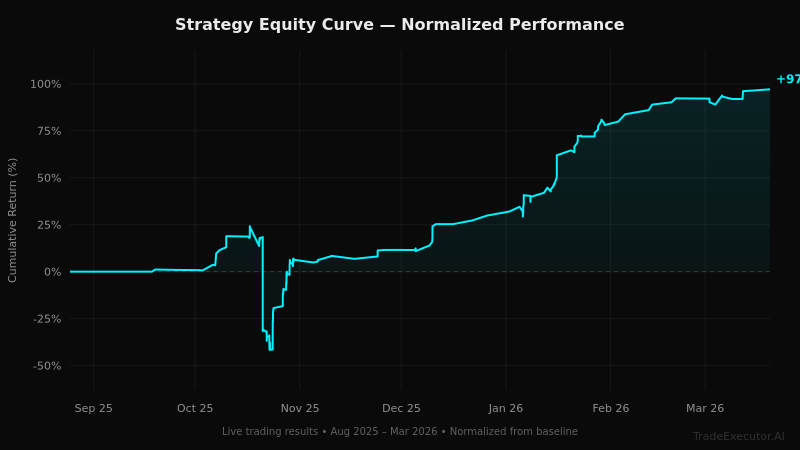
Should You Change Your Strategy When Market Breadth Diverges?
Strategy changes based on single data points or confusing market action typically destroy long-term performance. Successful trading strategies account for various market conditions during their development and testing phases, including breadth divergences like today's action.
Discretionary traders often view divergent market signals as reasons to modify their approach. They might skip trades, add filters, or completely reverse their bias based on contradictory information. This reactive behavior transforms a tested methodology into an untested experiment.
TradeExecutor.AI eliminates this decision-making burden by executing the same logic regardless of market headlines or internal contradictions. The system doesn't read news, doesn't interpret sentiment, and doesn't care whether tech stocks carry the market or broad participation drives gains. It follows predetermined rules with mathematical precision.
How Does Automated Trading Handle Conflicting Market Signals?
Automated systems process conflicting signals by adhering to their programmed hierarchy of decision-making criteria. When breadth deteriorates while indices advance, the system evaluates which specific conditions matter for its particular strategy and ignores irrelevant data points.
Consider today's scenario through two lenses. A discretionary trader sees record highs and thinks "bullish," then notices declining stocks and thinks "bearish." This creates analysis paralysis. Meanwhile, an automated system checks its specific entry criteria: price levels, volume patterns, momentum indicators, or whatever variables drive its decisions. External contradictions don't factor into the equation.
This deterministic approach ensures consistency across thousands of similar scenarios. The same inputs always produce identical outputs, regardless of whether market action feels confusing or crystal clear to human observers.
What Is an Execution Leak in Trading?
An execution leak represents the performance gap between your theoretical strategy results and actual trading outcomes. This gap widens dramatically when market conditions create uncertainty or emotional responses that delay decision-making.
Today's market action creates multiple execution leak opportunities. Traders might hesitate to enter positions despite meeting criteria, exit early due to conflicting signals, or add discretionary filters that weren't part of their original testing. Each modification introduces untested variables that typically reduce performance over time.
Studies show manual execution can lag systematic signals by 30-60 seconds on average, even for disciplined traders. In volatile conditions with contradictory signals, this delay often extends to several minutes or complete trade abandonment. TradeExecutor.AI processes signals and executes trades in milliseconds, eliminating human-induced delays.
Why Do Bull Markets Make Bad Habits Feel Profitable?
Bull markets reward almost every trading behavior, making it difficult to distinguish between skill and luck. When markets trend higher consistently, poor execution, emotional decisions, and rule violations still generate profits, creating false confidence in flawed approaches.
The current environment exemplifies this challenge. Even with today's breadth divergence, the S&P 500 reached new highs. Traders who chased momentum, ignored their rules, or made impulsive decisions might still profit short-term. This success reinforces bad habits that will prove costly when market conditions change.
Rules-based execution provides consistent behavior regardless of market direction. The system follows identical logic in bull markets, bear markets, and sideways action. This consistency proves especially valuable when profitable environments shift to challenging conditions where emotional trading fails catastrophically.
How Do You Build Confidence in Systematic Trading?
Confidence in systematic trading comes from understanding your strategy's behavior across different market conditions, including scenarios like today where headlines contradict internals. Backtesting reveals how your approach performs when breadth deteriorates, momentum diverges, or unusual conditions create confusion.
TradeExecutor.AI provides complete transparency into strategy performance across various market environments. Traders can examine exactly how the system behaved during previous breadth divergences, market corrections, and unusual trading sessions. This historical clarity builds confidence that reduces the temptation to override or modify systematic decisions.
The key lies in accepting that systematic trading prioritizes long-term consistency over short-term optimization for specific scenarios. Your rules won't be perfect for every situation, but they'll be consistently applied across all situations, which typically produces superior results compared to reactive modifications.
Does Market Complexity Require Human Judgment?
Market complexity actually argues against human judgment rather than for it. As today's action demonstrates, markets can present contradictory signals simultaneously, making discretionary interpretation more difficult rather than easier.
Human brains struggle with processing multiple conflicting data streams objectively. We tend to cherry-pick information supporting our existing bias or freeze when signals contradict each other. Complex market conditions overwhelm our cognitive capacity, leading to delayed decisions or emotional responses.
Systematic approaches excel in complex environments because they process predetermined variables without bias or emotion. The system doesn't struggle with contradictory information because it only considers specific inputs relevant to its decision-making process. Complexity becomes irrelevant when you're following a consistent logical framework.
Today's market action perfectly illustrates why removing human emotion and discretion from trading execution improves performance. When headlines confuse and internals contradict, rules provide clarity. When sentiment shifts and narratives change, tested strategies continue performing their intended function.
The choice isn't between intelligence and automation—it's between consistency and chaos. One approach follows proven rules regardless of external noise. The other gets caught up in every market contradiction and headline shift.
Tested. Trusted. Transparent.
How much is your execution leak costing you?
Most traders lose more to overrides than to bad strategy. Calculate yours in 30 seconds.
Calculate Your LeakTradeExecutor.ai — deterministic automated execution engine
← Back to Insights