S&P 500 Hits Records While Traders Second-Guess Their Rules: The Hidden Cost of Manual Override
The S&P 500 just hit fresh records on strong jobs data and Iran deal optimism, marking its sixth consecutive winning week. While headlines celebrate the rally, the real story unfolds in trading accounts where manual traders are second-guessing their predetermined rules, overriding stops, and chasing momentum that may reverse by market close.
TL;DR: Market rallies and volatility expose the fatal flaw in discretionary trading: human override. Rules-based execution systems follow identical protocols whether markets gap up 2% or crash 5%, eliminating the emotional interference that causes most trading failures. The strategy executes the same way every time, regardless of headlines or fear.Manual trading during volatile periods creates what we call "execution leak" — the gap between what your strategy says to do and what you actually execute. A rules-based strategy eliminates this leak by removing human discretion entirely.
The community submitted 1 prediction for AAPL. Every week, the most popular symbol gets publicly reviewed — good or bad.
Submit a Symbol →Does Your Strategy Follow Rules or Headlines?
Rules-based strategies execute identical protocols regardless of market conditions or news flow. Manual traders, however, modify their approach based on external factors like today's jobs report or geopolitical developments, creating inconsistent results that make performance analysis impossible.
Consider today's market action. Your backtested strategy might signal a specific position size and entry point. A rules-based system executes exactly that trade. A discretionary trader sees the headlines, questions whether "this time is different," and either skips the trade entirely or modifies position size based on gut feeling rather than data.
The S&P 500's sixth winning week creates additional psychological pressure. Manual traders start believing they should "ride the momentum" or "take profits while they can" — decisions that weren't part of their original testing framework. Rules-based execution treats week six of a rally identically to week one of a decline.
"Down $200 on a day trade. Not much. But I refused to take it. 'It's only $200, it'll come back.' $200 became $400. Then $700. Then $1,200. I finally sold. Six hours of holding. Six hours of hoping...."
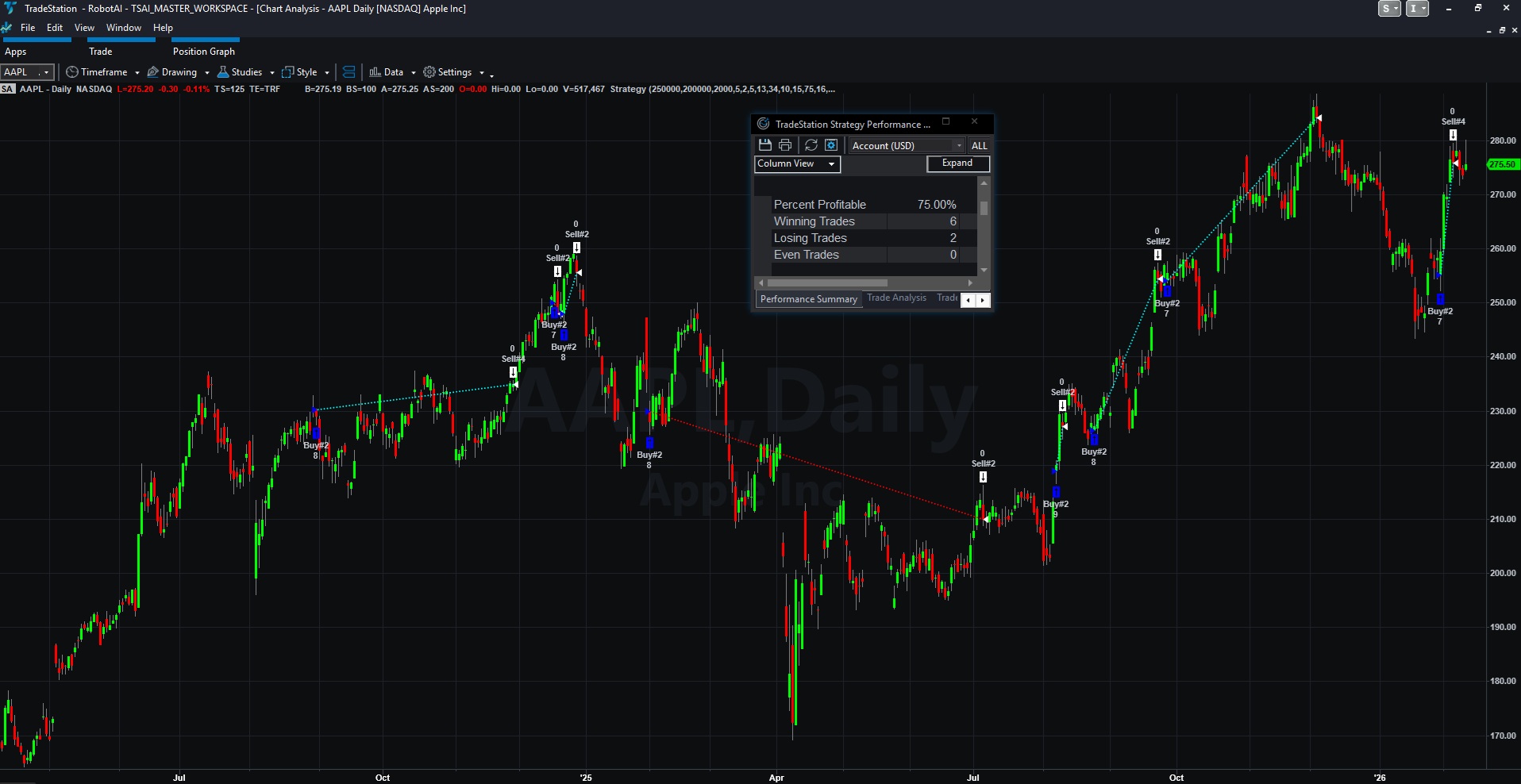
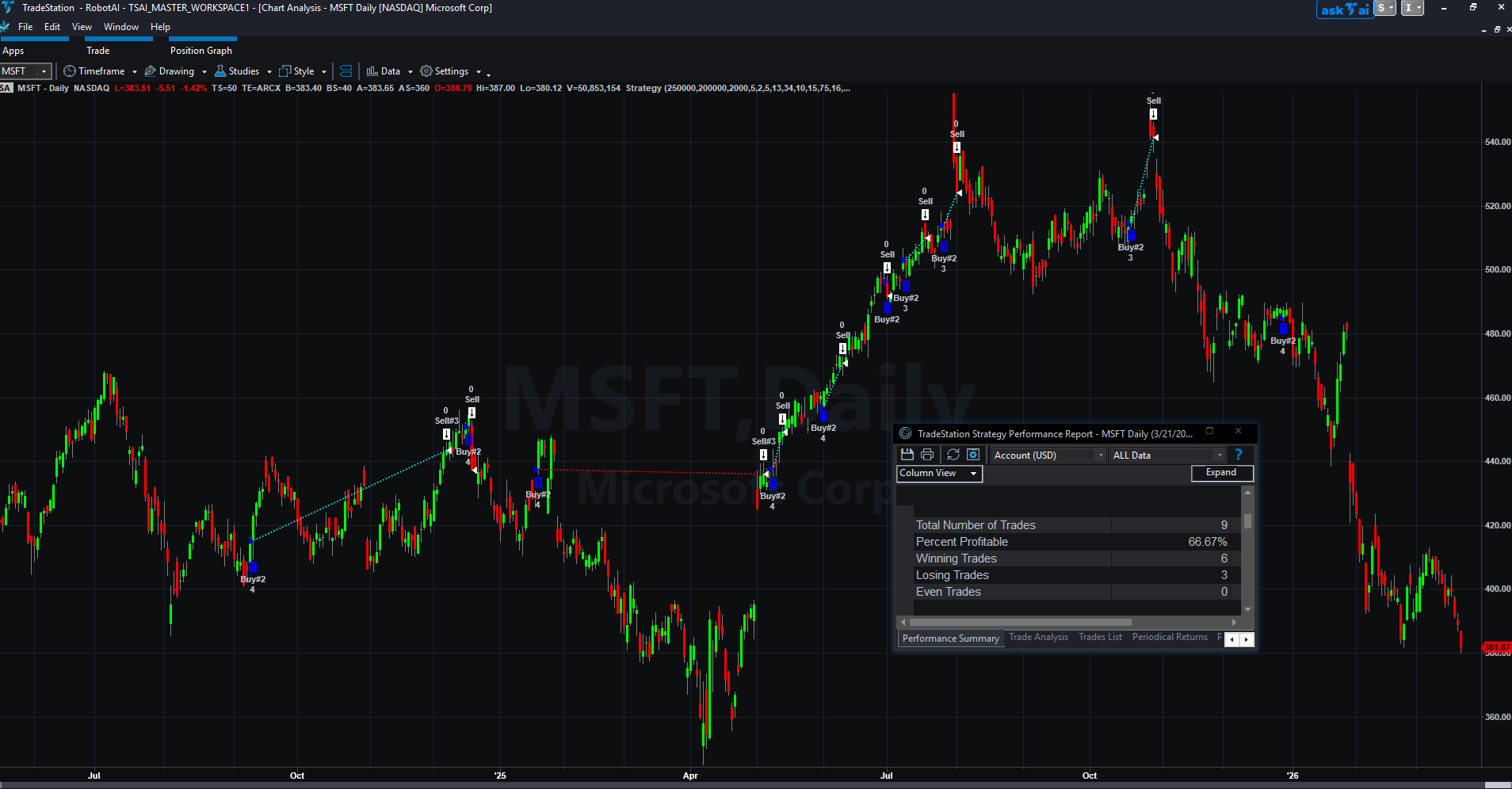
What Happens When Manual Traders See Record Highs?
Manual traders typically freeze or chase when markets hit records, abandoning their systematic approach for emotional decision-making. Fear of buying at the top conflicts with FOMO about missing additional gains, creating paralysis or impulsive trades that weren't part of the original plan.
Today's record highs trigger predictable human responses. Traders who missed the rally start chasing with oversized positions. Traders holding positions debate whether to take profits early, even if their system suggests holding. Both actions deviate from tested rules, creating execution leak that compounds over time.
A rules-based system processes "record high" as just another data point. The algorithm doesn't experience FOMO or fear of reversal. If the strategy's entry conditions are met, it executes. If exit conditions aren't triggered, it holds. The execution remains identical whether the market is at record highs or 52-week lows.
This mechanical approach seems counterintuitive to traders who believe human judgment adds value during "special" market conditions. Yet decades of performance data show that systematic adherence to tested rules outperforms human override in nearly every market environment.
How Does Automated Trading Handle Market Volatility?
Automated trading systems execute identical protocols during volatile and quiet periods, maintaining consistent risk management and position sizing regardless of external market conditions. The system doesn't interpret news, fear reversals, or chase momentum — it follows predetermined logic based on price and volume data.
During today's rally driven by jobs data and Iran hopes, an automated system continues monitoring its specific entry and exit criteria. It doesn't care that headlines are positive or that this marks the sixth winning week. The strategy executes when conditions align, regardless of broader market sentiment.
Manual traders struggle with volatility because they layer additional decision-making onto their original strategy. They read the jobs report, consider geopolitical implications, factor in technical levels, and try to synthesize everything into a "better" decision than their systematic approach would make.
This multi-variable analysis creates inconsistent execution that makes strategy evaluation impossible. When traders deviate from their rules, they can't determine whether poor performance stems from flawed strategy logic or execution failure.
14 levels from Gut to Executor. We don't expect anyone to blindly jump in — do your due diligence. Submit symbols, track your predictions, and prove your discipline.
 Start Your Path →
Should You Modify Your Strategy During Winning Streaks?
Strategy modification during winning or losing streaks destroys the statistical foundation that makes systematic trading effective. Your backtested results assume consistent execution across all market conditions — changing rules mid-stream invalidates that testing and creates unknown risk parameters.
The S&P 500's six-week winning streak tempts traders to "optimize" their approach for trending markets. They might tighten stops to lock in gains, increase position sizes to maximize momentum, or add discretionary filters to avoid "obvious" reversals. Each modification moves further from the tested strategy.
Rules-based systems resist this temptation by design. The strategy that performed during testing performs during live trading, whether markets trend up for six weeks or decline for six months. This consistency allows accurate performance attribution and maintains risk parameters within tested boundaries.
TradeExecutor.AI exemplifies this approach by executing one strategy on one platform with zero discretionary overrides. The system that runs today is identical to the system that generated backtested results, ensuring performance characteristics remain within expected parameters.
What Is an Execution Leak in Trading?
Execution leak measures the performance gap between your strategy's theoretical results and actual trading outcomes, typically caused by emotional overrides, timing delays, and discretionary modifications to systematic rules. Most traders lose more money to execution leak than to poor strategy design.
Calculate execution leak by comparing your actual trades to what your strategy rules indicated. Did you take every signal? Did you use correct position sizes? Did you exit when your system said exit? The cumulative difference between intended and actual execution represents your leak.
Studies show execution leak costs manual traders 2-4% annually in performance degradation. During volatile periods like today's record-setting rally, that leak expands as emotions override systematic judgment. Traders see profits and want to "lock them in" or see momentum and want to "add to winners" — both decisions that weren't part of their original testing.
Rules-based execution eliminates leak by removing human decision-making from the execution process. The system executes every signal with identical parameters, maintaining the statistical edge that backtesting identified. TradeExecutor.AI achieves zero execution leak by operating without discretionary overrides or human intervention.
The TradeStation Advantage for Systematic Execution
TradeStation's EasyLanguage environment enables precise strategy automation with institutional-grade execution capabilities, making it the optimal platform for traders serious about eliminating execution leak and maintaining systematic consistency.
Unlike platforms that require manual trade entry or offer limited automation, TradeStation allows complete strategy automation from signal generation to order execution. This end-to-end automation ensures the strategy executes identically whether markets gap up on jobs data or decline on geopolitical concerns.
TradeExecutor.AI leverages TradeStation's capabilities to deliver one strategy with transparent, verified performance results. The same code that generates backtested results executes live trades, ensuring consistency between testing and implementation that other platforms can't match.
This one-platform approach eliminates the execution variables that plague multi-platform strategies. There's no manual interpretation of signals, no delays between platforms, and no discretionary modifications based on "market feel." The strategy runs identically every trading session.
Whether today's record highs continue or reverse tomorrow, the execution remains constant. Your strategy doesn't read headlines, feel FOMO, or second-guess its logic. It follows the same rules that created your backtested performance, maintaining statistical consistency across all market conditions.
Tested. Trusted. Transparent.How much is your execution leak costing you?
Most traders lose more to overrides than to bad strategy. Calculate yours in 30 seconds.
Calculate Your LeakTradeExecutor.ai — deterministic automated execution engine
← Back to Insights