Oil Spikes, Dow Drops 400 Points — Does Your Strategy Follow Rules or Headlines?
The Dow just dropped 400 points as oil surged on Iran conflict fears, and somewhere right now, a discretionary trader is staring at their screen wondering if they should override their original plan. The automated trader? Already positioned according to predefined rules, immune to the breaking news cycle that just triggered panic across trading floors.
TL;DR: Market volatility exposes the fatal flaw in discretionary trading — emotion overrides strategy. Rules-based execution systems follow predetermined parameters regardless of headlines, eliminating the human failure point that costs traders money when markets move fast.The community submitted 1 prediction for AAPL. Every week, the most popular symbol gets publicly reviewed — good or bad.
Submit a Symbol →What Happens When Geopolitical News Hits Your Portfolio?
Rules-based systems execute trades according to predetermined criteria, ignoring the emotional noise that causes discretionary traders to abandon winning strategies. When oil jumps 5% overnight on Iran headlines, an automated system doesn't panic-sell energy positions or chase momentum trades.
The discretionary trader sees CNBC's breaking news alert and immediately starts second-guessing their morning plan. Should they close that energy short? Add to positions? Wait for more clarity? Each decision point introduces execution delay and emotional bias.
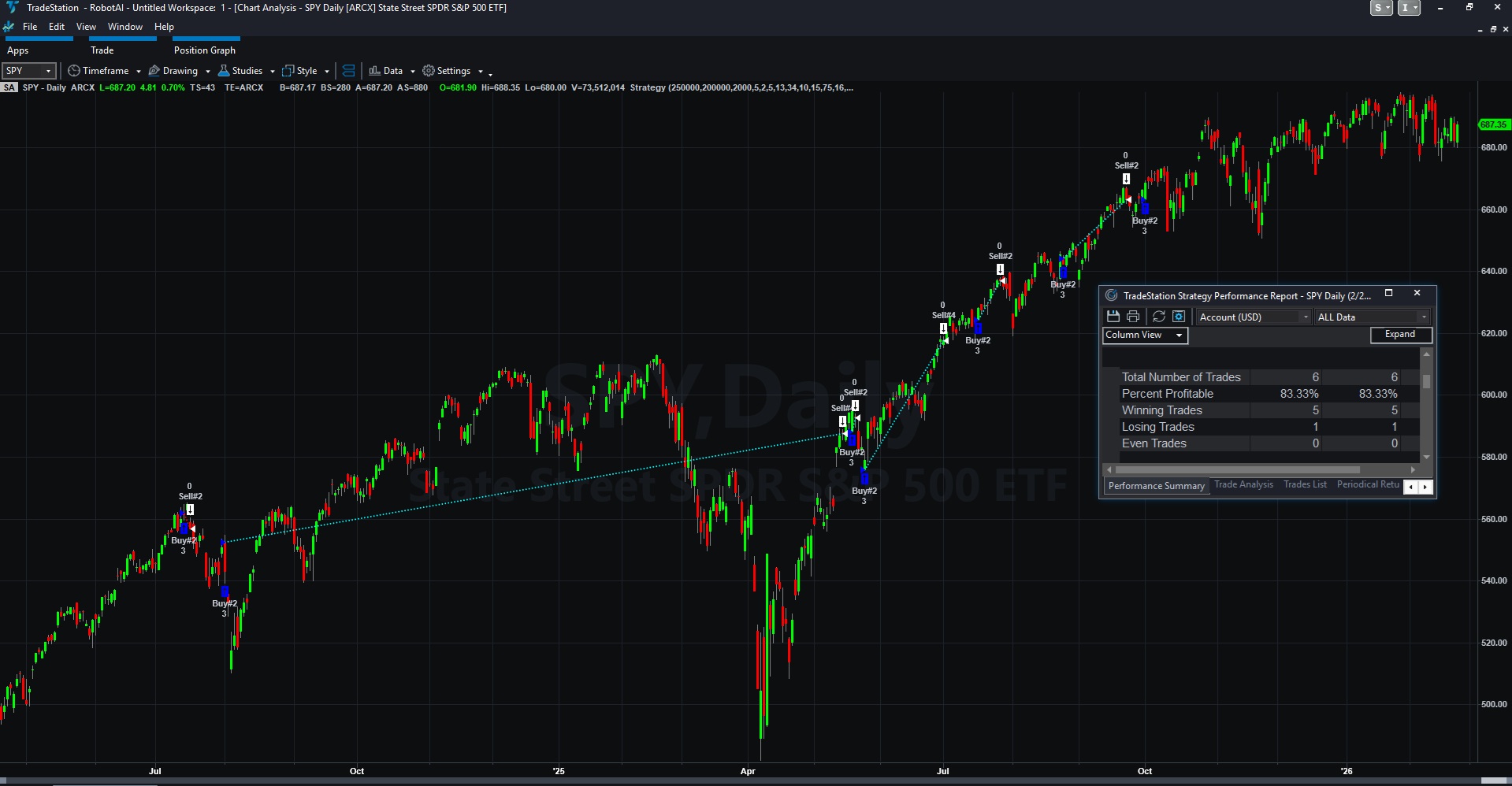
Meanwhile, the rules-based approach has already defined exact entry and exit criteria. If oil hits $85, buy. If it drops to $78, sell. The system doesn't care why oil moved — it only cares that predetermined conditions triggered predetermined actions.
"Down $200 on a day trade. Not much. But I refused to take it. 'It's only $200, it'll come back.' $200 became $400. Then $700. Then $1,200. I finally sold. Six hours of holding. Six hours of hoping...."
Should You Change Your Strategy When Oil Crashes?
No. Changing strategies based on daily market events destroys the statistical edge that backtesting provides. The moment you override your system "just this once," you've abandoned the rules that gave you confidence to trade in the first place.
TradeExecutor.AI operates on this principle: one strategy, one platform, executed without deviation. The same inputs always produce the same outputs, whether oil is spiking on Iran tensions or dropping on recession fears.
Consider what happened during the March 2020 oil crash when crude went negative. Discretionary traders froze, unsure whether their energy sector rules still applied in unprecedented conditions. Rules-based systems continued executing according to their parameters, treating the extreme move as just another data point.
The key insight: exceptional market days don't require exceptional responses. They require consistent execution of proven methodologies.
How Does Automated Trading Handle Volatility?
Automated trading handles volatility by treating it as a known variable, not an emergency requiring intervention. The system calculates position sizes, entry points, and exit criteria based on volatility metrics built into the strategy parameters.
When the Dow drops 400 points in a session, automated systems don't experience the psychological stress that causes human traders to make execution errors. There's no hesitation at the order entry button, no second-guessing the stop loss level, no impulse to "just see what happens next."
This elimination of execution hesitation matters more than most traders realize. A 30-second delay in order execution during volatile conditions can turn a profitable trade into a loss. Multiply that across hundreds of trades per year, and the cumulative impact becomes significant.
14 levels from Gut to Executor. We don't expect anyone to blindly jump in — do your due diligence. Submit symbols, track your predictions, and prove your discipline.
 Start Your Path →
What Is an Execution Leak in Trading?
Execution leak is the performance gap between your strategy's theoretical returns and your actual trading results. This gap widens dramatically during volatile periods when emotion and hesitation delay trade execution.
The leak occurs in three places: delayed entries when you second-guess signals, early exits when fear overrides predetermined stops, and position sizing errors when volatility makes you conservative at exactly the wrong moments. Each deviation from your original plan creates slippage between what should happen and what actually happens.
TradeExecutor.AI eliminates execution leak by removing the human decision point between signal generation and order placement. When your execution leak calculator shows the true cost of discretionary overrides, the numbers often surprise even experienced traders.
Why Do Professional Traders Still Override Their Systems?
Professional traders override their systems because they believe real-time market intuition trumps backtested data. This belief persists despite overwhelming evidence that systematic execution outperforms discretionary intervention over meaningful time periods.
The override impulse intensifies during crisis periods like today's oil spike. Traders see extraordinary headlines and assume extraordinary measures are required. But markets have always been driven by unpredictable events — geopolitical tensions, economic surprises, sector rotations.
What separates successful systematic traders from struggling discretionary ones isn't superior market prediction. It's the discipline to execute predetermined rules when those rules feel wrong. The discomfort of following your system during volatile periods is exactly when following your system matters most.
Can You Really Trade Without Watching the News?
You can trade without watching the news because price action already incorporates all available information, including geopolitical developments and analyst opinions. The oil spike on Iran tensions is immediately reflected in energy sector prices — no additional interpretation required.
News watching creates the illusion of gaining trading edge while actually introducing execution delays. The time spent analyzing whether Iran tensions will escalate could be spent refining entry criteria or position sizing algorithms.
Rules-based strategies work precisely because they ignore the narrative explanations for price movements and focus solely on price behavior itself. Whether oil moves because of Iran, OPEC decisions, or refinery shutdowns doesn't change the mathematical relationships between price, volume, and momentum that drive profitable trade signals.
How Do You Build Confidence in Systematic Trading?
Build confidence in systematic trading through rigorous backtesting across multiple market conditions, including periods of extreme volatility like today's oil spike scenario. Seeing how your rules performed during previous crisis periods removes the urge to intervene during current crises.
TradeExecutor.AI provides complete transparency into strategy performance across different market environments. You can see exactly how the system handled energy volatility during previous geopolitical events, economic announcements, and sector rotations.
Confidence comes from knowing your system has been tested against thousands of market scenarios, not just the calm periods that make backtesting look easy. When you've verified that your rules work during oil spikes, market crashes, and sector rotations, today's headlines become just another data point.
The path from discretionary trading to systematic execution requires accepting that consistent application of proven rules outperforms brilliant analysis applied inconsistently. One strategy, one platform, executed without deviation — regardless of what CNBC reports about Iran, oil prices, or market volatility.
Tested. Trusted. Transparent.
How much is your execution leak costing you?
Most traders lose more to overrides than to bad strategy. Calculate yours in 30 seconds.
Calculate Your LeakTradeExecutor.ai — deterministic automated execution engine
← Back to Insights