When Oil Spikes and Markets Panic, Your Trading Rules Matter More Than Ever
The S&P 500 just hit another record to kick off June, but don't let that headline fool you. Beneath the surface, energy volatility is wreaking havoc on discretionary traders while tech stocks carry the index higher. When oil moves 5% overnight, human traders scramble to adjust positions, override systems, and second-guess strategies that worked yesterday.
TL;DR: Market volatility exposes the fatal flaw in discretionary trading — emotional decision-making under pressure. Rules-based execution systems follow predetermined parameters regardless of oil spikes, tech rallies, or headline noise, eliminating the human failure point between signal and action.The difference between profitable trading and blown accounts often comes down to one question: Does your strategy follow rules or hype? Today's energy-driven market split proves why rules-based strategy execution matters more than perfect market timing.
The community submitted 1 prediction for AAPL. Every week, the most popular symbol gets publicly reviewed — good or bad.
Submit a Symbol →Should You Change Your Strategy When Oil Crashes?
No, you should execute your existing strategy exactly as designed. Changing strategies mid-trade based on energy sector volatility is how discretionary traders turn winning systems into losing accounts. Every strategy has predetermined parameters for handling volatility — the key is following them without deviation.
When oil jumped 4.8% last Tuesday, discretionary traders watching CNBC started making "smart" adjustments. They reduced position sizes in energy-sensitive stocks, added defensive positions, and convinced themselves they were protecting capital. Meanwhile, automated systems executed their programmed responses: maintained position sizing per volatility models, entered stops at predetermined levels, and ignored the noise.
The discretionary trader's account shows 47 trades that month with 23 "adjustments" for market conditions. The automated system shows 31 trades with zero adjustments. Same market, same opportunities, different execution discipline. Guess which one followed the backtested strategy that generated those impressive historical returns?
"Down $200 on a day trade. Not much. But I refused to take it. 'It's only $200, it'll come back.' $200 became $400. Then $700. Then $1,200. I finally sold. Six hours of holding. Six hours of hoping...."
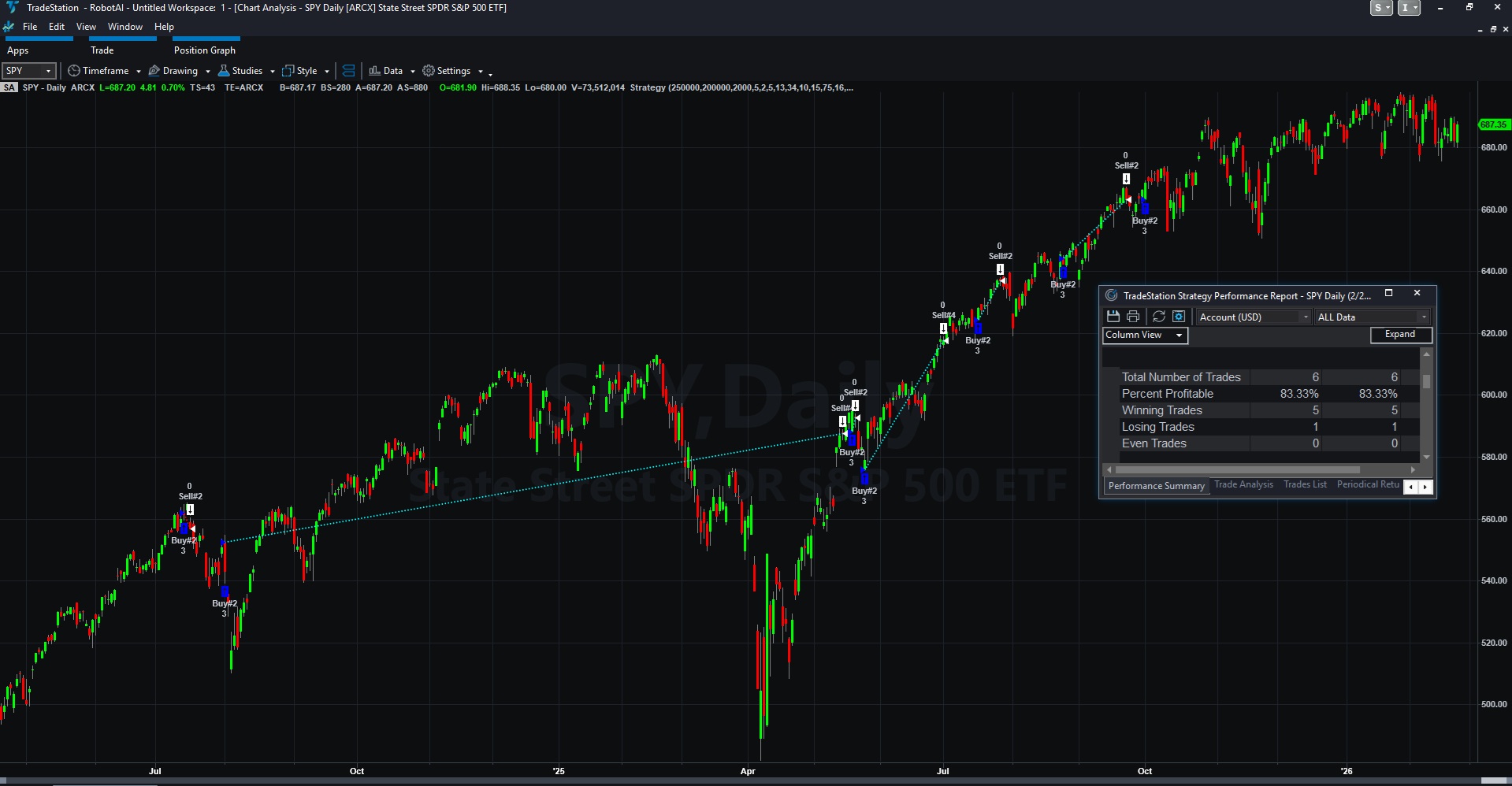
What Is an Execution Leak in Trading?
An execution leak occurs when actual trading results deviate from strategy backtests due to human intervention during live trading. Every override, every "smart" adjustment, every emotional decision creates a gap between what your strategy should do and what you actually do.
Energy volatility creates massive execution leaks. Your backtest assumed you'd take every signal, hold every position to its target, and cut every loss at predetermined levels. But when oil tanks and energy stocks drag down the market, that discipline evaporates. You start taking profits early on winners, holding losers "just one more day," and skipping entries that feel risky.
TradeExecutor.AI eliminates execution leaks by removing human decision-making from the trading process. The system executes every trade exactly as backtested — no emotions, no overrides, no second-guessing. When your strategy says buy, it buys. When it says sell, it sells. Period.
How Does Automated Trading Handle Volatility?
Automated trading systems handle volatility through predetermined algorithms that execute consistently regardless of market conditions. Rules-based systems don't experience fear when oil spikes or greed when tech stocks rally — they follow programmed logic designed during calm backtesting periods.
Consider today's market action: While human traders debate whether energy volatility signals broader market weakness, an automated system simply checks its rules. Is the signal valid? Yes. Does position sizing align with volatility parameters? Yes. Execute the trade. No CNBC commentary required.
The human trader sees oil up 5% and thinks "inflation concerns might pressure tech stocks." The automated system sees the same data and thinks nothing — it processes price, volume, and momentum indicators according to backtested parameters. One approach introduces emotional noise. The other maintains mechanical precision.
This deterministic approach means the same market conditions always produce the same trading decisions. No Monday morning quarterbacking about what you "should have done" when oil moved overnight.
Why Do Most Traders Fail During Market Volatility?
Most traders fail during volatility because they abandon proven strategies in favor of real-time market commentary and emotional decision-making. When oil spikes and market sectors start rotating, traders convince themselves their backtested strategy couldn't have anticipated these "unique" conditions.
The reality? Volatility isn't unique. Energy sector rotations happen regularly. Tech dominance cycles are common. Your strategy backtest included similar periods — you just don't remember them because backtests show clean equity curves, not the daily emotional roller coaster.
Successful trading requires treating every trade as part of a larger statistical sample, not as an individual event requiring special handling. TradeExecutor operates on this principle — every signal receives identical evaluation against identical criteria, regardless of whether oil is spiking or tech is rallying.
Does Rules-Based Trading Really Remove All Discretion?
Yes, truly rules-based trading removes all discretionary decisions during market hours. Every entry, exit, position size, and stop loss follows predetermined algorithms without human intervention or override capability.
This isn't about removing human intelligence from trading — it's about applying that intelligence during strategy development and backtesting, then executing mechanically during live markets. The human brain excels at pattern recognition and system design but fails catastrophically at real-time decision-making under financial pressure.
TradeExecutor.AI embodies this philosophy completely: one strategy, one platform, one-time payment. No discretionary overlays, no manual overrides, no emotional adjustments. The system trades exactly as programmed, delivering the same results that generated its transparent performance record.
When markets gap on energy news or tech stocks drive indices to new highs, the system responds according to its programming — not according to fear, greed, or CNBC's latest market commentary.
How Can You Calculate Your Trading Execution Leak?
Calculate your execution leak by comparing your actual trading results to your strategy's backtested performance over the same period. The difference represents money lost to emotional decision-making and discretionary overrides.
Most traders discover execution leaks of 15-30% annually — meaning their actual returns significantly underperform their strategy's theoretical returns. Energy volatility weeks often show the largest leaks as traders make "defensive" adjustments that weren't part of their original system.
Track every override, every early exit, every skipped signal for one month. Compare those results to mechanical execution of your original rules. The difference is your execution leak — the cost of human intervention in mechanical processes.
Rules-based systems eliminate this leak entirely. TradeExecutor's transparent performance record reflects actual trading results, not backtested theory, because the system executes exactly as designed without human interference.
Your trading success depends less on finding the perfect strategy and more on executing your current strategy perfectly. Market volatility will continue. Energy sectors will keep rotating. Tech stocks will dominate some periods and lag others.
The question isn't whether you can predict these moves — it's whether you can execute your trading plan consistently through all of them. Rules-based execution removes the human failure point that turns winning strategies into losing accounts.
Tested. Trusted. Transparent.
How much is your execution leak costing you?
Most traders lose more to overrides than to bad strategy. Calculate yours in 30 seconds.
Calculate Your LeakTradeExecutor.ai — deterministic automated execution engine
← Back to Insights