Rules Beat Hype: Why the Dow's 800-Point Jump Proves Your Trading Needs Execution Discipline
The Dow jumped 800 points today while the Nasdaq lagged, as investors rotated out of chip stocks and into banks and retail. Somewhere right now, a trader is celebrating their "genius" sector rotation call. Tomorrow, they'll be second-guessing themselves when the trade reverses.
TL;DR: Market volatility exposes the fatal flaw in discretionary trading — emotions override strategy. Rules-based execution systems follow predetermined criteria regardless of headlines, eliminating the human failure point that turns winning strategies into losing accounts.The real question isn't whether you can predict these rotations. It's whether your trading follows rules or hype. Every 800-point swing tests the same thing: will you stick to your plan, or will fear and greed hijack your execution?
The community submitted 1 prediction for AAPL. Every week, the most popular symbol gets publicly reviewed — good or bad.
Submit a Symbol →Does Your Strategy Follow Rules or Headlines?
Rules-based trading means your rules-based strategy executes the same way whether the Dow jumps 800 points or drops 800 points. The system doesn't read CNBC headlines or feel FOMO about sector rotations.
Consider today's sector rotation from tech to financials. A discretionary trader sees the Dow surge and starts questioning their positions. "Should I dump my semiconductor holdings? Am I missing the bank rally?" These questions create execution leaks — the gap between what your strategy says and what you actually do.
A rules-based system asks different questions: "Do current market conditions meet my entry criteria? Are any positions hitting stop-loss or profit-target levels?" The system doesn't care about sector rotation narratives or AI hype cycles. It follows predetermined logic, period.
This deterministic approach removes the human element that turns profitable backtests into unprofitable live trading. Same inputs produce same outputs, regardless of market noise.
"Down $200 on a day trade. Not much. But I refused to take it. 'It's only $200, it'll come back.' $200 became $400. Then $700. Then $1,200. I finally sold. Six hours of holding. Six hours of hoping...."
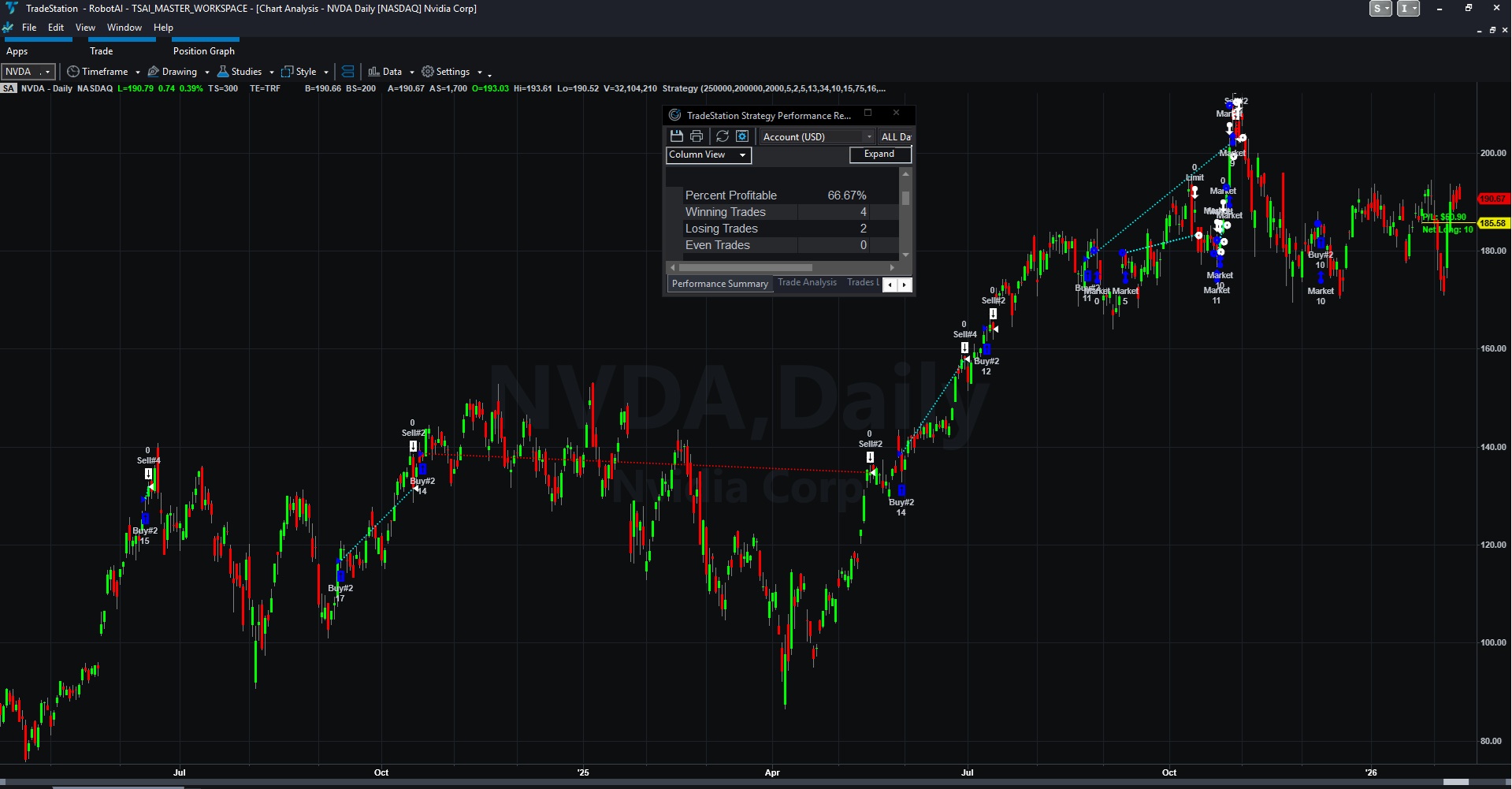
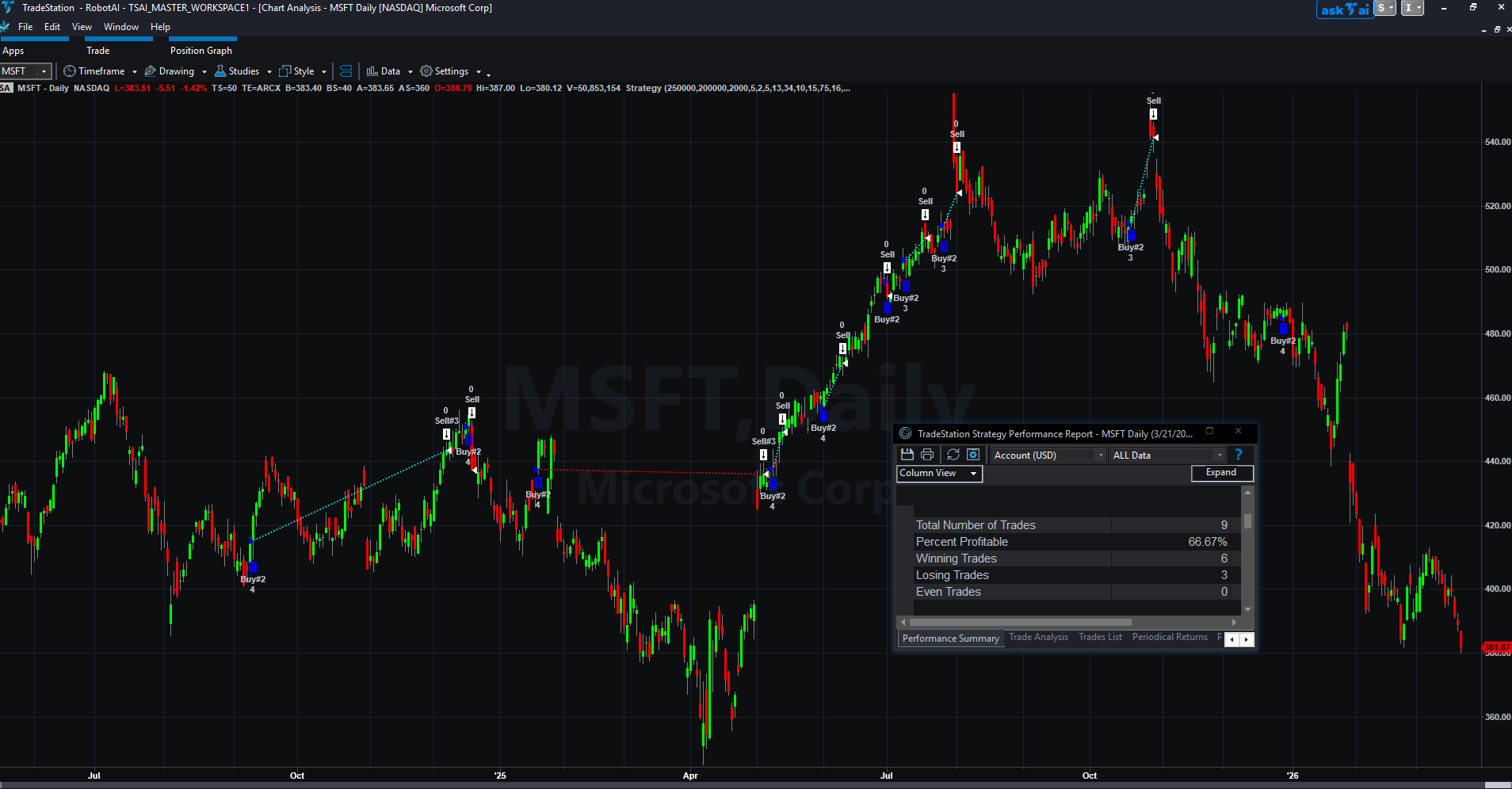
What Happens When You Override Your Own Rules?
Overriding predetermined rules typically leads to position sizing errors, premature exits, and chasing momentum. Research shows 85% of discretionary trading failures stem from execution discipline, not strategy flaws.
Today's market action illustrates this perfectly. Your backtested strategy might show stellar performance over the past year, but those results assume perfect execution. They assume you took every signal, sized every position correctly, and held through drawdowns without panic selling.
Reality tells a different story. When the Dow jumps 800 points, discretionary traders often:
- Increase position sizes on "hot" sectors (banks, retail today)
- Exit profitable tech positions too early, fearing rotation
- Add new positions outside their strategy scope
- Ignore stop-losses because "this time is different"
Each override creates an execution leak. Your strategy might generate alpha, but your emotional decisions leak that alpha back to the market. TradeExecutor.AI eliminates these leaks by removing override capability entirely.
How Does Automated Trading Handle Market Volatility?
Automated systems treat 800-point moves as data points, not emotional events. The system checks if volatility levels trigger position adjustments according to predetermined rules, then executes accordingly without hesitation.
When volatility spikes, automated execution follows a simple process: evaluate current positions against exit criteria, scan for new opportunities meeting entry criteria, adjust position sizes based on volatility calculations, and execute all decisions immediately without second-guessing.
Human traders face a more complex process during volatile sessions. They interpret news flow, gauge market sentiment, question their strategy's validity, adjust for current "market conditions," and often freeze or override their original plan.
The difference compounds over time. Automated systems maintain consistent execution quality regardless of market conditions. Human traders show declining execution quality during high-stress periods — exactly when precision matters most.
14 levels from Gut to Executor. We don't expect anyone to blindly jump in — do your due diligence. Submit symbols, track your predictions, and prove your discipline.
 Start Your Path →
Should You Chase Sector Rotations Like Today's Bank Rally?
Chasing sector rotations typically destroys more capital than it creates, because retail traders identify rotations after institutional money has already moved. Today's bank rally represents money that moved before retail investors noticed.
Professional institutions position for sector rotations weeks or months ahead of obvious headlines. When retail traders see the rotation clearly — like today's chip-to-bank movement — smart money is already evaluating exit strategies.
Rules-based systems avoid this trap entirely. They don't chase rotations or respond to sector momentum. If a banking stock meets the system's entry criteria, it triggers a position. If it doesn't, the system ignores the sector entirely, regardless of performance.
This approach might miss some explosive moves, but it avoids the whipsaw effect that destroys discretionary accounts. Consistency trumps spectacular wins when you're building long-term wealth.
What Is an Execution Leak in Trading?
An execution leak represents the difference between your strategy's theoretical performance and your actual trading results. These leaks typically cost traders 3-7% annually in lost returns.
Common execution leaks include: delayed order entry due to hesitation, partial position sizing during uncertainty, early exits before targets hit, late exits after stops are breached, and position additions outside strategy parameters.
Today's market volatility creates multiple leak opportunities. A discretionary trader might see the Dow surge and partially close winning positions "to lock in gains." This decision violates the original strategy but feels prudent during volatile sessions.
TradeExecutor.AI plugs these leaks through deterministic execution. The system doesn't experience hesitation, fear, or greed. When conditions meet predetermined criteria, orders execute immediately at specified sizes. No partial positions, no early exits, no emotional overrides.
The mathematical impact is significant. A strategy generating 12% annual returns with perfect execution might deliver only 6-8% with typical execution leaks. Automated execution preserves the strategy's full return potential.
Why One Platform Beats Multiple Trading Systems?
Using multiple platforms and strategies creates coordination problems that compound during volatile periods like today's session. Each additional system increases complexity and potential failure points exponentially.
TradeExecutor.AI operates exclusively on TradeStation, eliminating platform coordination issues. One strategy, one platform, one execution engine. This focused approach reduces system complexity and increases reliability.
When the Dow moves 800 points in a session, you don't want to manage positions across multiple platforms while monitoring different strategy signals. Simplicity provides clarity, especially during high-stress market conditions.
The one-platform approach also simplifies performance tracking. All trades flow through the same execution engine, creating clean performance data for strategy evaluation and optimization.
How Do You Measure Trading Execution Quality?
Execution quality measurement requires comparing actual fills against theoretical optimal fills, tracking timing delays between signals and orders, and analyzing position sizing accuracy versus strategy specifications.
Most traders focus on win rates and profit factors while ignoring execution metrics. They might achieve a 60% win rate but lose money due to poor execution timing and sizing decisions.
Professional measurement includes slippage analysis, timing accuracy, sizing precision, and rules adherence percentage. TradeExecutor.AI tracks these metrics automatically, providing transparent performance data.
The system's deterministic nature ensures execution quality remains consistent regardless of market conditions. There's no "good execution day" versus "bad execution day" variability that plagues discretionary trading.
---
Market volatility like today's 800-point Dow surge will always create emotional trading pressure. The solution isn't predicting these moves — it's executing your strategy with machine-like precision regardless of headlines.
Rules-based execution eliminates the human failure point between signal and action. While discretionary traders wrestle with sector rotation decisions and position sizing anxiety, automated systems simply follow predetermined logic.
Calculate your execution leak. Compare your actual results against your strategy's theoretical performance. The difference represents the cost of emotional decision-making.
Tested. Trusted. Transparent.How much is your execution leak costing you?
Most traders lose more to overrides than to bad strategy. Calculate yours in 30 seconds.
Calculate Your LeakTradeExecutor.ai — deterministic automated execution engine
← Back to Insights