OpenAI Report Tanks Chip Stocks: Why Rules Beat Hype in Market Chaos
The S&P 500 just slipped from its record high, and the Nasdaq tumbled as an OpenAI report sent chip stocks plummeting. Another day, another AI narrative whipsawing the markets.
TL;DR: Market hype creates noise that derails discretionary trading decisions. Rules-based automated execution systems ignore the headlines and follow predetermined parameters, eliminating the emotional reactions that cause execution leaks between signal and action.This morning's selloff perfectly illustrates why discretionary trading fails during volatile periods. While human traders scramble to interpret whether OpenAI's latest development means chip stocks are overvalued or just taking a breather, automated systems execute based on price action and predefined rules — nothing more, nothing less.
The community submitted 1 prediction for AAPL. Every week, the most popular symbol gets publicly reviewed — good or bad.
Submit a Symbol →Does Your Strategy Follow Rules or React to Headlines?
Your strategy should follow predetermined rules, not react to headlines or market narratives. A rules-based strategy executes the same way whether chip stocks are falling on OpenAI reports or rallying on earnings beats.
Consider what happened this morning. The moment that OpenAI report hit, discretionary traders faced an impossible choice: hold their semiconductor positions and hope the selloff is temporary, or cut losses based on a news story they're still trying to understand. Neither decision follows a systematic approach.
Rules-based execution removes this choice entirely. The system doesn't read headlines, interpret AI developments, or guess about sector rotation. It follows the same entry and exit parameters whether the market is celebrating AI breakthroughs or panicking about AI disruption.
"Down $200 on a day trade. Not much. But I refused to take it. 'It's only $200, it'll come back.' $200 became $400. Then $700. Then $1,200. I finally sold. Six hours of holding. Six hours of hoping...."
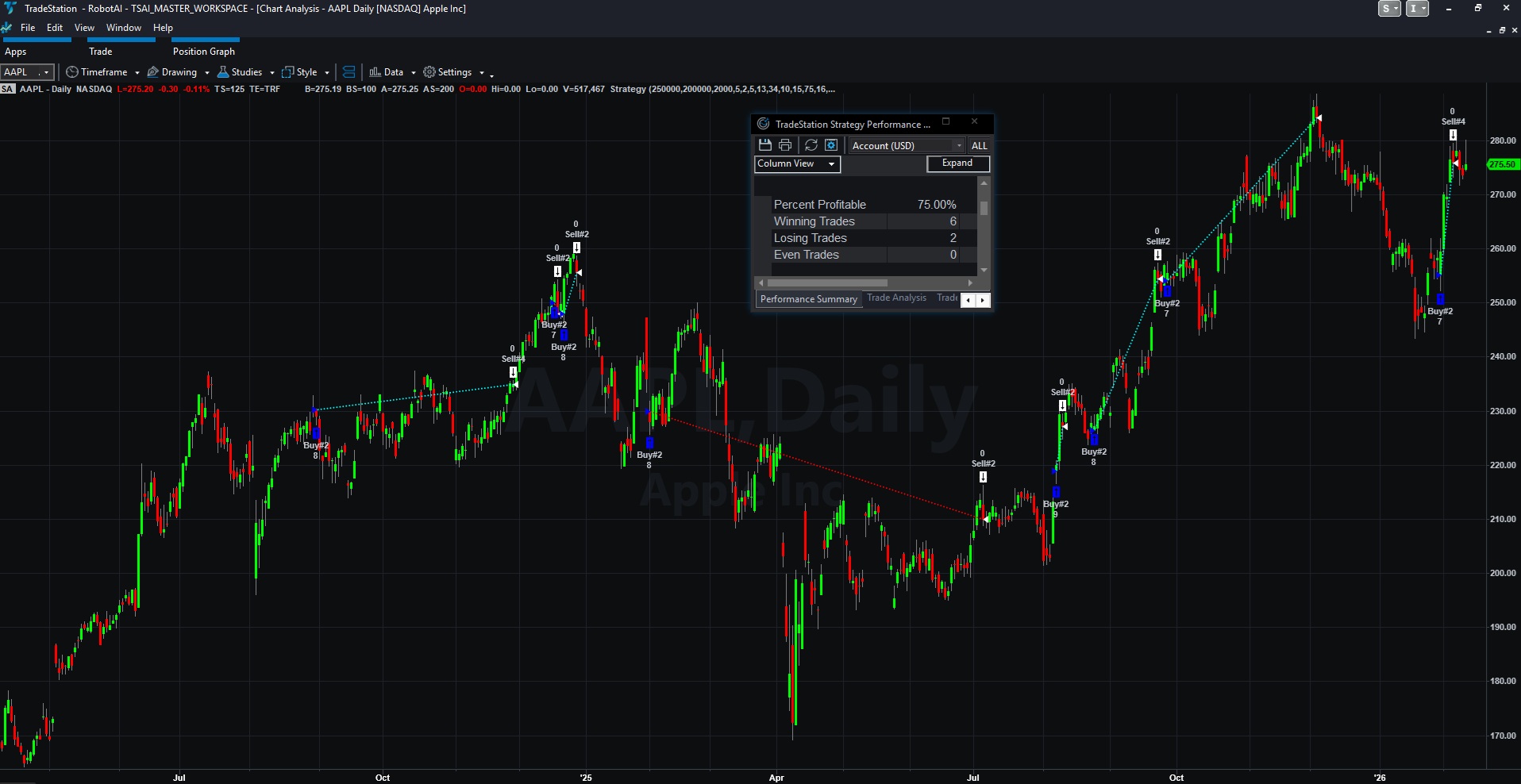
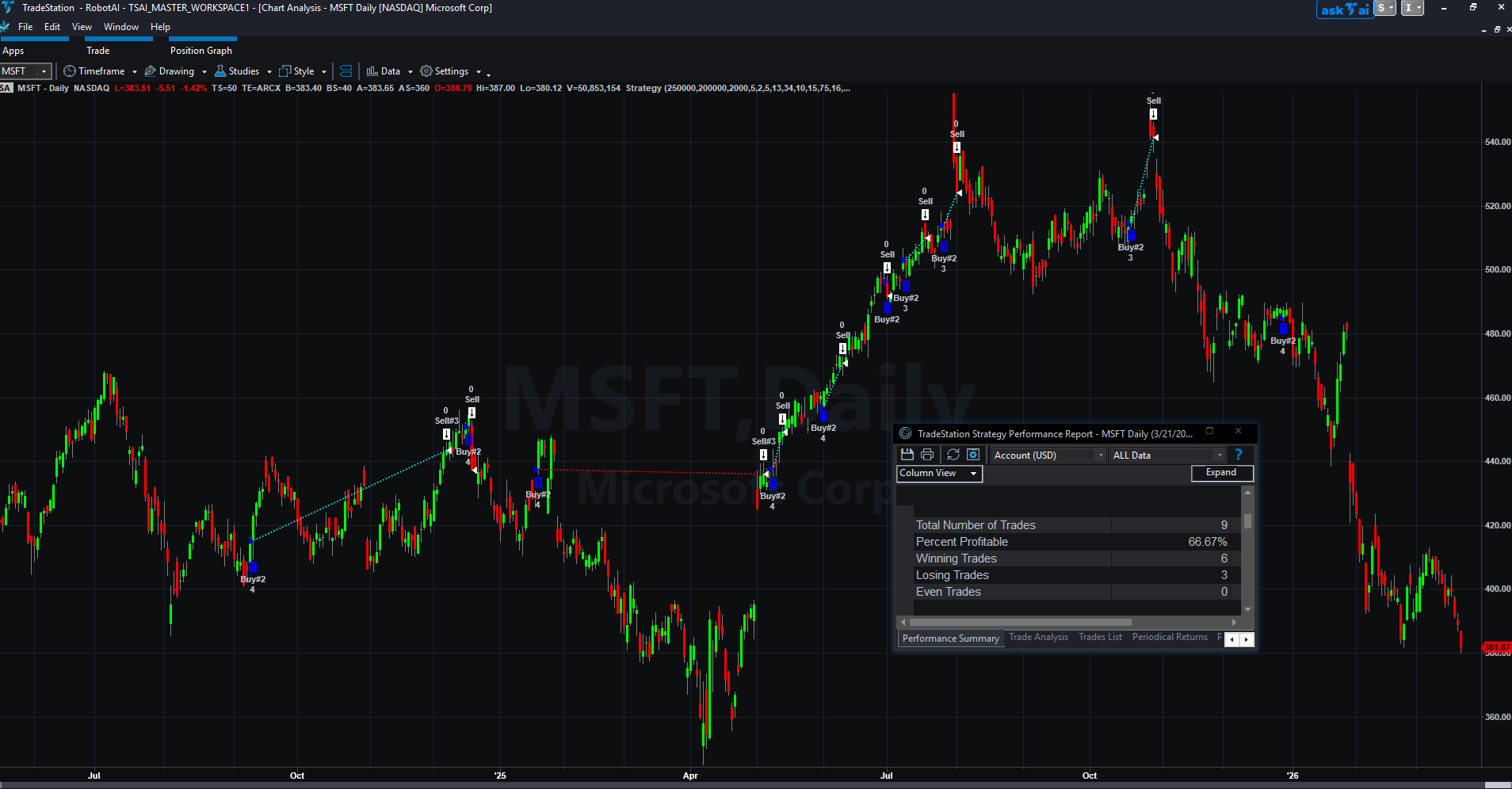
What Happens When Discretionary Traders Face Market Volatility?
Discretionary traders typically freeze, overtrade, or abandon their strategy entirely when volatility spikes. The psychological pressure of real-time decision-making during market chaos creates predictable failure patterns.
During this morning's chip stock selloff, discretionary traders likely experienced one of three reactions. First, paralysis — watching positions move against them while trying to decide if the news justifies an exit. Second, panic selling — dumping positions based on headline fear rather than technical levels. Third, rationalization — holding losing positions while crafting narratives about why the selloff is temporary.
Each reaction introduces human judgment into what should be mechanical execution. The strategy becomes secondary to the trader's emotional response to market conditions. This gap between intended strategy and actual execution creates what professionals call "execution leak" — the performance difference between backtested results and live trading.
TradeExecutor.AI eliminates these failure points by removing human discretion from the execution process. The system doesn't experience fear when semiconductors gap down or euphoria when AI stocks rally. Every trade executes according to the same predetermined parameters, maintaining strategy integrity regardless of market conditions.
How Does Automated Trading Handle Sudden Market Moves?
Automated trading handles sudden market moves through predetermined risk parameters and systematic position sizing, not emotional reactions. The system treats every price movement as data, not drama.
When chip stocks opened lower on the OpenAI news, an automated system would process the price action through its existing framework. If the selloff triggered stop-loss levels, positions close automatically. If the decline created entry opportunities based on the strategy's criteria, new positions open according to predetermined size calculations.
The system doesn't distinguish between a selloff caused by AI concerns versus earnings disappointments versus broader market weakness. Price movement is price movement. This consistency prevents the strategy drift that plagues discretionary trading during volatile periods.
Human traders often modify their approach based on the "why" behind market moves. They might hold through AI-related selloffs because they believe in long-term technology trends, or cut positions early because they fear regulatory backlash. These modifications, however well-intentioned, create inconsistency that compounds over time.
14 levels from Gut to Executor. We don't expect anyone to blindly jump in — do your due diligence. Submit symbols, track your predictions, and prove your discipline.
 Start Your Path →
Should You Override Your System During Market Chaos?
You should never override your system during market chaos, as this defeats the primary purpose of systematic trading. Override decisions typically occur at the worst possible times, when emotions are highest and judgment is most impaired.
The temptation to intervene peaks during exactly these moments — when headlines are scary, positions are moving against you, and conventional wisdom suggests "this time is different." The OpenAI chip stock selloff represents a perfect example. The news feels significant enough to justify strategy modifications, but that feeling is precisely why systematic execution matters.
Professional systematic traders understand that individual market events — regardless of how dramatic they seem — represent single data points in longer-term probability distributions. The strategy accounts for various market conditions through its backtesting period, including sudden sector rotations, technology disruptions, and sentiment shifts.
TradeExecutor's rules-based approach maintains this discipline automatically. The system cannot second-guess itself, cannot be influenced by market commentary, and cannot modify its approach based on today's headlines. This consistency preserves the statistical edge that backtesting identified.
What Is the Real Cost of Emotional Trading Decisions?
Emotional trading decisions typically cost traders 2-4% annually in execution leak, the performance gap between strategy design and actual results. This leak compounds significantly over longer time periods.
The cost extends beyond individual trades. When traders modify their approach based on market events like today's AI-driven selloff, they often create systematic biases that persist across multiple trades. Fear-based modifications tend toward premature exits and reduced position sizing. Greed-based modifications lean toward extended holding periods and oversized positions.
These behavioral patterns create asymmetric execution where traders consistently underperform their strategy's theoretical results. The magnitude of this underperformance increases during volatile periods when modification impulses are strongest.
Systematic execution through TradeExecutor.AI eliminates this leak entirely. Every trade executes with identical precision, maintaining the statistical properties that backtesting identified. The system captures the full theoretical performance of the strategy, not a degraded version filtered through human emotions.
Why One Strategy, One Platform, One-Time Payment Makes Sense
One strategy, one platform, and one-time payment eliminate the complexity and conflicts that degrade trading performance. Multiple strategies create decision paralysis, multiple platforms introduce execution inconsistencies, and subscription models incentivize unnecessary modifications.
The typical trader's setup — several strategies across different platforms with various subscription services — creates countless opportunities for human interference. Which strategy should handle today's chip stock selloff? Should the platform's suggested modifications be accepted? Do the subscription service's market alerts justify strategy changes?
Each decision point introduces discretion back into what should be systematic execution. The complexity that multiple options create often overwhelms the underlying strategy's edge.
TradeExecutor's simplified approach removes these complications. One tested strategy handles all market conditions. One platform (TradeStation) eliminates execution variables. One payment removes ongoing decision pressure about service value.
This simplicity preserves the deterministic properties that make systematic trading effective. Same inputs always produce same outputs, regardless of whether markets are celebrating AI advances or fearing AI disruption.
The morning's OpenAI-driven volatility demonstrates why systematic execution matters. While discretionary traders debate the implications of AI development reports, rules-based systems execute according to tested parameters. One approach introduces human judgment into systematic processes. The other maintains the consistency that creates long-term edges.
Tested. Trusted. Transparent.
How much is your execution leak costing you?
Most traders lose more to overrides than to bad strategy. Calculate yours in 30 seconds.
Calculate Your LeakTradeExecutor.ai — deterministic automated execution engine
← Back to Insights