Chipmaker Rebounds and Geopolitical Chaos: Does Your Strategy Follow Rules or Hype?
Stocks surged today as chipmakers bounced back from their recent selloff, while Iran halted attacks on Israel, sending markets into their familiar whipsaw pattern. NVIDIA jumped 4%, Taiwan Semiconductor gained 3.2%, and the VIX dropped 15% in a matter of hours.
The bottom line: Markets move on headlines, but profitable trading depends on whether your execution follows predetermined rules or gets swept up in the emotional chaos. Rules-based strategies execute the same way whether chipmakers are crashing or soaring, while discretionary traders chase yesterday's winners and panic at tomorrow's headlines.The community submitted 1 prediction for AAPL. Every week, the most popular symbol gets publicly reviewed — good or bad.
Submit a Symbol →What Happens When Your Trading Strategy Meets Breaking News?
A rules-based strategy executes identically whether the news is "chipmakers rebound" or "chipmakers crash." The same entry conditions, exit rules, and position sizing apply regardless of what CNBC's ticker says.
Consider today's price action: NVIDIA opened down 2.1%, rallied 6.8% by midday, then gave back 2.3% in the final hour. A discretionary trader watching this unfold faces three separate emotional decisions: panic at the open, FOMO during the rally, and fear during the pullback.
The rules-based approach removes all three decision points. If the strategy's entry criteria trigger at 10:15 AM, the trade executes. If they don't trigger, nothing happens. The system doesn't care that Iran paused its attacks or that semiconductor stocks are "rebounding from a rout."
This deterministic execution eliminates what we call execution leak — the gap between what your strategy should do and what you actually do when real money is on the line.
"Down $200 on a day trade. Not much. But I refused to take it. 'It's only $200, it'll come back.' $200 became $400. Then $700. Then $1,200. I finally sold. Six hours of holding. Six hours of hoping...."
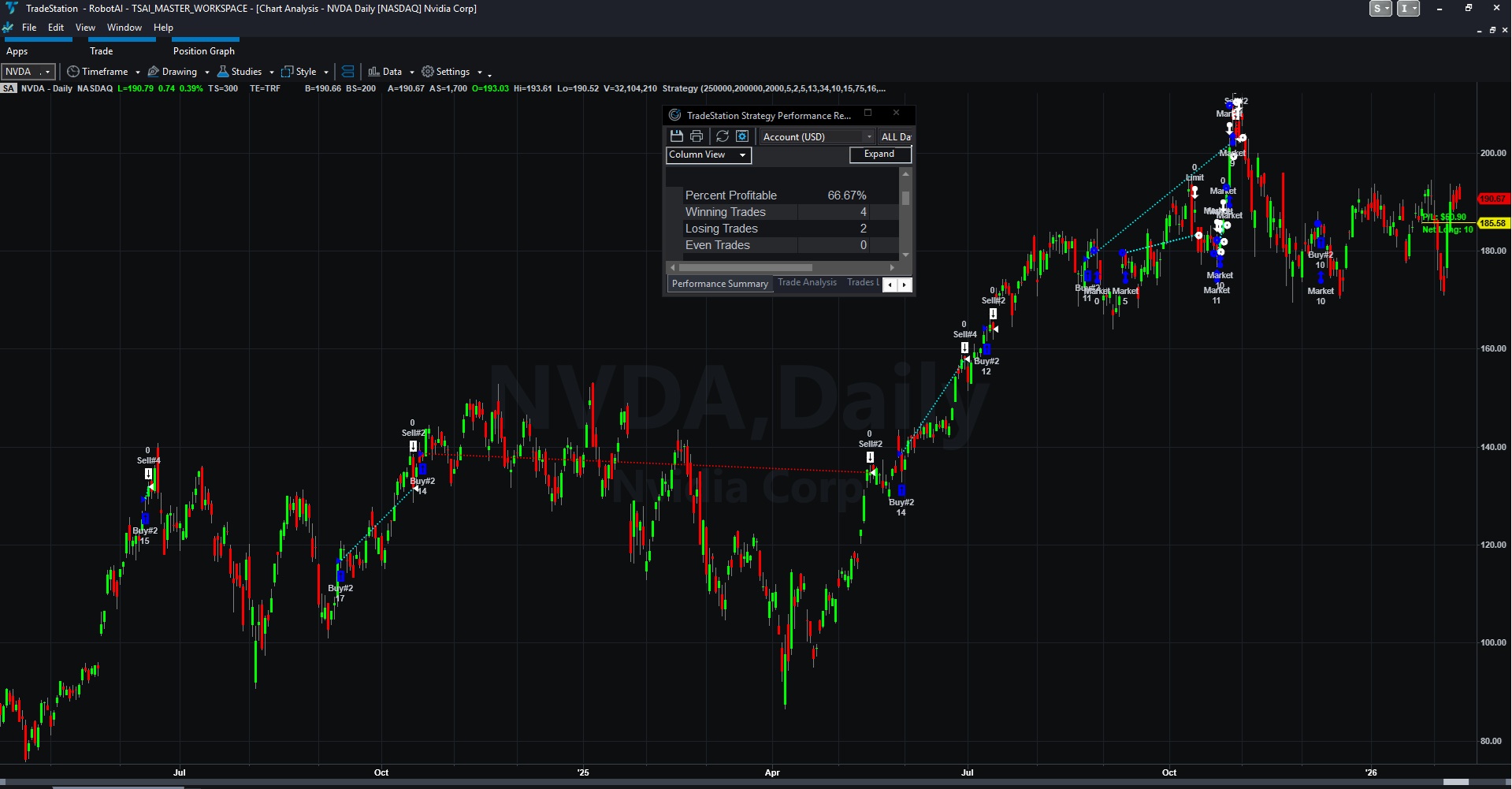
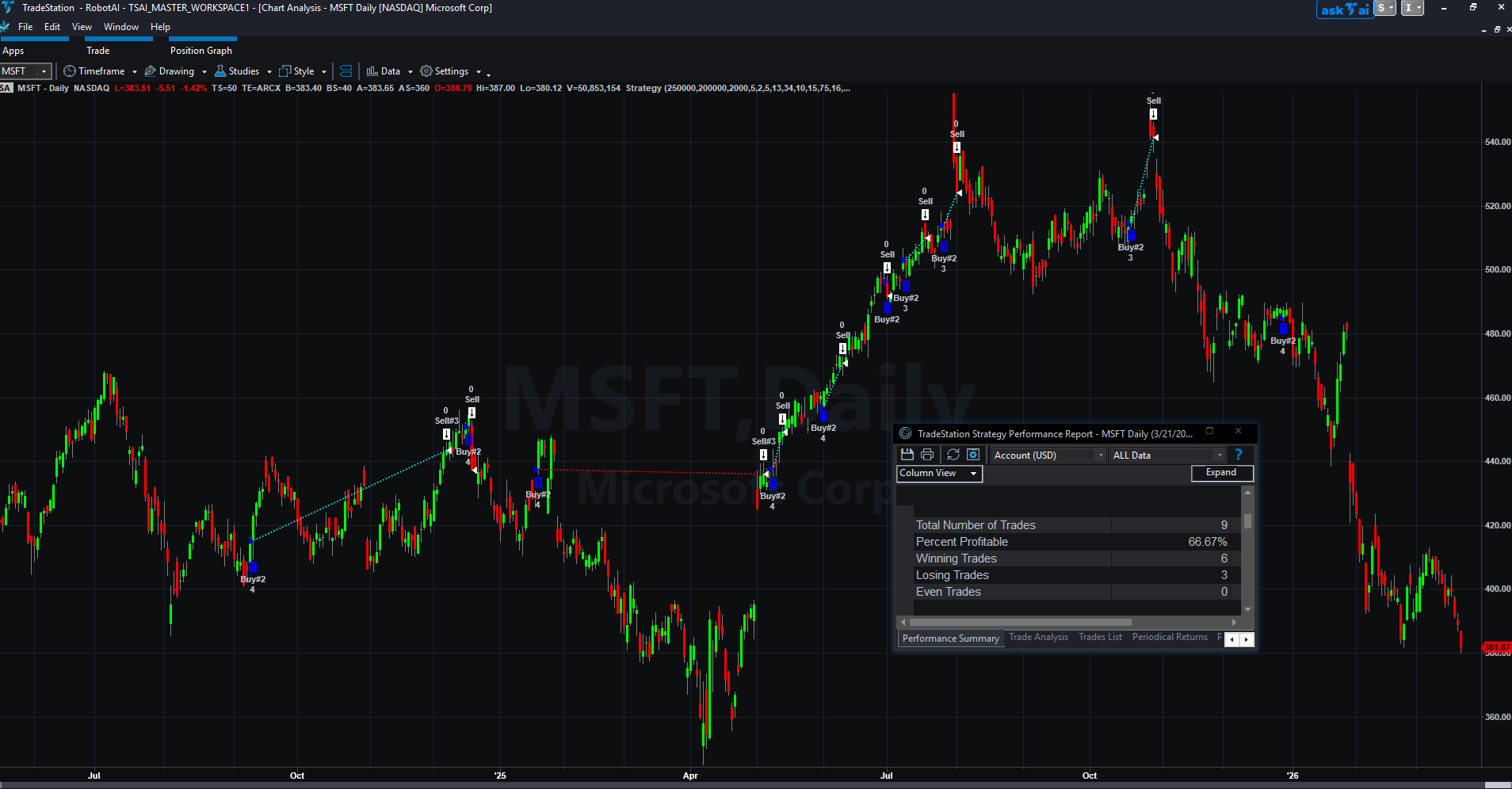
Should You Change Your Trading Approach When Geopolitics Explode?
No. Changing your trading approach based on geopolitical events introduces discretion where rules should govern, and discretion is where profitable strategies die.
Today's Iran-Israel headline perfectly illustrates why. At 9:30 AM, futures were limit down. By 11:00 AM, they were positive. By 2:00 PM, the "all-clear" narrative dominated financial media. A trader adjusting their strategy for geopolitical risk would have made three different strategy modifications in four hours.
Rules-based execution treats geopolitical volatility the same as earnings volatility, Fed volatility, or any other market noise. The strategy either meets its mathematical criteria or it doesn't. A properly backtested system has already encountered dozens of geopolitical events in its historical data — from 9/11 to COVID to the 2008 crisis.
TradeExecutor.AI runs the identical algorithm whether markets are pricing in World War III or celebrating peace treaties. The strategy's mathematical foundation doesn't change because headlines change.
How Does Automated Trading Handle Market Whipsaws?
Automated trading handles whipsaws by following predetermined rules without emotional interference, executing the same logic whether markets move 1% or 10% in either direction.
Today's chipmaker action created a textbook whipsaw: down at the open, up 6% by noon, then fading into the close. Discretionary traders faced impossible timing decisions at each inflection point. Do you buy the dip at 9:45? Take profits at 11:30? Re-enter on the afternoon fade?
An automated system sidesteps these timing dilemmas entirely. It executes when mathematical conditions align, regardless of whether that's during the morning panic or the midday euphoria. If the strategy's entry signal triggers when NVIDIA is down 2%, the trade executes. If it triggers when NVIDIA is up 4%, the trade executes.
The key advantage isn't that automated systems time these moves better — it's that they remove the human decision-making that turns profitable strategies into losing ones. Every override, every "just this once" adjustment, every emotional deviation creates execution leak.
14 levels from Gut to Executor. We don't expect anyone to blindly jump in — do your due diligence. Submit symbols, track your predictions, and prove your discipline.
 Start Your Path →
What Is Execution Leak in Live Trading?
Execution leak is the performance difference between your strategy's backtested results and your actual trading results, caused by emotional interference in live markets.
Your backtested strategy assumes perfect execution: every signal gets traded, no positions get held too long due to hope, no entries get skipped due to fear. But when you watch NVIDIA gap down 3% at the open, your brain starts generating reasons to deviate from the plan.
"Maybe I should wait for confirmation." "This feels different." "The geopolitical situation is unprecedented." Each hesitation, each override, each emotional adjustment widens the gap between theoretical performance and real results.
Consider a trader whose backtested strategy returned 18% annually over five years, but whose live account averaged 11%. That 7% difference is execution leak — the cost of human discretion overriding systematic rules.
TradeExecutor.AI eliminates execution leak by removing human decision-making entirely. The strategy that produced 18% in backtesting executes identically in live markets, with zero discretion and zero emotional interference.
Why Do Most Traders Fail When Markets Move Fast?
Most traders fail during fast markets because they abandon their plan precisely when following it matters most, replacing tested logic with emotional reactions to price movement.
Today's session offered a perfect example. Between 9:30 and 10:00 AM, the Nasdaq dropped 180 points. Between 10:00 and 11:30, it rallied 220 points. Discretionary traders watching this action faced paralyzing decisions every few minutes.
The emotional cycle is predictable: panic during the drop ("I should have sold yesterday"), euphoria during the rally ("I need to get back in"), then confusion during the afternoon chop ("What's the market actually doing?"). Each emotional state generates trading decisions that feel logical in the moment but destroy long-term performance.
Rules-based execution breaks this cycle by operating identically regardless of market speed. The same entry conditions, exit rules, and position sizing apply whether the market moves 20 points or 200 points. Fast markets don't create special cases — they're just another data point for the algorithm to process.
How Do You Build Confidence in Systematic Trading?
Build confidence in systematic trading by understanding that your strategy's mathematical foundation remains valid regardless of today's headlines, and that emotional interference destroys more trading accounts than market crashes.
The hardest part of systematic trading isn't building the strategy — it's trusting it when markets feel different. Today's geopolitical chaos feels unprecedented, but your backtested system has processed dozens of similar events: Gulf War, dot-com crash, 2008 crisis, COVID pandemic, countless Fed announcements and earnings surprises.
Each event felt unique when it happened. Traders convinced themselves "this time is different" and abandoned profitable approaches for emotional reactions. The systematic traders who stayed with their rules captured the rebounds, the crashes, and everything in between.
TradeExecutor.AI's track record demonstrates this principle in action: one strategy, one platform, consistent execution across every market environment. No discretion during the COVID crash. No override during the 2022 bear market. No emotional adjustments when chipmakers gap up or down.
The confidence comes from understanding that markets change, but human psychology doesn't. Greed, fear, and hope drive the same trading mistakes whether the year is 2024 or 1924.
Does Perfect Backtesting Guarantee Future Performance?
Perfect backtesting doesn't guarantee future performance, but it provides the only mathematical foundation for consistent execution, while emotional trading guarantees inconsistent results.
Backtesting reveals how your strategy performed across hundreds of market scenarios, but it can't predict tomorrow's exact price movements. What it can do is show you how your rules-based approach handled similar chaos in the past: market crashes, geopolitical crises, sector rotations, and bull market euphoria.
Today's chipmaker rebound might feel unique, but the mathematical patterns underlying market behavior remain remarkably consistent. Fear creates oversold conditions, greed creates overbought conditions, and systematic strategies profit from both extremes.
The alternative to backtested systems is discretionary trading — making real-time decisions based on incomplete information and emotional bias. That approach guarantees execution leak, because human psychology introduces variables that no amount of market analysis can overcome.
TradeExecutor.AI provides transparency that most trading approaches can't match: every trade, every drawdown, every winning and losing streak documented and verifiable. The strategy's performance isn't marketing fiction — it's mathematical reality, executed without human interference.
One strategy. One platform. One-time payment. The same deterministic execution whether markets are celebrating chipmaker rebounds or pricing in geopolitical catastrophe.
Tested. Trusted. Transparent.How much is your execution leak costing you?
Most traders lose more to overrides than to bad strategy. Calculate yours in 30 seconds.
Calculate Your LeakTradeExecutor.ai — deterministic automated execution engine
← Back to Insights